
Last updated October 16, 2026
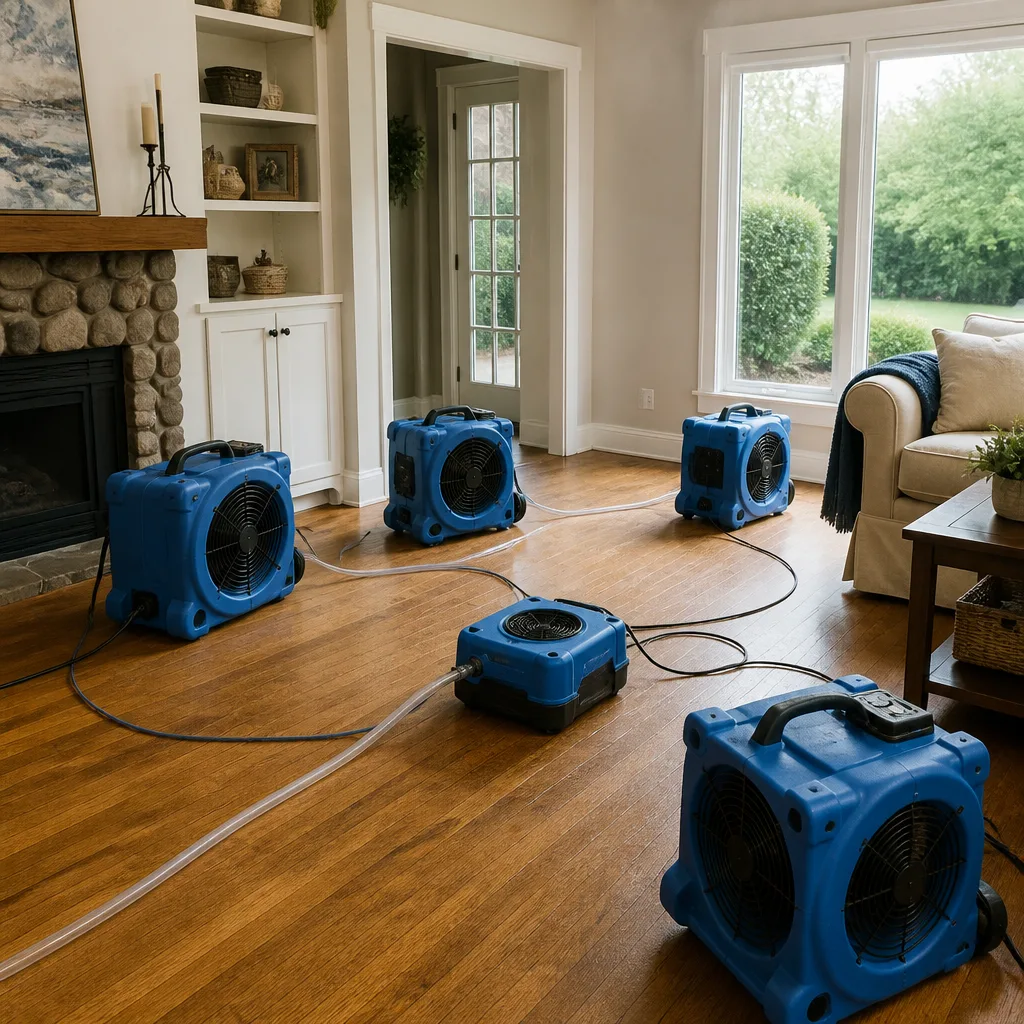 Water damage drying
 Fire & smoke cleanup
 Mold remediation
 Storm response
 Sewage cleanup
 Reconstruction
Free visual inspection and a written scope of work before any mitigation begins - photos, moisture readings, and drying logs go in your claim file
The scope we write is the scope we bill. Anything new gets shown to you, in writing, before we touch it.
Get your free estimateDIY vs Professional Damage Restoration: The Brooklyn Homeowner’s Decision Guide
A Brooklyn landlord dried out a flooded basement apartment with box fans and a rental dehumidifier, passed a visual inspection, and re-rented the unit. Eight months later, the tenant’s physician flagged mold-related respiratory symptoms, and the Department of Buildings complaint that followed triggered a full investigation. The remediation, legal fees, and tenant relocation cost more than twelve times what professional restoration would have cost on day one. This guide exists because that story is not rare in Brooklyn. What you’ll get here is a decision framework built on the actual risk factors in this borough: legal exposure, insurance policy language, and the hidden material conditions in pre-war buildings that turn a manageable DIY job into a hazmat situation without warning.
Restoration work we handle
Quick Answer
DIY damage restoration in Brooklyn is genuinely safe and cost-effective only for small, clean-water incidents confined to non-porous surfaces that you caught within hours, and where no rental unit, asbestos-era material, insurance claim, or structural component is involved. Everything else carries legal, financial, and health risk that outweighs the savings. If the water is anything but clean, if it touched drywall or flooring, if a tenant lives in the unit, or if you plan to file an insurance claim, professional restoration is the cheaper option when total cost is measured honestly.
Table of Contents
- The Four Conditions That Make DIY Restoration a Legal Liability in Brooklyn
- What Proper Drying Actually Requires: The Technical Standard You’re Trying to Hit
- How DIY Work Affects Your Homeowner’s Insurance Claim
- The Narrow Category of Work That’s Actually Safe to DIY
- The Hybrid Approach: Using a Professional Assessment to Scope Your Job
- Brooklyn-Specific Risks: Pre-War Materials, Climate, and Density
- The Real Cost Comparison: DIY vs Professional in Brooklyn
- Common Mistakes to Avoid
- When to Call a Professional
- Frequently Asked Questions
- The Bottom Line
The Four Conditions That Make DIY Restoration a Legal Liability in Brooklyn
The DIY versus professional debate usually gets framed around skill and cost. In Brooklyn, skill is the least important variable. The real question is whether your situation triggers legal exposure that no amount of competence can fix. Here are the four conditions that flip DIY restoration from a weekend project into a liability, regardless of how handy you are.
1. Rental Units
If you own a rental property in Brooklyn, you are not just a property owner. You are a housing provider subject to the New York City Housing Maintenance Code, the New York State Multiple Dwelling Law, and the implied warranty of habitability. A tenant who experiences water damage has rights that extend far beyond the repair itself. If mold develops because your drying was incomplete, and the tenant develops respiratory symptoms, you’re looking at DOB complaints, HPD violations, potential relocation costs, and personal injury exposure. The courts in Brooklyn do not accept “I did my best with a shop vac” as a defense. Landlords should treat any water event in a rental unit as a professional job by default. The legal standard is not whether you dried it to your satisfaction. It’s whether you dried it to an industry standard that holds up in Housing Court.
2. Category 3 Water
Water damage has three classifications. Category 1 is clean water from a supply line or faucet. Category 2 is significantly contaminated water, like washing machine discharge or sump pump failures. Category 3 is grossly contaminated water, including sewage backups, storm surge, and any floodwater that came from outside the building. In Brooklyn, Category 3 events are more common than homeowners realize. Combined sewer overflows during heavy rain push sewage into basement drains. Gowanus Canal-adjacent groundwater infiltration carries industrial contaminants. If you DIY a Category 3 event, you’re handling pathogenic material without the containment, PPE, and disposal protocols that New York requires. You’re also responsible for the legal disposal of contaminated materials. Put them in the regular trash and you’ve created a new violation.
3. Asbestos-Era Materials
Brooklyn’s housing stock is old. Tens of thousands of buildings in this borough predate 1980, and many predate World War II. That means plaster walls, pipe insulation, floor tiles, and adhesives that contain asbestos. When water damage soaks into these materials and you start ripping them out, you may be disturbing asbestos without knowing it. New York City has strict asbestos abatement rules under the Department of Environmental Protection. Disturbing asbestos without the proper surveys, certifications, and disposal manifests is a serious violation with substantial fines. Professional restoration companies in Brooklyn know to test before they tear out. DIYers usually don’t, because most homeowners never think about what’s inside their 1930s plaster.
4. Structural Involvement
Water that has been sitting for more than 48 hours, or water that has penetrated flooring to reach joists, subfloors, and sill plates, is no longer a drying job. It’s a structural mitigation job. In Brooklyn’s row houses and brownstones, floor systems are often shared with adjacent units. A leak that soaked through your floor may have already compromised the neighbor’s ceiling below. Structural drying requires specialized equipment and an understanding of how moisture moves through wood framing. Get it wrong, and you’ve created conditions for rot, warping, and structural weakening that will cost far more to repair later than the restoration would have cost now. And if the building shares walls or floors with other units, your DIY mistake becomes someone else’s problem, which in New York means it becomes your legal problem.
What Proper Drying Actually Requires: The Technical Standard You’re Trying to Hit
The term “proper drying” gets thrown around without much specificity. Here’s what it actually means, technically, and what you’re competing against when you decide whether to rent equipment from a hardware store.
Professional restoration contractors operate on a discipline called psychrometrics: the science of moisture, air, and heat. A technician doesn’t just run a fan and hope for the best. They take moisture readings from multiple depths in the affected materials, calculate the dew point and vapor pressure in the room, determine the volume of air that needs to be moved, and calculate the CFM (cubic feet per minute) of airflow and the pints-per-day dehumidification capacity required to hit a specific drying goal within a specific time frame.
The equipment requirement is where DIY approaches almost always fall short. A professional job typically involves air movers generating thousands of CFM, low-grain refrigerant dehumidifiers pulling 100-plus pints per day, and in some cases desiccant dehumidifiers for deep structural drying. The rental equipment most Brooklyn homeowners can access at a hardware store or equipment rental counter runs at a fraction of that capacity. A box fan moves air but contributes nothing to reducing vapor pressure. A small residential dehumidifier might pull 20 pints per day when the job needs 150.
What does this mean in plain terms? It means the surface dries, and the homeowner thinks the job is done, while the moisture trapped inside the drywall cavity, under the floor, and in the wall framing never drops below the threshold where mold can grow. That threshold is a moisture content of about 16 percent in wood and an equilibrium relative humidity at the surface below 60 percent. Hitting those numbers requires instruments: moisture meters, thermo-hygrometers, and infrared cameras. Those tools cost real money, and more importantly, they require training to use and interpret correctly.
This is where DIY restoration usually fails: not at the extraction stage, but at the verification stage. The homeowner can’t measure what they can’t see, so they declare victory based on touch. In our experience across Brooklyn, we’ve returned to homes where the drywall felt dry to the touch but registered 28 percent moisture content three inches below the surface. The mold that followed was invisible until it wasn’t.
How DIY Work Affects Your Homeowner’s Insurance Claim
Here’s a fact most Brooklyn homeowners don’t realize until it’s too late: your homeowner’s insurance policy contains documentation requirements that DIY restoration work cannot satisfy. This is not a matter of the insurer being difficult. It’s a matter of the policy language you agreed to when you bought the coverage.
Most homeowner’s policies require the policyholder to take reasonable steps to mitigate further damage, which you can do yourself. But they also contain language requiring you to provide proof of loss, which typically means a documented scope of the damage, itemized receipts for materials and labor, and evidence that the mitigation was performed to a professional standard. When you file a claim for water damage and you’ve done the drying yourself, the adjuster has every right to question whether the drying was done properly. If secondary damage like mold develops because of incomplete drying, the insurer may argue that the secondary damage was caused by your failure to mitigate, not by the original water event. That argument, in New York, has teeth.
Professional restoration companies document every step: initial moisture readings, daily drying logs, equipment placement records, final verification readings, and a written scope of loss. That documentation is formatted to support an insurance claim, because that’s how legitimate restoration companies operate. It answers the questions the adjuster is going to ask: How wet was it on day one? What equipment was deployed? What were the drying goals? When were those goals hit?
There’s another dimension to this. If you do the work yourself and save $4,000, but your claim is reduced by $9,000 because the adjuster can’t verify your mitigation, you didn’t save money. You lost $5,000. The insurance dimension doesn’t get talked about enough in the DIY-versus-pro debate, but in Brooklyn, where home values and repair costs are both higher than national averages, it’s often the deciding factor.
For more on how the process works from a professional standpoint, see our guide on Water Damage Restoration in Brooklyn.
The Narrow Category of Work That’s Actually Safe to DIY
We’re not going to pretend there’s no room for DIY. There is a narrow window of restoration work that is genuinely safe, legal, and cost-effective for Brooklyn homeowners to handle themselves. The key is knowing the boundary lines. Here they are.
Safe DIY scenarios:
- Category 1 water only: clean supply-line water, water heater overflow with clean water, or a pipe leak from a supply line. If the water came from a drain, a sewer line, or outside the building, stop.
- Small footprint: the affected area is less than about 10 square feet of non-porous surface, like tile, concrete, or sealed vinyl. Once water reaches drywall, carpet padding, or wood flooring, you’re in professional territory.
- Fresh event: you caught it within the first few hours, before water had time to wick up walls or soak through subfloors. Drying needs to start immediately, with the right equipment.
- No structural contact: water never touched wall cavities, floor joists, or ceiling assemblies. If it did, the drying equation changes completely.
- No rental unit: the property is owner-occupied. Landlord situations, as covered above, are always professional jobs.
- No insurance claim: you’re paying out of pocket for a small event and you’re not counting on a claim to cover anything.
For these limited scenarios, the DIY protocol is:
- Stop the source of the water first. Shut the supply valve or the main.
- Remove the standing water with a wet/dry vac. Extract as much as you physically can.
- Set up the most powerful fan you have and a dehumidifier rated for the room size. Run both continuously.
- Monitor the area for 72 hours and check for odor, discoloration, or any sign of warping. If any of those appear, stop and call a professional.
That’s the entire safe DIY envelope. It’s narrow for a reason: the margin for error in Brooklyn’s housing stock is small, and the cost of an error is large.
The Hybrid Approach: Using a Professional Assessment to Scope Your Job
Here’s a strategy most Brooklyn homeowners don’t consider, and it’s the one that often produces the best outcome: hire a professional to assess the damage and write the scope, then make an informed decision about what to handle yourself and what to hand off.
The logic is simple. The assessment is the part that requires the most specialized knowledge: moisture mapping, material classification, and a determination of the drying strategy. That’s where the professional’s value is highest. Once you have a written scope, you know exactly what’s involved. You know the category of water, the affected materials, the drying goals, and the equipment requirements. From there, you can make a rational decision.
A professional assessment in Brooklyn typically includes:
- Moisture readings taken from the affected surfaces and surrounding areas, including the structure behind and below the visible damage.
- A determination of the water category and class of water damage per IICRC standards.
- Identification of materials that need to be removed versus materials that can be dried in place.
- A written drying plan with equipment specifications and estimated timeline.
- An assessment of any health and safety considerations, including potential asbestos or mold exposure.
This hybrid approach saves money without creating liability. You might handle the extraction and initial drying yourself for a small Category 1 event, then bring in professionals for the verification reading and any necessary repairs. Or you might determine, based on the scope, that the job is beyond what you can handle safely, and hand the whole thing off with full knowledge of what’s involved. Either way, you’re making the decision from information, not from guesswork.
The 365-Day Done Right Promise matters here, too. If a professional restoration company writes a scope and performs the work, and the work fails within a year, you have a written guarantee you can invoke. That’s a level of accountability DIY work never provides. The full scope of water and fire restoration services at Keegan Restoration Brooklyn home reflects this approach.
Brooklyn-Specific Risks: Pre-War Materials, Climate, and Density
Brooklyn is not a generic restoration market. The borough has specific physical and regulatory conditions that change the DIY-versus-pro calculus. Here’s what makes Brooklyn different, and what you need to know as a homeowner here.
First, the housing stock. Brooklyn has some of the oldest continuously occupied housing in the United States. Brownstones and row houses built between 1880 and 1940 dominate neighborhoods like Park Slope, Bed-Stuy, Bay Ridge, and Crown Heights. These buildings have plaster walls with lath, old-growth timber framing, and materials that behave differently when wet than modern drywall and engineered lumber. Plaster holds water differently. Old-growth wood is denser and dries slower. The chemistry is different, and the consequences of getting it wrong are more severe.
Second, the density. Brooklyn’s attached housing means your water event rarely stays contained. A burst pipe in a third-floor Park Slope brownstone becomes a ceiling collapse in the second-floor unit the same day. Shared party walls transmit moisture horizontally. A basement flood in a Bed-Stuy limestone can push water into the foundation of the adjacent building. When you DIY restoration in attached housing, you’re not just managing your own risk; you’re managing your neighbor’s risk, and your neighbor’s neighbor’s risk. That changes the liability picture entirely.
Third, the climate. Brooklyn’s humidity levels from June through September are high, and the temperature swings in spring and fall create condensation conditions that slow drying. Professional drying calculations account for ambient vapor pressure, which runs higher in Brooklyn than in most of the country. Consumer-grade equipment in a Brooklyn summer is often working against ambient conditions it can’t overcome.
Fourth, the building code and regulatory environment. New York City’s building code, DOB rules, HPD requirements, and DEP asbestos regulations create compliance layers that most homeowners don’t know exist until they’re cited. A professional restoration company operating in Brooklyn is familiar with these requirements. A homeowner with a shop vac is not.
For properties in Brooklyn affected by fire, the same material and code considerations apply. See our dedicated guidance on Fire Damage Restoration in Brooklyn for the full picture.
The Real Cost Comparison: DIY vs Professional in Brooklyn
Let’s put real numbers on this, because the cost question is usually where the DIY argument starts, and it’s where the math is most often wrong.
Small Category 1 event, 50 square feet of tile floor in a bathroom, caught immediately:
- DIY cost: $75 wet/dry vac, $40 fan, $150 dehumidifier rental for one week, $30 cleaning supplies. Total: roughly $295, plus your time.
- Professional cost: $600 to $1,200 for extraction, drying, and verification.
- Verdict: DIY can make sense here, within the narrow scope limits outlined above.
Moderate Category 1 event, water spread across a finished basement with drywall, carpet, and baseboard contact:
- DIY cost: $500-plus in rental equipment, materials to cut and remove damaged drywall, potential mold products, and multiple weekends of labor. But the real risk is the mold that develops because the wall cavities weren’t dried.
- Professional cost: $2,500 to $6,000 for proper extraction, demolition, drying, and verification.
- Verdict: the DIY savings evaporate when the follow-up mold remediation costs $8,000 to $15,000, which is the realistic outcome when cavity moisture isn’t eliminated.
Category 3 sewage backup in a Brooklyn basement:
- DIY cost: PPE, cleaning supplies, disposal fees, and your time. Also your health, legal exposure, and the cost of disposing of contaminated materials properly.
- Professional cost: $4,000 to $10,000, including containment, disinfection, material removal, proper disposal, and drying.
- Verdict: this is never a DIY job. Ever.
The pattern is consistent. DIY wins on small, clean, fresh, non-porous, no-claim, no-tenant jobs. The moment any one of those conditions changes, the expected value calculation flips hard toward professional restoration. And in Brooklyn, the flip point comes sooner than in most markets because the regulatory and structural stakes are higher.
Mold is where the delayed cost is most brutal. See our Mold Remediation in Brooklyn page for what happens when a DIY drying job goes wrong and the mold takes hold.
Common Mistakes to Avoid
- Declaring victory by surface touch. Drywall that feels dry on the surface can carry 25 percent moisture content inside the cavity. Moisture meters exist because touch lies. If you didn’t measure, you didn’t verify.
- Using a residential dehumidifier on a structural drying job. The 20-pint dehumidifier from the hardware store is running at a fraction of the extraction capacity a 150-pint professional unit delivers. The math doesn’t close, and the mold doesn’t care how hard you tried.
- Skipping the moisture mapping stage entirely. Water moves downward and sideways through capillary action. If you dry only the visible wet spot, you leave the hidden migration paths untouched.
- Filing an insurance claim after doing DIY mitigation without documentation. The insurer will ask for proof of mitigation. If you can’t provide it, your claim is weaker, and the savings you thought you captured disappear in the claim adjustment.
- Treating sewage water as if it’s rainwater. Category 3 water contains pathogens that require professional containment, PPE, and disposal. Cleaning it up yourself and throwing the towels in the regular trash creates a public health issue and a legal one.
- Ignoring the neighbor problem in attached housing. In a Brooklyn brownstone, your water event is the neighbor’s water event. DIY work that doesn’t account for shared walls and floors is a liability you carry into court.
- Cutting into walls before checking for asbestos. Pre-war Brooklyn buildings frequently contain asbestos in plaster, insulation, and adhesives. The time to test is before you open the wall, not after you’ve disturbed it.
When to Call a Professional
You should call a professional restoration company when any one of these conditions applies: the water is Category 2 or Category 3, the affected area includes drywall or flooring, water has been sitting for more than 48 hours, the property is a rental unit with tenants, you intend to file an insurance claim, the building was constructed before 1980 and you can’t rule out asbestos, or the water has touched structural components like joists, studs, or subflooring. That covers the majority of real-world Brooklyn water events. If you’re uncertain whether your situation qualifies, get a professional assessment before you start ripping things out, or consult our Water Damage Restoration Maintenance Checklist for Brooklyn Homeowners to evaluate your risk. The assessment cost is small compared to the cost of a wrong decision. Keegan Restoration Brooklyn offers free estimates in Brooklyn. Call (607) 325-7185 and we’ll help you scope the job properly, whether you end up doing some of the work yourself or handing it all to us.
Frequently Asked Questions
Professional water damage restoration in Brooklyn typically ranges from $600 to $1,200 for small Category 1 events up to $4,000 to $10,000 for Category 3 sewage backups requiring containment and full mitigation. The exact price depends on the water category, affected materials, square footage, and whether structural drying is required. Call (607) 325-7185 for a free estimate specific to your situation.
You can use a shop vac and fans only for small Category 1 water events on non-porous surfaces caught within the first few hours. If the water touched drywall, carpet, or wood, or if it’s been sitting for more than a few hours, consumer equipment cannot achieve the drying standard required to prevent mold, and professional equipment is necessary.
Your insurance may cover the damage, but DIY mitigation without professional documentation weakens your claim. Policies require proof of loss and reasonable mitigation. If secondary mold damage develops because the drying was incomplete, the insurer may argue that your mitigation failure caused the secondary damage. Professional documentation protects your claim.
Water damage is the initial event. Mold is the secondary consequence that develops when moisture remains in materials for 48 to 72 hours or longer. In Brooklyn’s humid climate, that window is often shorter in summer. If you address water damage properly and completely, mold won’t develop. If the drying is incomplete, mold is nearly guaranteed.
Brooklyn landlords should hire professionals for any water damage in rental units because they face legal exposure beyond the repair itself. The implied warranty of habitability, NYC Housing Maintenance Code requirements, and potential HPD or DOB complaints mean landlord DIY restoration carries financial and legal risk that far exceeds any savings.
Professional restoration companies that operate with 24/7 dispatch can typically respond to Brooklyn water emergencies the same day, often within hours. Speed matters because every hour of standing water increases the affected area and the cost. A live person answers at (607) 325-7185, 24 hours a day, 7 days a week.
The Bottom Line
DIY restoration in Brooklyn has a narrow safe zone. Small, clean, fresh water on non-porous surfaces, no rental units, no insurance claim, no structural involvement, no pre-war materials. Outside that zone, the risks stack up fast: legal exposure in rental properties, health hazards from Category 3 water, asbestos disturbance in old buildings, neighbors affected through shared walls, insurance claims weakened by poor documentation. The real cost math isn’t the receipt from the hardware store. It’s the total cost measured six months later, when the mold shows up, the claim gets reduced, or the DOB complaint arrives. Professional restoration puts the price in writing before work starts and backs the work with a written guarantee. That’s the standard worth holding to in Brooklyn.
Written by Shane Pruitt, Owner at Keegan Restoration Brooklyn, serving Brooklyn since 2005.
Need help now? Call (607) 325-7185 for a free estimate. A live person answers, 24/7.
See the difference
 Before
 After
After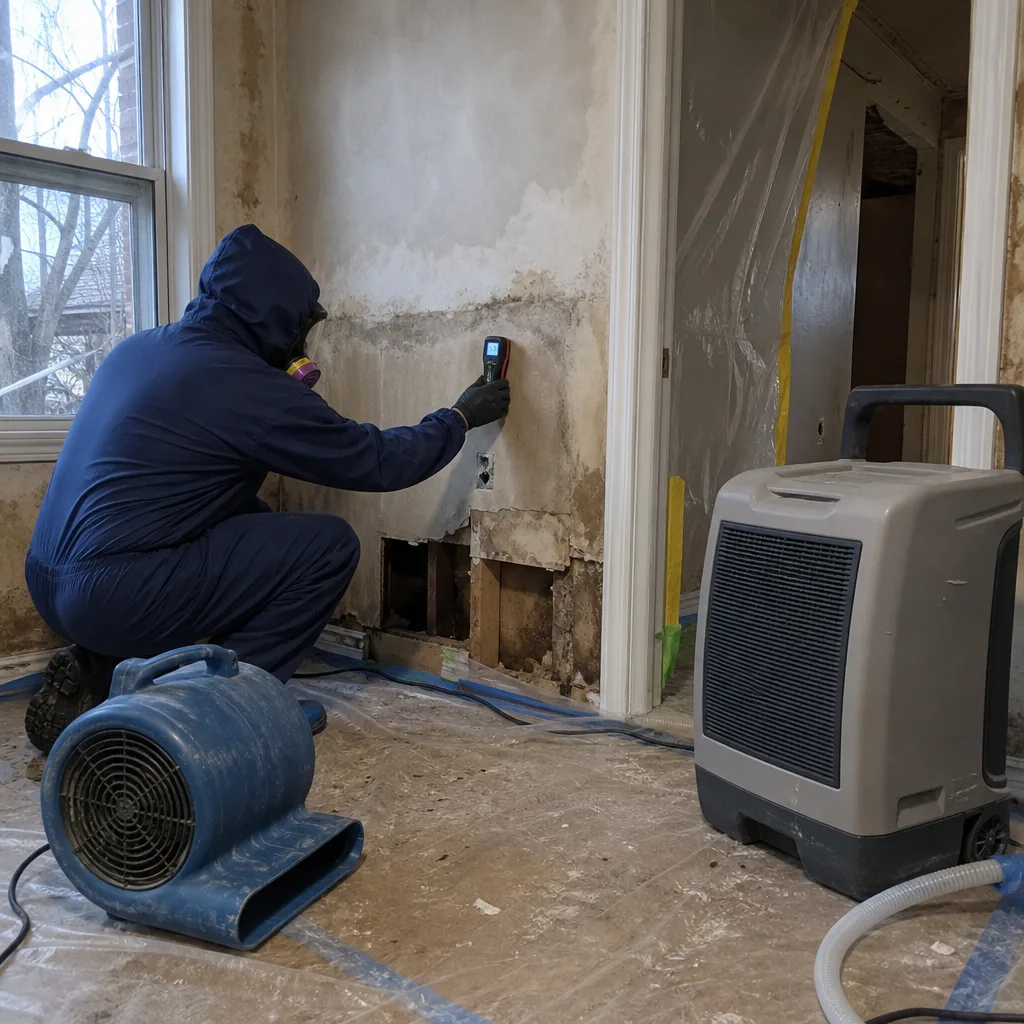 Before
 After
After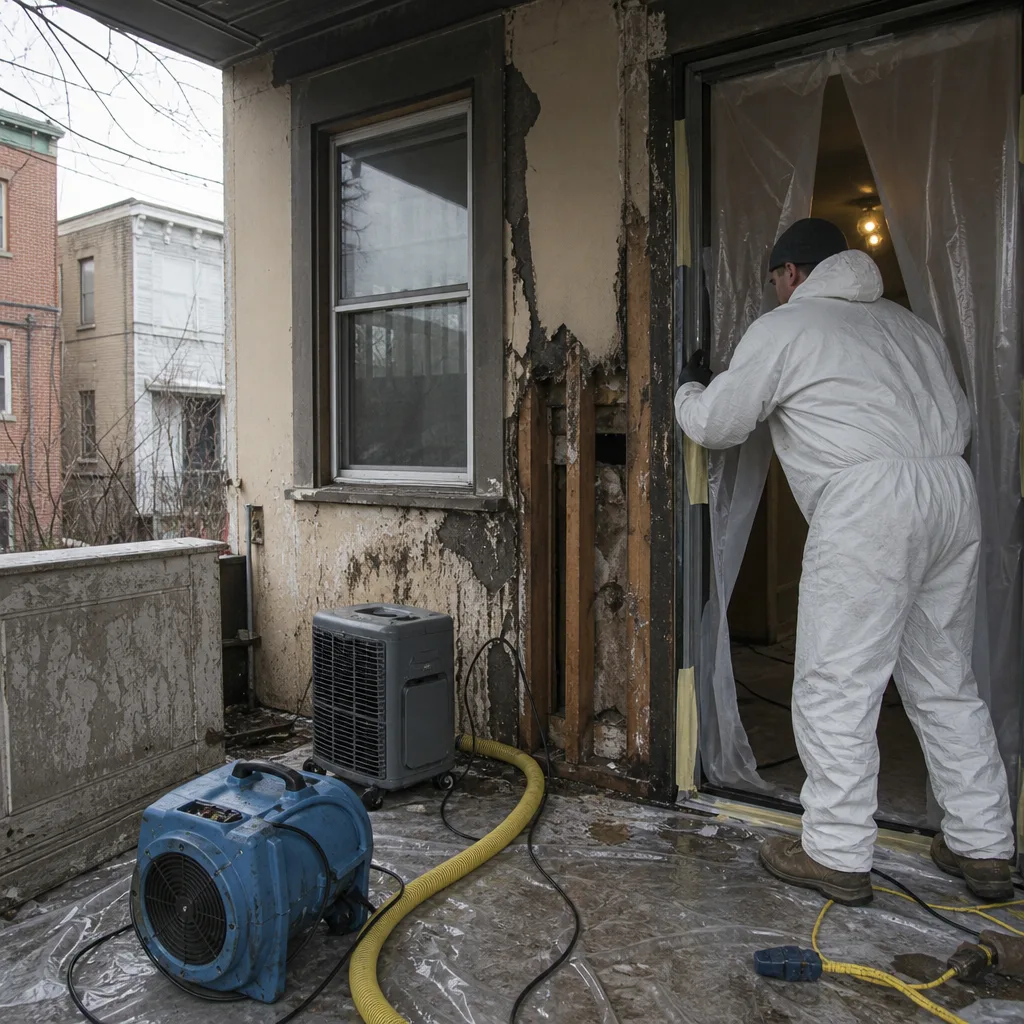 Before
 After
After