
 Mold remediation
 Water damage drying
 Fire & smoke cleanup
 Storm response
 Sewage cleanup
 Reconstruction
Free visual inspection and a written scope of work before any mitigation begins - photos, moisture readings, and drying logs go in your claim file
The scope we write is the scope we bill. Anything new gets shown to you, in writing, before we touch it.
Get your free estimateFast, Reliable Mold Remediation Across Park Slope
Mold remediation in Park Slope costs between $1,800 and $6,500 for a typical brownstone project, with inspections running $350 – $600. We dispatch crews to Park Slope same-day or next-morning, and a live person answers when you call (607) 325-7185. The older the building, the faster mold moves through plaster and wood lath, so we treat every Park Slope call as time-sensitive.
Our Mold Remediation team works inside 1880s – 1910s brownstones and limestone row houses every week. We know what hides behind original plaster, how shared party walls behave, and what the Landmarks Preservation Commission requires before tear-out starts. That local working knowledge changes how we scope, contain, and dry a Park Slope job from day one.
Why Keegan Restoration Brooklyn Is Park Slope’s Preferred Mold Remediation Company
Park Slope homeowners call us because we run every job to the Garrison Standard: the price goes in writing before any work starts, technicians arrive background-checked and in uniform, and every repair carries the 365-Day Done Right Promise, a written one-year guarantee with a free return visit if the work fails. We don’t move the number at the door and we don’t send whoever happens to be available.
Our crews know Park Slope’s geography cold. We park and stage equipment on narrow streets off 5th and 7th Avenues without blocking building entrances, and we coordinate with supers and co-op boards on multi-unit losses. We’ve handled mold jobs along Prospect Park West, in the Center Slope historic district, and through the blocks between Grand Army Plaza and 15th Street. That local familiarity means faster containment and fewer surprises.
Shane Pruitt leads our Brooklyn operation, and he holds every crew to the same standard on a parlor-floor ceiling as on a full basement tear-out. We document every job with photos and moisture readings formatted to support your insurance claim, and we’ll talk directly with your adjuster if that helps move things along.
Restoration work we handle
Mold Inspection in Park Slope
Mold Inspection in Park Slope typically costs $350 – $600 and includes visual assessment, moisture mapping, and air or surface sampling where conditions warrant it. In a brownstone, the inspection has to account for what you can’t see: cavities behind plaster, joist pockets, and the shared wall between you and the neighbor. We don’t just swab a stain. We trace the moisture source.
A Park Slope homeowner should order an inspection when staining appears on a ceiling below a bathroom, when a musty smell persists after a leak was “fixed,” or when a neighbor’s leak has visibly crossed a party wall. You should also inspect before buying or selling a brownstone unit, since hidden mold in original joist pockets is a common deal-breaker at the inspection table.
Moisture Mapping and Source Tracing
We use moisture meters and thermal imaging to find where water is actually moving, not just where it stained. In Park Slope’s wood-joist row houses, a stain on a parlor ceiling often traces back to a failed wax ring or tub overflow two floors up, traveling along cast-iron waste stacks. Finding the real source stops remediation from being a temporary patch.
Air and Surface Sampling
When a Park Slope unit has had chronic dampness or a neighbor’s leak, we run air samples to measure spore counts against outdoor baselines. Surface samples identify the specific mold species present. The results tell us whether containment can be local or whether the whole floor needs negative air pressure.
Mold Removal Specialist in Park Slope
A Mold Removal Specialist in Park Slope handles everything from a single bathroom wall cavity to a full parlor-floor ceiling after a Category 2 or 3 water event, with most jobs running $2,500 – $6,500 depending on square footage and how much original plaster must come out. The work requires containment, negative air, controlled demolition of affected material, antimicrobial treatment, and structural drying to a documented standard. It’s not a cleaning service, and in a landmarked brownstone it’s also a preservation exercise.
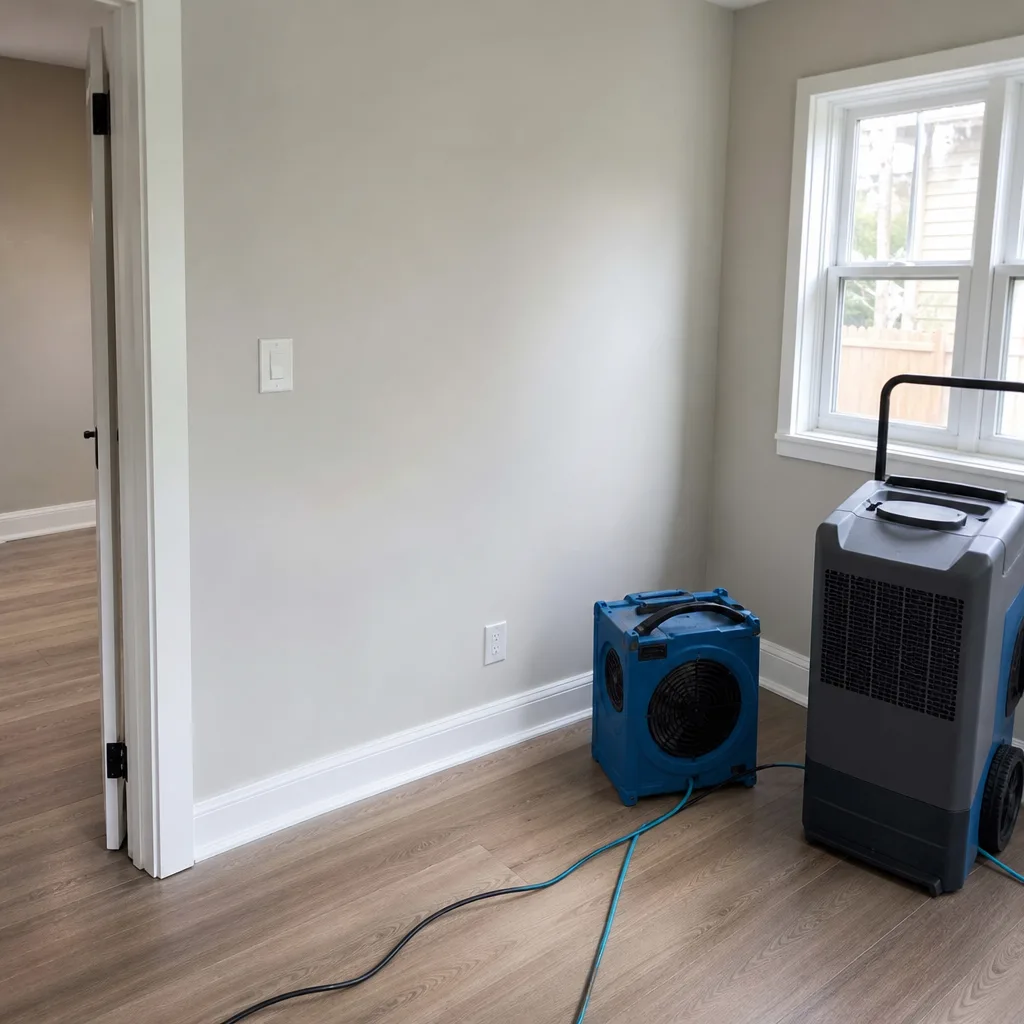
When LPC rules block full tear-out of wet original plaster, we adapt: small access cuts, injection drying behind the lath, and Dri-Eaz dehumidifiers running in containment until readings confirm the cavities are dry. That takes longer and costs more than gutting drywall, which is exactly why a Park Slope-specific scope matters.
Containment and Controlled Demolition
We build containment with negative air pressure so mold spores don’t travel through the rest of the house during tear-out. In a brownstone, that means sealing stairwells, sealing return vents, and protecting original woodwork and plaster details we’re not removing. Controlled demolition takes out only what’s contaminated, nothing more.
Structural Drying and Antimicrobial Treatment
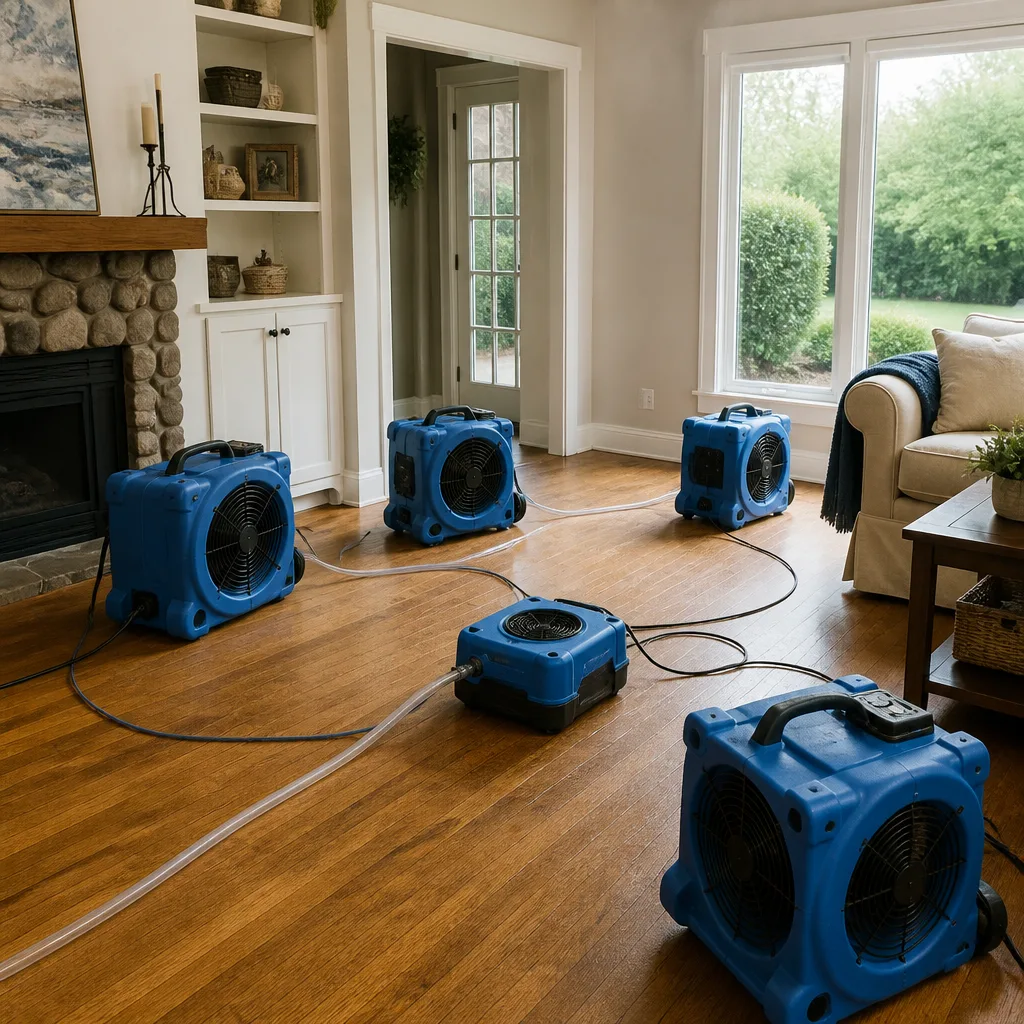
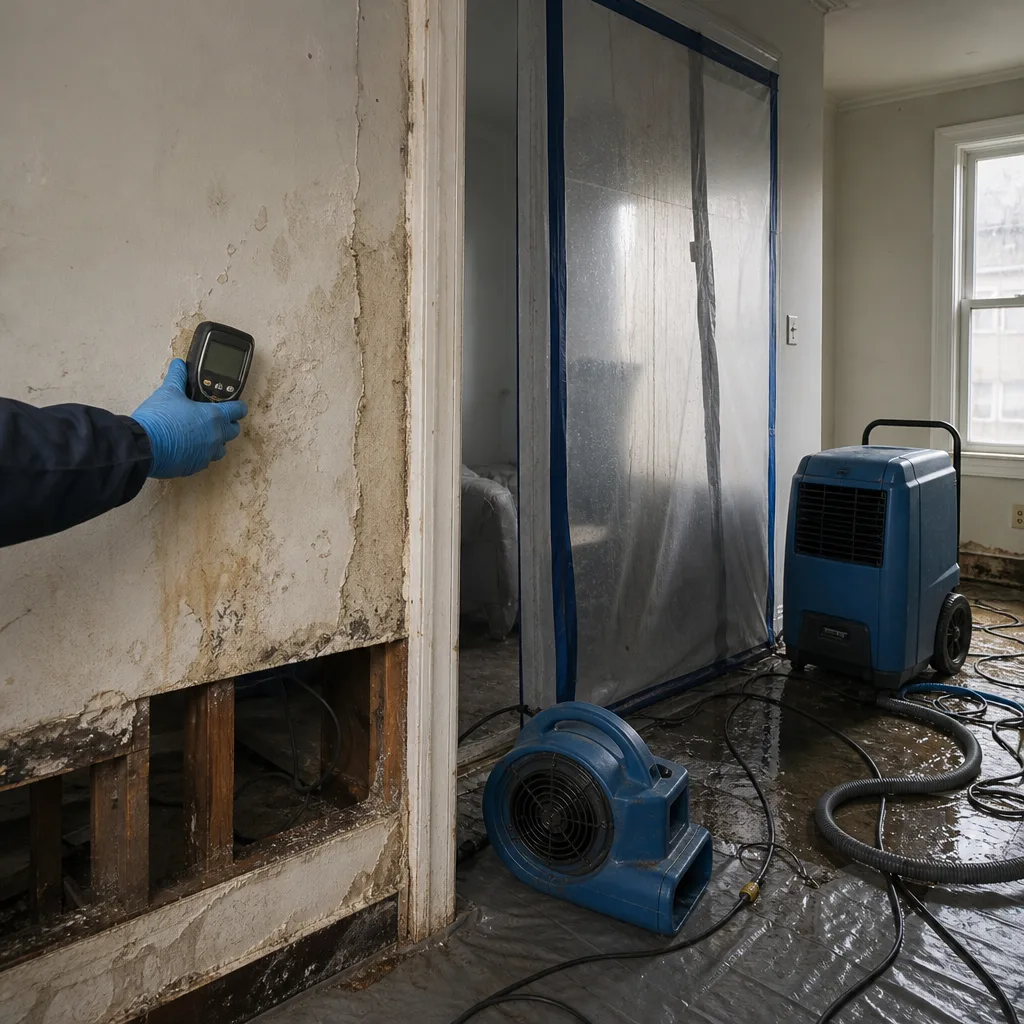
After affected material comes out, we dry the remaining structure with professional-grade equipment. Dri-Eaz dehumidifiers and air movers run to psychrometric targets, not to a timer. Once readings show the cavities are dry, we apply antimicrobial treatment and document everything before rebuild starts. Every step is recorded to support an insurance claim.
Trusted Brands We Service in Park Slope
We stock and run professional-grade equipment from Dri-Eaz, Phoenix, XPOWER, B-Air, and Injectidry, the same brands specified in IICRC-standard restoration work. Our techs train to IICRC, RIA, and IFA standards, and we keep replacement filters, sampling media, and drying accessories on our trucks so a Park Slope job doesn’t stall waiting on parts. When you call, a live person answers and dispatches a crew that already has what the job needs. That’s the difference between a same-day containment and a two-day delay while mold keeps growing behind the plaster.
See the difference
 Before
 After
After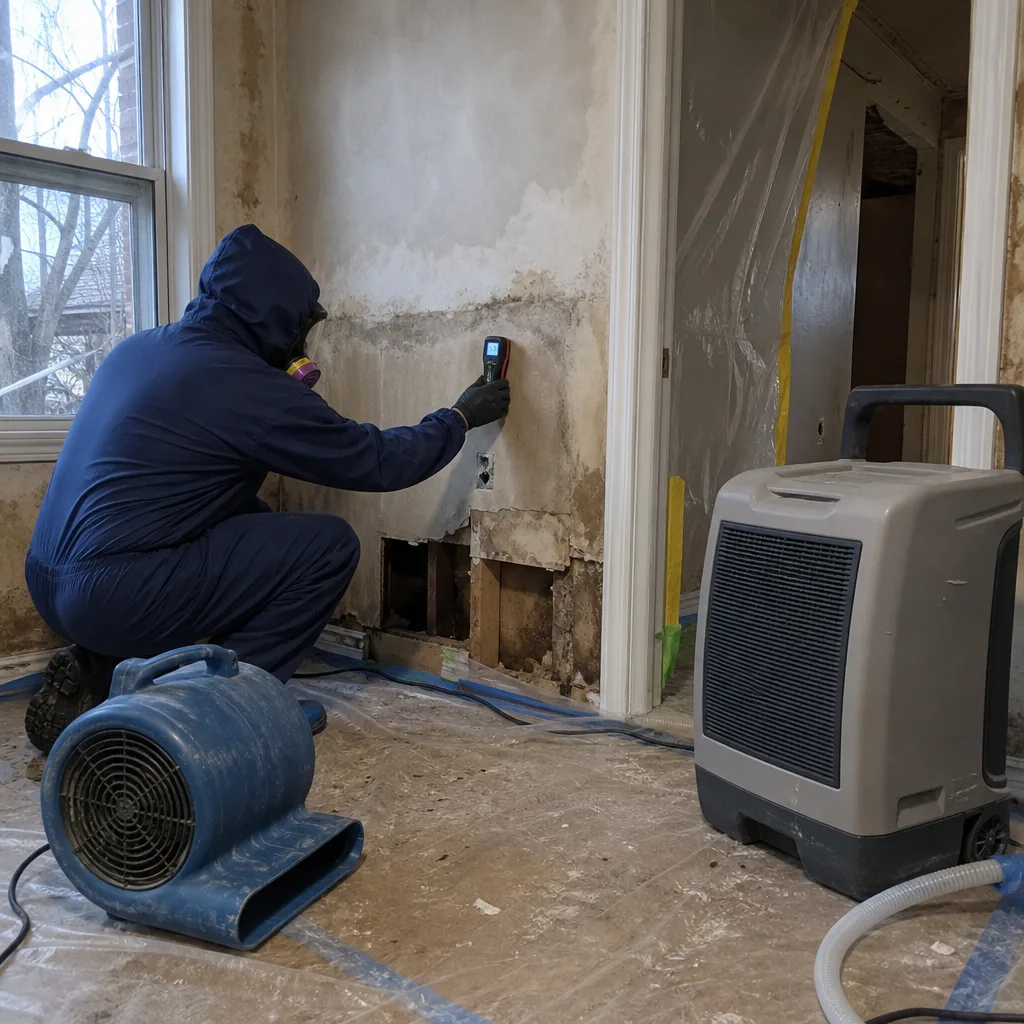 Before
 After
After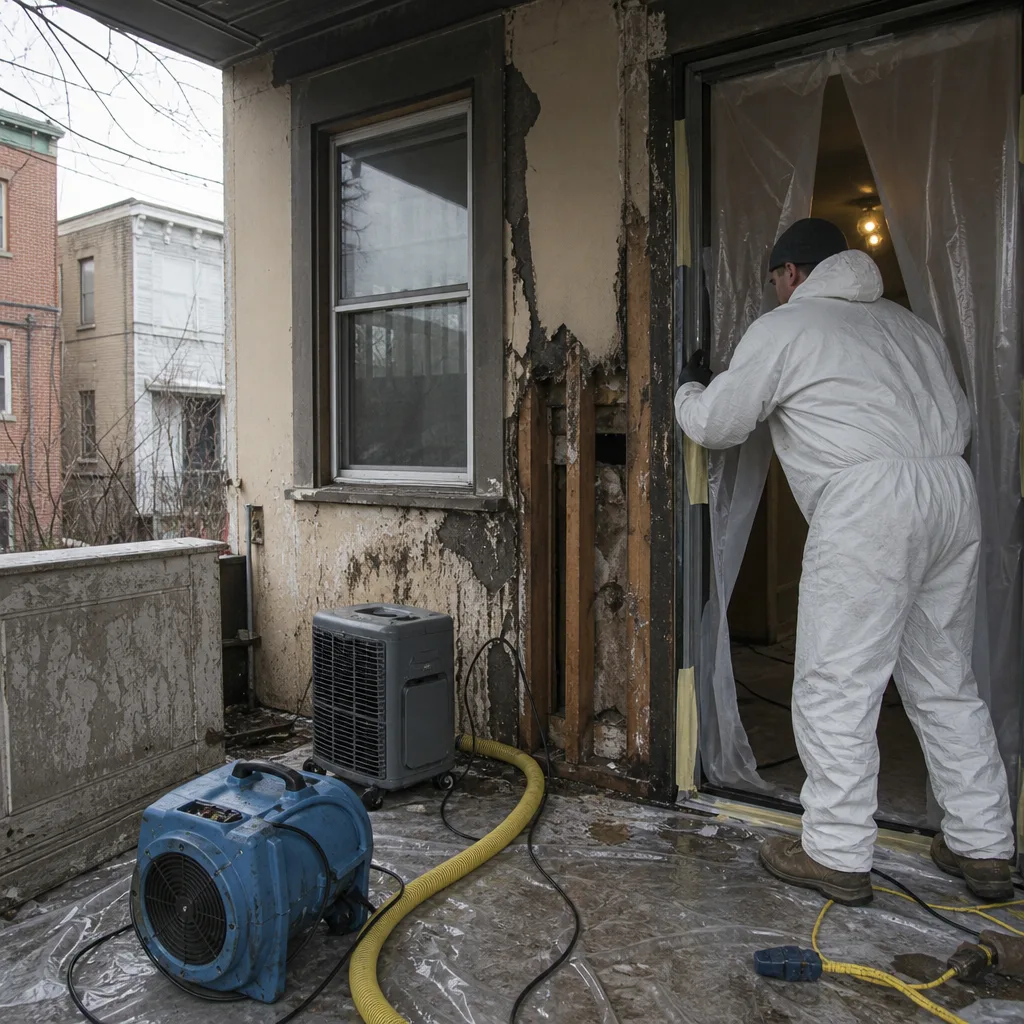 Before
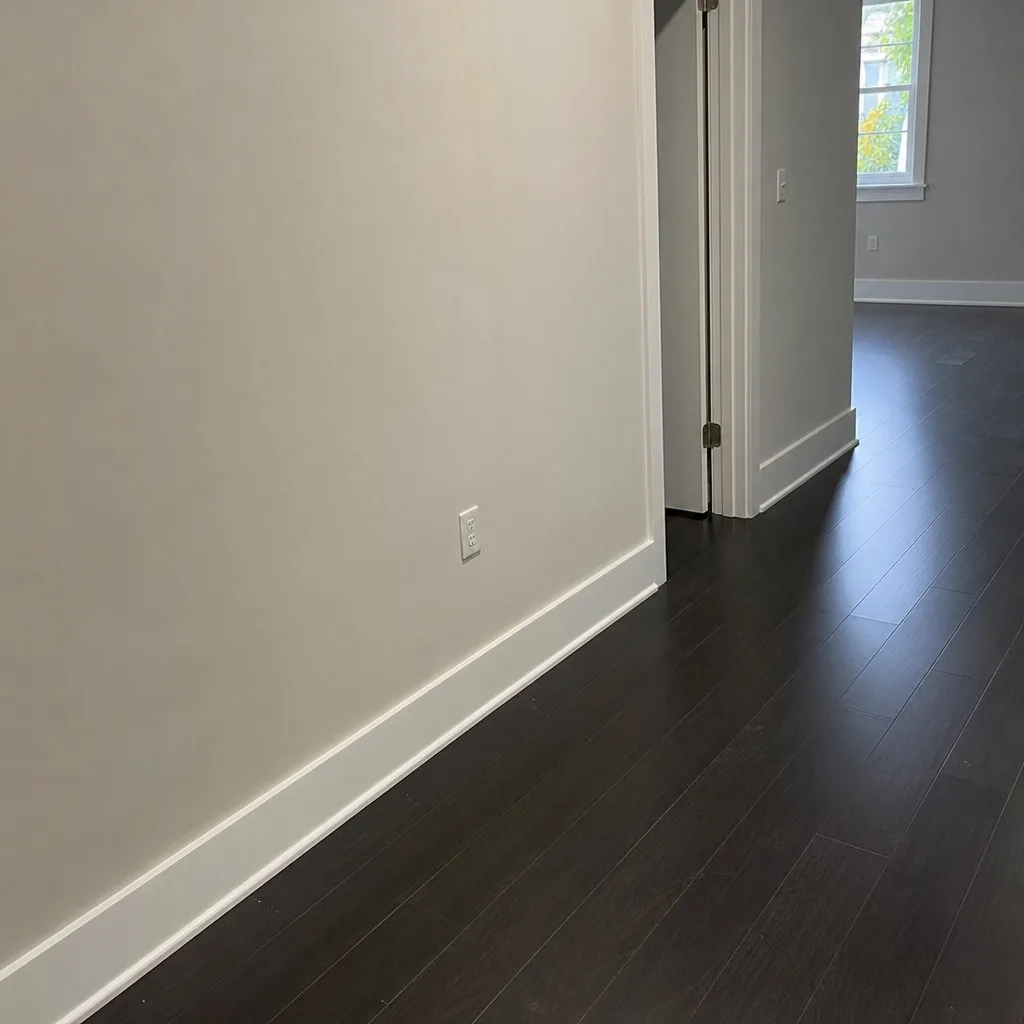 After
AfterCommon Mold Remediation Problems We See in Park Slope Homes
- Legacy plumbing failures behind original plaster. Galvanized supply lines and cast-iron DWV couplings from the 1890s – 1910s fail without warning, feeding moisture into wall and ceiling cavities for weeks before staining shows. By the time you see it, the mold colony is established.
- Shared party wall moisture migration. Brownstones share masonry walls, and vapor or bulk water from a neighbor’s leak moves through those walls into your joist pockets. Containment on your side alone won’t stop recontamination if the neighbor’s source is still active.
- LPC approval delays on wet plaster tear-out. Landmarks Preservation Commission review can add days before wet original plaster can be removed. Mold doubles every 24 – 48 hours in warm, damp cavities, so we start containment and drying immediately while the approval process runs.
- Shallow basement foundations and high water table. Park Slope basements sit close to the water table, and combined sewer backups during summer thunderstorms push category 3 water into ground floors. These basements need aggressive structural drying and often need ongoing humidity control to prevent recurrence.
Pricing for Mold Remediation in Park Slope, NY
A mold inspection in Park Slope runs $350 – $600. Targeted removal from a single bathroom or closet cavity runs $1,800 – $3,200. A full parlor-floor ceiling or basement-level remediation typically lands between $4,000 and $6,500, depending on square footage, LPC constraints, and whether original plaster must be preserved or removed. Party-wall involvement from a neighboring property pushes costs higher because containment and drying must run longer. Every quote is written and delivered before work starts. Call (607) 325-7185 for a free estimate with specific numbers for your building.
We Also Serve Cities Near Park Slope
Beyond Park Slope, we run mold remediation jobs in Brooklyn, New York, Elmhurst, and Forest Hills. Our Park Slope crews cover the whole borough, and we dispatch from our New York City office with the same written pricing and 365-Day Done Right Promise on every job, no matter the neighborhood.
Serving Park Slope, NY - Our Local Coverage Area
We’re based in the Park Slope area and know this community well. Use the map below to see our service coverage - if you’re nearby, we can almost certainly help.
FAQs About Mold Remediation in Park Slope
We start with a moisture assessment to define the contaminated area precisely, then build containment and run negative air so spores don’t spread. Where LPC rules require preserving original plaster, we make small access cuts and dry behind the lath with Dri-Eaz dehumidifiers rather than tearing out whole walls. When plaster must come out, we cut clean edges and document every detail for your LPC file. Call (607) 325-7185 to have a crew walk your building and explain the exact approach for your plaster.
Yes. We remediate your side of the party wall under containment and document the moisture migration path so your insurance claim and the neighbor’s claim can move forward. The caveat is that recontamination will keep happening until the neighbor’s source is fixed, so we’ll coordinate with their contractor or co-op board where needed. We’ve handled many multi-building losses in Park Slope where a failed wax ring two floors up soaked three adjacent brownstones through shared masonry.
Category 2 gray water from failed wax rings, tub overflows and washing machine discharge is the most common source we see in Park Slope mold cases, followed by Category 3 sewage backups in basements during combined sewer overflow events. The category matters because it determines the antimicrobial protocol, the extent of material removal, and what your insurer will cover. We classify the water and document it so your claim reflects the right scope.
It will return if the moisture source isn’t controlled, no matter how thorough the remediation. In Park Slope basements, that usually means a combination of a functioning sump pump, a dehumidifier sized for the space, and repairing any foundation cracks or sewer backflow issues. We can install and calibrate humidity controls as part of the scope, then back the repair with the 365-Day Done Right Promise. Call (607) 325-7185 for an assessment of your specific basement conditions.
It depends on the scope and whether the building is individually landmarked or inside a historic district. Removing contaminated plaster or original fabric from interior spaces sometimes triggers LPC review, especially if the work is visible from the street or affects protected interior features. We prepare the documentation and work with your architect or expediter so the tear-out starts as fast as the rules allow. We’ve managed this process on multiple Park Slope landmarked brownstones and know which scopes need a permit and which don’t.
Written by Shane Pruitt, Owner at Keegan Restoration Brooklyn, serving Park Slope mold remediation with written pricing and the 365-Day Done Right Promise.