
Last updated October 16, 2026
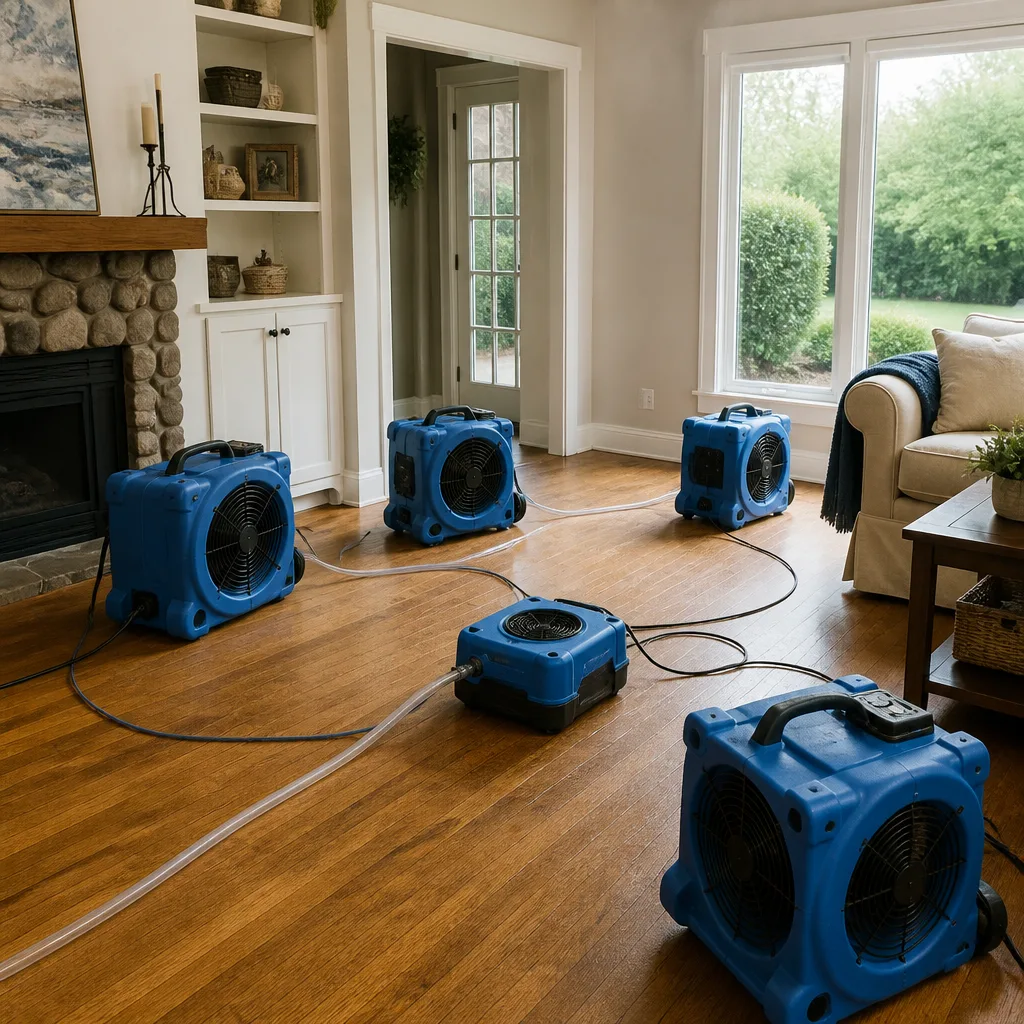 Water damage drying
 Fire & smoke cleanup
 Mold remediation
 Storm response
 Sewage cleanup
 Reconstruction
Free visual inspection and a written scope of work before any mitigation begins - photos, moisture readings, and drying logs go in your claim file
The scope we write is the scope we bill. Anything new gets shown to you, in writing, before we touch it.
Get your free estimateDamage Restoration Warning Signs: A Brooklyn Homeowner’s Reference Guide
Efflorescence, that chalky white mineral deposit creeping up a basement wall, looks like a cosmetic nuisance. In a Brooklyn brownstone with a shared party wall, it’s often the first visible evidence that water has been moving through the foundation for months. The next stages are spalling brick, compromised mortar joints, and a restoration bill that begins at five figures. Most warning-sign guides are written for suburban frame houses with siding and crawl spaces, so check out our more guides & resources tailored to urban masonry. This one is written for Brooklyn: pre-war masonry, row houses, co-ops, and the particular ways water, fire, and mold announce themselves in a hundred-year-old building. You’ll learn what each warning sign actually looks like in person, what it means, whether it’s an emergency or a monitor-and-wait situation, and when to call a professional.
Restoration work we handle
Quick Answer
The most reliable early warning signs of damage restoration problems in a Brooklyn home are white mineral deposits (efflorescence) on masonry walls, a persistent musty smell that sharpens after rain, ceiling stains with defined edges or brown rings, and doors or windows that suddenly begin to bind. Efflorescence and binding indicate active water movement through structural materials. A musty odor concentrated in one room signals hidden mold. Ceiling stains with recurring rings mean an active leak, not a dried one. If you see any of these, the damage is already underway and the cost of delay rises every week.
Table of Contents
- Efflorescence, Spalling, and Mortar Erosion: What Water Does to Brooklyn Masonry
- The Smell Test: Active Mold Versus Old Mold Behind Plaster Walls
- Reading Ceiling Stains: Plumbing, Roof, or HVAC Condensate
- Doors and Windows That Bind: Structural Movement From Water-Damaged Joists
- Triage: Emergency Response, Scheduled Inspection, or Owner Monitoring
- Party Walls and Co-op Rules: What Brooklyn Homeowners Need to Know
- What Brooklyn Restoration Work Actually Costs
- Common Mistakes to Avoid
- When to Call a Professional
- Frequently Asked Questions
- The Bottom Line
Efflorescence, Spalling, and Mortar Erosion: What Water Does to Brooklyn Masonry
Efflorescence is the white, powdery or crystalline deposit that appears on brick, brownstone, or concrete block walls. It forms when water moves through masonry, dissolves natural salts inside the material, and carries them to the surface. When the water evaporates, the salts remain. The deposit itself is not structurally dangerous. What it indicates is. In our experience across Brooklyn, efflorescence on an interior basement wall or a first-floor party wall means water has established a regular pathway through the masonry. The source might be a leaking parapet, failed roof flashing, a stopped-up yard drain against the foundation, or rising groundwater through a failed footing drain. The efflorescence is the message, not the problem.
Spalling is the next stage. When water saturates brick or brownstone and Brooklyn winters cycle through freeze and thaw, the face of the masonry pops off. You’ll see brick faces on the sidewalk, pitted areas on the brownstone facade, or chunks of mortar missing between bricks. Spalling is always a sign of long-term water intrusion. It is never a surface blemish. Once spalling begins, the structural integrity of the wall is compromised. The repair is no longer a repointing job; it’s a reconstruction project, and the cost reflects the difference.
Mortar joint erosion runs on the same timeline but is easier to overlook. Run a finger along the mortar between bricks in your basement or along the exterior at grade level. If the mortar crumbles to sand, it has been washed out from the inside. Repointing that section without fixing the water source is a waste of money. The mortar will fail again within a season or two. A masonry contractor or a restoration firm that understands Brooklyn building stock will trace the water before touching a trowel; our guide on How to Hire a Damage Restoration Contractor in Brooklyn: A Step-by-Step Guide explains what to look for.
The Garrison Standard that governs every job at Keegan Restoration Brooklyn home starts with the same principle: find the source of the water before writing a scope of work. We don’t patch over evidence. We follow it.
The Smell Test: Active Mold Versus Old Mold Behind Plaster Walls
Active mold has a specific smell profile. It’s sharp, earthy, and slightly sour, like wet leaves packed in a plastic bag. It intensifies within hours of rain or high humidity. Old mold that has been remediated and is no longer active smells faintly musty, flat, and stale, like an old paperback book. It does not change with weather. The difference matters because active mold means there’s a live water source feeding it right now. Old mold residue, assuming the original water source was actually fixed, is an odor issue and a possible air-quality concern, not an active invasion.
Behind plaster walls in Brooklyn row houses, mold usually establishes in the wall cavity where it’s invisible from the living space. What you notice first is the smell. It tends to concentrate in one room or along one wall and gets stronger when the heat kicks on in winter and the air pressure inside the wall pushes out. You may also notice paint bubbling, wallpaper peeling at the seams, or a soft, chalky feel to the plaster itself. All three are evidence that moisture has been trapped inside the wall long enough for fungal growth to begin.
If the smell is strong, the standard protocol is to open a small inspection hole and look. The mold industry, operating under IICRC standards, classifies contamination by square footage. Under ten square feet is a minor job. Over thirty square feet requires containment, negative air pressure, and professional remediation. The key is to investigate before you decide whether it’s an emergency or a scheduled project. If you open the wall and the framing behind the plaster is black, snap a photo, close the wall if you can, and call a professional. Do not sand it, spray it with bleach, or run fans on it. Disturbing a large mold colony without containment spreads spores through the house.
Shane Pruitt, owner at Keegan Restoration Brooklyn, tells homeowners the same thing on every mold call: “The smell is information. Don’t cover it with air freshener. Follow it.”
Reading Ceiling Stains: Plumbing, Roof, or HVAC Condensate
Ceiling stains are one of the most misdiagnosed warning signs in Brooklyn homes. The pattern, location, and behavior of the stain tell you what kind of leak you’re dealing with, and that determines which contractor should be on the phone.
A plumbing leak from a supply line or a drain pipe typically produces a small, concentrated stain that grows darker over days, not months. It sits directly below the fixtures, tubs, or radiators on the floor above, or follows the pipe chase. The stain often has a brownish center with a yellow outer ring and a defined edge. If you live in a co-op or condo, the leak may originate in the unit above you. The stain appears and grows regardless of weather.
Roof intrusion, common in Brooklyn brownstones and row houses with flat or low-slope roofs, usually shows up as a wide, irregular stain near an exterior wall, a skylight, a roof drain, or a bulkhead. It often worsens after rain and may grow over weeks or months as water collects in the membrane and moves slowly across the ceiling. In a heavy storm, you may see dripping. In a slow leak, you see only the stain, and it may fade and darken again with the weather. Brown rings repeating inside the stain indicate successive cycles of wetting and drying. That’s an active, intermittent leak.
HVAC condensate and mechanical issues produce a different signature. Condensate from an air handler or ductwork in a ceiling plenum leaves a stain that is cold to the touch during cooling season and may appear suddenly during a heat wave when the system runs hardest. The stain is often near a vent or along the path of ductwork and has no brown ring. Condensate is cleaner than roof or plumbing water, so the stain looks more like dried tea than dark brown coffee.
How to Read a Ceiling Stain
- Circle the stain with a pencil. Mark the edge on the ceiling. Check it daily for a week. If the stain grows past the pencil line, the leak is active.
- Feel the stain. Wet and soft to the touch means active water. Dry, flaky, and yellowed means it may be old and inactive.
- Note the weather. Stain grows after rain: roof or parapet. Stain grows regardless of weather: plumbing or mechanical.
- Look for rings. Multiple brown rings mean repeated wet-dry cycles. You have a recurring leak, not a one-time event.
- Check the floor above. If the room above the stain is a bathroom or kitchen, suspect plumbing. If it’s a top floor under the roof, suspect roof membrane or flashing.
If the stain covers more than a few square feet, the drywall or plaster is likely saturated. It may hold several gallons of water and require removal, not just repainting. This is where documentation matters. A photo of the stain, dated and marked with the pencil line, helps your insurance claim and gives the restoration crew a clear starting point. At Keegan, every Water Damage Restoration in Brooklyn job begins with the same step: document the visible damage before opening any wall or ceiling. It’s the skeleton of the insurance claim.
Doors and Windows That Bind: Structural Movement From Water-Damaged Joists
Every Brooklyn homeowner has a door that sticks in August. Humidity swells wood, and a door that scrapes during a heat wave and works fine in January is usually just seasonal movement. But a door or window that begins to bind and then continues to get worse, regardless of season, is a different animal. It can signal structural movement caused by water-damaged floor joists or framing members.
Here’s what we look for when a homeowner calls about a binding door in a row house. First, is the problem isolated to one door or one window, or is it happening in a line across the house? If multiple doors on the same floor are binding at the same time, the floor system is deflecting. That means the joists supporting that floor are no longer holding their original profile. In Brooklyn, the usual suspect is water. A slow plumbing leak inside a wall, a roof drain that has dripped onto a joist for years, or a bathroom that has been leaking at the wax ring under the porcelain and soaking the subfloor.
The second question is whether the door binds at the top corner or the latch side. Top-corner binding indicates the header or the frame has moved, which points to sagging above the opening. Latch-side binding means the floor has dropped or the wall has shifted. Both are structural conversations, not carpentry fixes.
Third, look at the floor. Is there a low spot in the middle of the room? Does the floor feel springy underfoot in one area? Place a tennis ball on the floor. If it rolls consistently to the same spot, you have a low point. A springy floor plus a binding door plus a musty smell in the same room is not a nuance. It’s a water-damaged framing problem.
The professional fix is not to shave the door. Shaving the door treats the symptom. The fix is to open the ceiling below or the floor above, inspect the joists, and determine whether they can be sistered or must be replaced. It’s invasive, it’s noisy, and it’s not a handyman special. It’s also the kind of work that needs a written scope and a price before the first hole is cut. The Garrison Standard exists precisely because this is where contractors move the price.
Triage: Emergency Response, Scheduled Inspection, or Owner Monitoring
Not every warning sign is a four-alarm fire. One of the most useful skills a Brooklyn homeowner can develop is triage: sorting what needs a truck tonight from what needs an inspection next week from what you should simply watch and document. Here’s the framework we use on our own Fire Damage Restoration in Brooklyn calls, applied to the more common water and mold warning signs.
Emergency Response: Call Now
- Active water flowing from a ceiling, wall, or pipe, especially if it’s near electrical fixtures or the breaker panel.
- A ceiling stain that is bulging downward and growing visibly within hours. It is holding water and will collapse.
- The smell of gas combined with any of the above. Evacuate, then call the utility company first.
- Fire or smoke damage of any kind. The window for salvageable contents and structural materials closes quickly.
- Any flooding that touches finished materials: hardwood, carpet, drywall, or baseboards. The clock on mold growth starts immediately.
In these scenarios, call a restoration company with a live answer. Keegan answers the phone 24 hours a day, 7 days a week at (607) 325-7185. A live person picks up. That matters when water is soaking through the ceiling plaster at 2 a.m.
Scheduled Inspection: This Week
- Efflorescence that keeps returning after cleaning, especially on interior or party walls.
- A persistent musty smell in one room that does not clear with ventilation or dehumidification.
- A ceiling stain with recurring rings that grows slowly but is not dripping.
- Doors or windows binding progressively over several months without a humidity explanation.
- Suspected old water damage discovered during a renovation or a purchase inspection.
These signs mean the problem is real but not currently cascading. Schedule an inspection with a firm that will write a formal finding, show you the evidence, and give you a price before any work begins. Don’t let anyone open a wall on a handshake.
Owner Monitoring: Watch and Document
- Seasonal door binding that appears every August and disappears by November. Document it with photos and dates so you have a baseline if it ever stops behaving on schedule.
- Minor condensation on basement walls in summer. Run a dehumidifier and check that grading drains away from the foundation. If it turns white and chalky, you’ve crossed into inspection territory.
- Hairline drywall cracks along corners and ceiling edges. Mark the ends with a pencil and date. If they don’t grow over six months, they’re probably normal settlement. If they grow, call a professional.
- Warm-weather mustiness in an unfinished cellar. Improve ventilation and run a dehumidifier. If the smell persists into winter, schedule an inspection.
- Painting over a stain without fixing the leak. The stain bleeds through within a month because the water is still moving. You’ve spent money on a cosmetic fix and the structural damage has continued in the dark.
- Cleaning efflorescence with water. Water dissolves the salts and pushes them back into the masonry, where they recrystallize and cause more spalling. Dry brushing or a professional chemical treatment is the only correct approach, and only after the water source is fixed.
- Waiting for the smell to “go away” on its own. Active mold behind plaster does not self-correct. It grows until the water source is removed. Every month of delay adds square footage and zeros to the remediation price.
- Assuming the neighbor’s leak is not your problem. In a row house, water doesn’t respect the property line. Document it, report it, and get an inspection on your side even if the visible source is next door.
- Using bleach on mold. Bleach kills surface mold but does not penetrate porous materials like plaster, wood, or drywall. The roots survive, the mold returns, and you’ve added moisture to the equation.
- Filing an insurance claim before getting a professional assessment. A restoration firm that documents properly can tell you what’s claimable and what’s not before you involve your carrier. Filing first and discovering later that the damage was long-term or excluded can raise your premiums without a payout.
- Hiring a general handyman for structural water damage. A plumber can fix a pipe. A roofer can patch a membrane. But the framing damage left behind requires a restoration contractor who understands how water moved through the building. The wrong trade on the wrong problem extends the damage and complicates the claim.
Party Walls and Co-op Rules: What Brooklyn Homeowners Need to Know
Brooklyn is not a single-family-detached market. More than any other variable, the party wall changes how restoration warning signs are diagnosed and who pays for the fix. A party wall is a shared wall between two separate properties. In a brownstone or row house, it runs from foundation to roof and separates you from the building next door. When water moves through that wall, the source may be in your neighbor’s building, not yours.
The warning signs are identical to any masonry wall: efflorescence appearing on your side, peeling paint, a damp smell that worsens after rain, or cracking at the ceiling line. What changes is the response. You can’t independently open the neighbor’s wall to chase the leak. You can’t repoint only your side of a shared wall and expect the water to stop. In a co-op or condo, the building’s governing documents usually assign responsibility for party walls, roof membranes, and common plumbing to the building, not the unit owner. In a two-family or three-family rowhouse, a party wall agreement or the deed itself governs who pays.
The practical move is to document the damage thoroughly, date it, and report it in writing to the building or the neighbor immediately. Insurance companies and building lawyers love documentation. A series of dated photos showing the efflorescence growing, the paint peeling, or the stain spreading is the difference between a straightforward claim and a six-month dispute. If you’re in a co-op, the building’s insurance may cover the structural repair while your individual policy covers your contents and betterments. Read your proprietary lease or alteration agreement before you assume. And do not sign a restoration contract until you know who’s paying the bill.
Keegan runs every job to The Garrison Standard regardless of whether the check comes from a homeowner, a co-op board, or an insurance carrier. The written price doesn’t move based on who’s in the room.
What Brooklyn Restoration Work Actually Costs
Brooklyn restoration pricing is different from national averages because the housing stock is different. Lath and plaster costs more to repair than drywall. A party wall costs more than a freestanding wall. Access in a brownstone, where materials come through a narrow stair or a hoist through a second-floor window, adds labor. Here are realistic line-item ranges for common restoration work in Brooklyn as of this writing. These are planning numbers, not quotes. Your specific scope depends on the source of the water, the materials involved, and the square footage affected.
| Scope of Work | Typical Brooklyn Range | Notes |
|---|---|---|
| Water extraction and drying (single room, unfinished) | $1,500 – $3,500 | Includes equipment, monitoring, and documentation for insurance. |
| Water extraction and drying (finished living space) | $4,000 – $9,000 | Higher if hardwood floors or built-ins are involved. |
| Ceiling replacement after plumbing leak (plaster) | $2,500 – $6,000 | Plaster repair is skilled labor; drywall is less. |
| Mold remediation (contained room, under 30 sq ft) | $2,000 – $5,000 | Containment, HEPA filtration, removal, and clearance testing. |
| Mold remediation (multiple rooms or full basement) | $8,000 – $25,000+ | Larger jobs include full containment, negative air, and reconstruction. |
| Masonry repointing and spall repair (localized) | $3,000 – $9,000 | Does not include fixing the water source. |
| Structural joist repair (opening ceiling, sistering joists) | $5,000 – $15,000 | Depends on joist condition and access. |
| Full basement waterproofing and sump installation | $10,000 – $30,000+ | Brooklyn basements have limited access; excavation costs swing this number. |
Every Keegan job gets a written price before any work starts. That price is not an estimate with an asterisk. It’s the number you approve, in writing, at the kitchen table before a tool comes off the truck. If the scope changes because hidden damage is discovered during the job, the change is documented, repriced, and re-approved before anything else happens. No surprises, no moving target. That’s The Garrison Standard, and it’s non-negotiable on every job we run.
Common Mistakes to Avoid
When to Call a Professional
Call a professional the moment you see active water, a bulging ceiling, or a stain that grows past your pencil line within a week. Call when a binding door refuses to respond to humidity changes, when efflorescence returns after the wall was dry-brushed, or when the musty smell sharpens after every rain. Call when you’re buying or selling and a home inspection flags past water intrusion that was never properly documented. Call when the co-op board or the insurance carrier wants a formal scope of loss and you don’t have one.
Keegan Restoration Brooklyn offers free estimates to homeowners throughout Brooklyn. We show up inside the window we give you, put the price in writing before any work starts, and back every repair with the 365-Day Done Right Promise: if it fails within a year, we return and make it right at no charge. Call (607) 325-7185 to talk to a live person about what you’re seeing.
Frequently Asked Questions
The first signs are usually efflorescence on basement or ground-floor masonry walls, a musty smell that sharpens after rain, peeling paint at the ceiling line, or a door that begins to bind without a weather explanation. Each of these means water has already moved into places it shouldn’t be. Call (607) 325-7185 for a free assessment in Brooklyn.
Circle the stain with a pencil and watch it for a week. If it grows past the line, the leak is active. If it feels wet to the touch, it’s active right now. If it shows multiple brown rings, it has been leaking on and off for months or years. A dry, flat yellow stain with no growth is probably old damage, but it should still be checked before you paint.
Insurance coverage for water damage depends on the source. Sudden and accidental events, like a burst supply line, are usually covered. Gradual leaks, groundwater seepage, and maintenance failures often are not. That’s why documentation matters: a dated photo trail showing the damage developing supports your position with the adjuster. We document every job to support your claim, whatever the outcome.
Active mold smells sharp, earthy, and slightly sour, like wet leaves in a closed bag. It intensifies when it rains or when the humidity climbs. Old, inactive mold smells flat and faintly musty, like an old paper book, and does not change with weather. If the smell sharpens after rain, you have a live water source and active growth.
Efflorescence itself is not toxic, but it signals water moving through the foundation masonry. If the water continues, it leads to spalling brick, eroded mortar joints, and eventually structural compromise. It’s not a cleanup job. It’s an investigation.
A live person answers our phone 24 hours a day, 7 days a week, including nights, weekends, and holidays. In a Brooklyn water emergency, you’ll speak to a real person on the first ring. We’ll talk you through immediate steps and schedule dispatch from there. Call (607) 325-7185.
The Bottom Line
Brooklyn homes announce their problems early, but the signs are easy to misread if you’re working from a suburban playbook. Efflorescence is a water alarm, not a stain. A musty room that sharpens after rain is active mold until proven otherwise. A ceiling stain with rings is an advertising campaign for a leak that isn’t closing. A door that binds in January is asking a structural question. Learn to read the signs in Brooklyn’s language, document everything with dates and photos, and call a professional before the warning becomes a collapse. For ongoing maintenance tips, see our Seasonal Damage Restoration Care for Brooklyn: Year-Round Homeowner’s Guide. Keegan Restoration Brooklyn is part of the Garrison Partners family and has been serving Brooklyn since 2005. Every job runs to The Garrison Standard: written price first, background-checked technicians, and a written one-year guarantee on every repair. Call (607) 325-7185 for a free estimate when you see something that doesn’t look right.
Written by Shane Pruitt, Owner at Keegan Restoration Brooklyn, serving Brooklyn since 2005.
See the difference
 Before
 After
After Before
 After
After Before
 After
After