
Last updated October 16, 2026
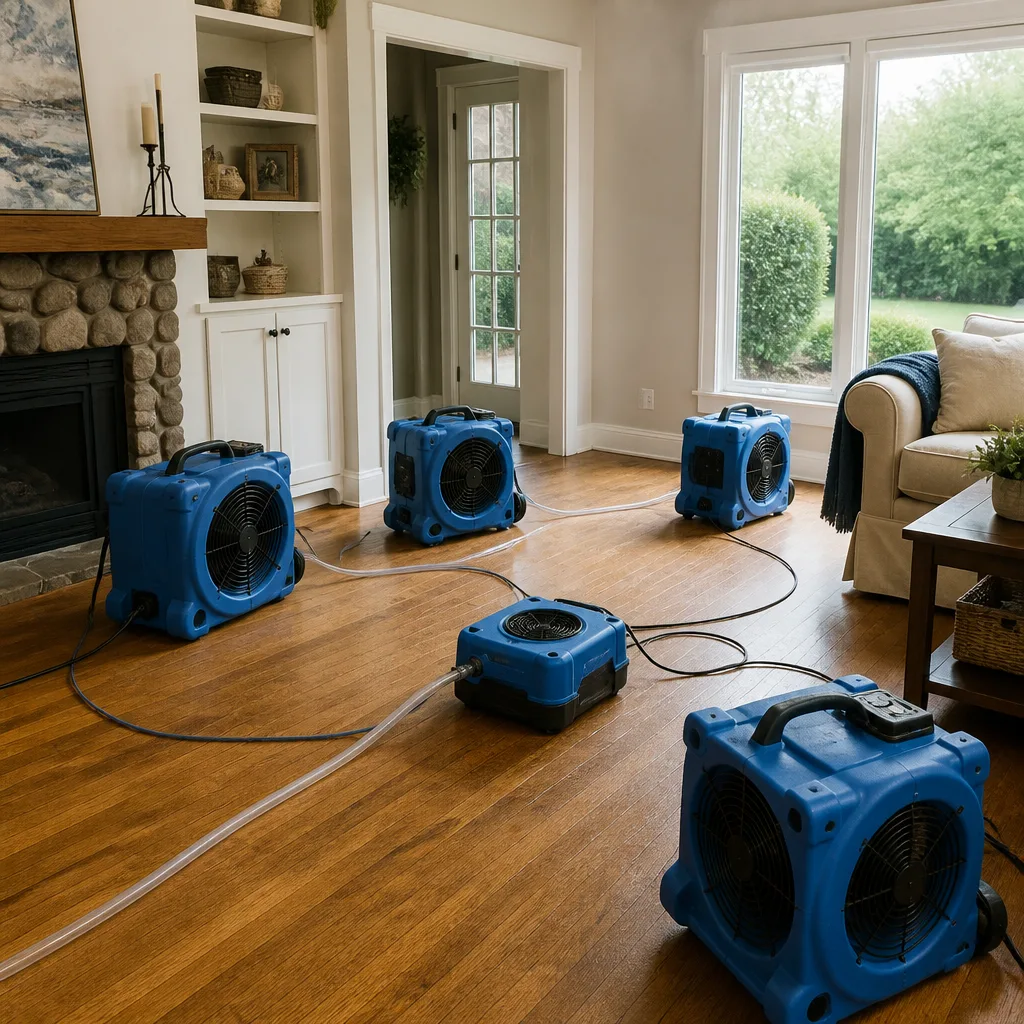 Water damage drying
 Fire & smoke cleanup
 Mold remediation
 Storm response
 Sewage cleanup
 Reconstruction
Free visual inspection and a written scope of work before any mitigation begins - photos, moisture readings, and drying logs go in your claim file
The scope we write is the scope we bill. Anything new gets shown to you, in writing, before we touch it.
Get your free estimateHow to Hire a Damage Restoration Contractor in Brooklyn: A Step-by-Step Guide
Here’s something most homeowners don’t realize until it’s too late: after a major water or fire loss, the first contractor to knock on your door usually isn’t the best one. It’s the one who monitors emergency scanner feeds and races to your block before you’ve even made a phone call. In Brooklyn, storm-chasing contractors have been documented adding line items mid-job that never appeared on the original estimate, betting that a stressed homeowner with water still pooling in the basement won’t push back. This complete guide to damage restoration in Brooklyn walks you through the exact verification steps, contract clauses, and documentation checks that separate legitimate restoration crews from door-knockers. You’ll learn what to demand before any equipment gets unloaded, which license and insurance lookups actually matter in New York State, and how to structure a contract so the price can’t move after work begins.
Restoration work we handle
Quick Answer
The right way to hire a damage restoration contractor in Brooklyn is to verify their New York State license and insurance before signing anything, demand a written scope of work with a fixed price delivered before any equipment is set, and confirm their documentation process will hold up under insurance adjuster scrutiny. Skip any contractor who pressures you to sign on the spot, refuses to put the price in writing, or claims you don’t need to involve your insurer. The contractor you choose should answer the phone live, show up inside the window they gave you, and stand behind their work with a written guarantee.
Table of Contents
- Step 1: Verify the Contractor’s License and Insurance Before They Touch Anything
- Step 2: Demand a Written Price Before Any Equipment Is Set
- Step 3: Strike the Three Contract Clauses That Let Contractors Move the Price
- Step 4: Evaluate Whether Their Documentation Will Actually Support Your Claim
- Step 5: Check the Equipment and Training Standards They Use
- Step 6: Read the Red Flags Most Homeowners Miss
- Step 7: Ask These Questions Before You Let Anyone Inside
- Common Mistakes to Avoid
- When to Call a Professional
- Frequently Asked Questions
- The Bottom Line
Step 1: Verify the Contractor’s License and Insurance Before They Touch Anything
New York State does not issue a single “restoration contractor license” the way some states do. Instead, restoration work in Brooklyn falls under home improvement contracting rules, which means a contractor performing water, fire, or mold work on residential property must hold a valid New York City Department of Consumer and Worker Protection (DCWP) Home Improvement Contractor license. You can verify a license number on the DCWP’s public lookup portal by entering the business name or license number directly. If they can’t produce a license number that checks out, that’s the end of the conversation.
Here’s the sequence that matters:
- Ask for the DCWP license number. Write it down. Don’t accept a photo on a phone. Anyone can screenshot a fake.
- Run the number on the DCWP website. Look for the license status, the business name matching who you’re actually talking to, and the license type matching the work being quoted. A general contractor license is not a license to perform mold remediation.
- Verify the insurance certificate names you as additional insured. Ask for the certificate of insurance (COI) directly from their broker, not from the contractor. A legitimate company’s broker will email you the COI within hours. Confirm the policy’s effective dates have not lapsed and the general liability coverage is at least $1 million.
- Check for mold-specific certifications. If the job involves mold, ask whether the technicians hold IICRC certifications, specifically Water Damage Restoration Technician (WRT) or Applied Microbial Remediation Technician (AMRT). In Brooklyn’s older housing stock, where pre-war buildings hold moisture in ways newer construction doesn’t, unqualified mold work can make a bad situation worse.
We’ve seen homeowners skip this step because the contractor seemed professional and the price sounded fair. Then the crew damages a neighbor’s wall, the contractor’s insurance lapsed six months ago, and the homeowner is left fighting a liability claim on their own policy. The five minutes it takes to run a license lookup beats months of that.
If you’re dealing with water damage specifically, the same verification applies before extraction begins. Our Water Damage Restoration in Brooklyn guide covers what equipment should arrive on day one and how to tell if the drying plan is actually working.
Step 2: Demand a Written Price Before Any Equipment Is Set
A legitimate restoration company can give you a written price before work starts. Not a rough ballpark. Not a “we’ll see how it goes.” A written scope of loss, line by line, with the total at the bottom, signed by both parties. In Brooklyn’s restoration market, the most common complaint we hear from homeowners is that the price they agreed to on the phone changed after the crew showed up. The contractor added “unforeseen subfloor damage” or “additional drying days” without explaining what changed or getting approval in writing first.
Here’s what a written price protects you from legally. Under New York General Business Law, home improvement contracts over $500 must be in writing and include specific items: the approximate start and completion dates, a description of the work, materials to be used, the total price, and a notice of your right to cancel within three days. If a contractor refuses to put the price in writing, they’re either not licensed (because a licensed contractor knows this requirement) or they plan to move the number once your home is torn apart.
The Garrison Standard at our company is simple: the price goes in writing before any work begins, and it does not move at the door. That’s not a marketing line. It’s a contract requirement we hold ourselves to because we know homeowners have been burned by the alternative. When you call us for a Brooklyn estimate, you’ll get a written scope before we unload a single fan.
What a written scope should include:
- Every room affected, with square footage and the specific work to be performed in each
- The exact equipment to be used (manufacturer and model where relevant)
- Labor hours, broken down by day and technician count
- Materials with quantities and unit prices
- Drying time estimate and the monitoring schedule
- Total price, including tax, with no “contingency” line items
Step 3: Strike the Three Contract Clauses That Let Contractors Move the Price
The fine print is where bad Brooklyn contractors hide their leverage. Three clauses in particular show up in restoration contracts and cause most of the horror stories.
Clause 1: “Owner authorizes additional work as needed at prevailing market rates.” This is a blank check. Strike it. Replace it with language requiring a written change order, signed by you, before any work outside the original scope begins. The change order must list the additional work, the reason it’s needed, the cost, and the schedule impact.
Clause 2: “Contractor may adjust pricing based on actual time and materials.” This turns a fixed bid into an open-ended hourly arrangement. If you sign this, you’ve agreed to pay whatever the job ends up costing, with no ceiling. Instead, require a fixed price for the defined scope, with change orders as the only mechanism for increases.
Clause 3: “Final payment due upon completion of work, as determined by contractor.” The contractor gets to decide when the job is done, and you’re on the hook. Require instead a completion standard: the affected areas are dry (with moisture readings documented), damaged materials are removed, and repairs are finished to the agreed specification. Payment is released after you’ve walked the site and confirmed the work matches the written scope.
We’ve reviewed contracts from local homeowners that contained all three of these clauses. The homeowners had no idea what they’d signed. One Brooklyn homeowner in Sheepshead Bay came to us after a fire restoration company billed him $34,000 on a project quoted at $18,000, citing the “actual time and materials” clause. He paid it because his family was in a rental and he needed the house back. A written change order process would have prevented every one of those surprise line items.
If a contractor pushes back on striking these clauses, that’s your signal to walk. A company that won’t agree to written change orders is a company that plans to use ambiguity against you.
Step 4: Evaluate Whether Their Documentation Will Actually Support Your Claim
Insurance adjusters work from documentation. If the restoration company’s paperwork is sloppy, missing moisture readings, or lacks photo evidence, your adjuster has openings to deny or reduce coverage. In Brooklyn’s densely populated co-op and condo market especially, where claims often involve multiple parties, documentation gaps get exploited.
Here’s what strong restoration documentation looks like:
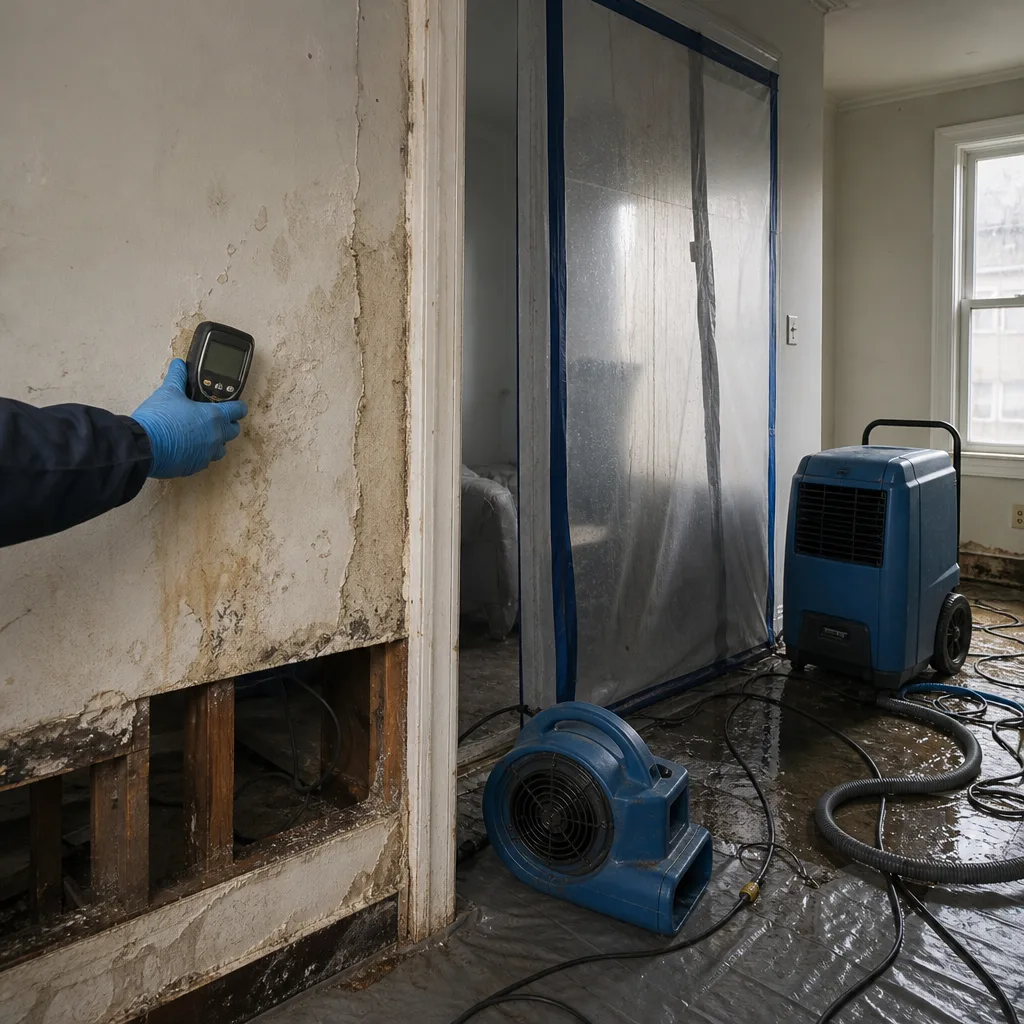
- Moisture readings from wall cavities, floor penetration, and structural lumber. Recorded at intake, daily during drying, and at completion. The numbers show the drying plan worked or didn’t.
- Photo documentation of every affected area before, during, and after. Timestamped. The adjuster should be able to see the water line on the drywall, the buckled floor, the mold growth pattern.
- A drying log showing daily moisture content trending toward the dry standard. This matters because insurers will challenge whether all affected materials were actually dried, not just what was visibly wet.
- An equipment inventory tied to each room and each day. If the company billed for nine fans but only deployed six, the adjuster will catch it. Your documentation should match the billing line by line.
- The scope of loss in writing, matched to the final invoice. No surprises. If something changed, there’s a signed change order for it.
When we run jobs in Brooklyn, every piece of that documentation is formatted to support your insurance claim. That’s not a favor we do on the side. It’s part of The Garrison Standard, the written operating code we follow on every job: show up inside the window, put the price in writing, do it by the book, leave the site clean, and stand behind the work for a full year. A restoration company that can’t or won’t show you a sample documentation package before the job starts is telling you something you need to hear.
For fire damage specifically, the documentation requirements get more complex because of smoke penetration into materials that look fine on the surface. Our Fire Damage Restoration in Brooklyn page explains what proper smoke and soot documentation looks like and why surface cleaning alone usually isn’t enough.
Step 5: Check the Equipment and Training Standards They Use
Professional water damage restoration in Brooklyn requires professional-grade equipment, not the rental units you’d pick up at a hardware store. The difference shows up in drying time and in whether hidden moisture gets left behind. The equipment standards that matter:
Extraction: A truck-mounted or high-powered portable extraction unit rated for restoration work. The goal immediately after water damage is to remove as much standing water as physically possible before drying begins. A shop vac is not extraction equipment.
Air movement: Professional air movers, not box fans. The brands that show up on serious restoration jobs are Dri-Eaz, Phoenix, XPOWER, and B-Air. These units move air at velocities that speed evaporation from wall cavities and subfloor spaces, which is where water hides in Brooklyn’s older rowhouses and brownstone conversions.
Dehumidification: Low-grain refrigerant or desiccant dehumidifiers sized to the affected area. This is where psychrometrics, the science of air moisture and temperature relationships, determines the right unit count. Too little dehumidification and the space won’t dry to standard. Too much is wasted energy and bill padding.
Specialty drying: Injectidry systems for drying inside wall cavities and under cabinets without demolition. This equipment can save Brooklyn homeowners thousands in repair costs by drying in place what a less-equipped company would tear out.
Training: Technicians should hold or be working under someone who holds IICRC certifications. RIA membership is a secondary signal that the company participates in the restoration industry’s professional association, which maintains standards for proper drying. IFA involvement signals a company networked with insurance-focused restoration practices.
Ask directly: “What extraction equipment are you bringing?” and “What drying standards do your technicians follow?” If the answer is vague or the equipment list is thin, call someone else.
Step 6: Read the Red Flags Most Homeowners Miss
The pattern recognition here can save you from the worst-case scenario. Here are the signs we’ve seen precede bad outcomes in Brooklyn restoration jobs:
- The contractor arrived uninvited. They heard your loss on a scanner or got tipped by a neighbor. Legitimate restoration companies don’t cold-knock after fires or floods.
- They want you to sign the work authorization before you’ve called your insurer. The contract terms should work in your favor whether or not insurance covers the claim. If they’re rushing you to sign before an adjuster is involved, slow down.
- They quote a price without inspecting the actual damage. A legitimate estimate requires looking inside wall cavities, under flooring, and at the ceiling from both sides. A phone quote is not a quote.
- They won’t give you references from Brooklyn jobs. Every legitimate contractor in this borough has done work within a few miles of your home. Ask for project addresses or customer references you can actually contact.
- Their truck is unmarked or has a magnetic sign. Storm chasers move between markets. Magnetic signs are easy to swap. A local Brooklyn business has its name painted on the truck.
- They ask for payment in full before starting. Legitimate restoration work is billed in stages tied to milestones, with the final payment due after you’ve verified the work.
None of these red flags alone proves anything. Three of them together is a pattern. Five is a door-knocker. Walk away and call a company that checks out.
Step 7: Ask These Questions Before You Let Anyone Inside
Here’s the exact question set to run through on the phone or before you sign. Each one exposes a specific risk:
- “What’s your DCWP license number?” If they hesitate, that’s the end.
- “Will you send me a certificate of insurance from your broker naming my property as additional insured?” A yes with no follow-through means their insurance may have lapsed.
- “Can you give me a written price for the full scope before any work begins?” No hedging allowed. The answer is yes or no.
- “What drying equipment are you bringing, and what’s the monitoring schedule?” Vague answers on equipment mean they’re renting whatever’s available.
- “How do you document the job for insurance?” Look for photo logs, moisture readings, and equipment inventories. If they say “we take some pictures if you want,” that’s not documentation.
- “What’s your change order process for extra work?” If they can’t describe it clearly, expect surprises on the invoice.
- “Do you guarantee the work in writing?” A one-year written guarantee is standard for a professional operation. Our 365-Day Done Right Promise covers every repair: if it fails within a year, we return and make it right at no charge.
If you’re dealing with mold, add one more: “Do you perform mold remediation or just cleaning?” The distinction matters more than most homeowners realize. Our Mold Remediation in Brooklyn guide covers the difference and why spray-and-wipe approaches leave spores behind.
Common Mistakes to Avoid
- Hiring the first contractor who shows up. Speed feels urgent when there’s water on the floor, but the first arrival is often the one who monitors scanners. Verify before you sign.
- Signing a work authorization before reading the clauses. The fine print controls the price. If there’s a clause allowing “adjustment based on actual time and materials,” you’ve signed an open check.
- Skipping the insurance certificate verification. A contractor’s word about insurance means nothing. Get the COI from the broker and confirm your property is named.
- Accepting a phone estimate without an on-site inspection. Hidden damage inside wall cavities and subfloors changes the scope dramatically. A legitimate estimate requires looking.
- Not documenting the condition of your home before work starts. Take your own photos before the crew arrives. If damage occurs during the job, you need evidence of the pre-existing condition.
- Paying the full balance before you’ve verified the work matches the scope. Final payment is your leverage. Walk the site, check the moisture readings, confirm the repairs, then release payment.
- Assuming your insurance company will protect you from a bad contractor. The insurer cares about the claim payout, not whether the contractor overcharged or under-delivered. Verify the contractor independently.
When to Call a Professional
Call a professional restoration contractor the moment you discover standing water, visible mold growth covering more than 10 square feet, or smoke and soot damage from any fire. For more guides & resources on protecting your home, see our blog. Time works against you: water wicks upward through drywall at roughly one inch per hour. Mold begins to colonize damp organic materials within 24 to 48 hours. Smoke residue etches surfaces within days. If you’re in a multi-unit Brooklyn building, delays also expose you to liability from affected neighbors. Keegan Restoration Brooklyn offers free estimates in Brooklyn, call (607) 325-7185 and a live person will answer, day or night.
Frequently Asked Questions
Water damage restoration in Brooklyn typically runs between $1,800 and $6,500 for a standard single-room water intrusion with extraction, drying, and minor repairs. Fire damage restoration starts around $3,500 and scales based on square footage and smoke penetration depth. Mold remediation commonly runs $2,000 to $8,000 depending on the affected area and whether demolition is required. Every job is priced in writing before work starts, never guessed over the phone.
Homeowners insurance generally covers water damage from sudden and accidental sources, such as a burst pipe or appliance failure, but not gradual leaks or flooding from external sources without flood insurance. The restoration company’s documentation quality directly affects whether your claim is paid in full. Insist on a contractor who documents the loss the way an adjuster requires: moisture readings, photo logs, and equipment inventories tied to the billing.
A legitimate Brooklyn restoration company can typically begin mitigation the same day you call, especially for active water intrusion. The first visit includes extraction, equipment setup, and a written scope of work. Drying takes three to seven days depending on the materials affected and the ambient conditions. Keegan Restoration Brooklyn maintains live phone answering 24 hours a day, seven days a week, so you reach a person who can dispatch help, not an answering service. Call (607) 325-7185 for a free estimate.
The answer depends on what’s wet and for how long. Clean water from a supply line, extracted quickly, often needs drying and sanitizing but not full remediation. Water that sat for more than 48 hours, sewage-affected water, or any visible mold growth usually requires removal of affected materials and professional remediation. A restoration company that uses IICRC standards will test and tell you honestly which path is correct. Be wary of anyone who quotes a cleaning without inspecting the full extent of moisture penetration.
A professional restoration company documents the loss, provides the necessary evidence, and communicates directly with your adjuster about the scope of work and drying progress. You stay involved in decisions, but the contractor handles the technical back-and-forth. The key is choosing a company whose documentation package already matches what adjusters expect to see. Weak documentation means you’ll be the one arguing with the insurer.
Coverage depends on the source of the moisture and your policy language. Mold resulting from a covered water loss, such as a burst pipe, is often covered up to policy limits. Mold from long-term humidity, condensation, or neglected maintenance is typically excluded. The critical factor is proving the causal link between the covered event and the mold growth, which requires documentation that starts with the original water damage. Call (607) 325-7185 to discuss what your situation looks like and how to position it for your insurer.
The Bottom Line
Hiring a damage restoration contractor in Brooklyn comes down to verification before authorization. Check the DCWP license, demand a written price before equipment is unloaded, strike the clauses that let the price move, and verify the documentation standards match what your insurer expects. The contractor who checks out on all four is the one you can trust inside your home. The one who resists any of them is showing you who they are. We built Keegan Restoration Brooklyn home on one operating rule: the written price never moves at the door, and every repair is backed by the 365-Day Done Right Promise in writing. That’s the standard to measure any contractor against. Call (607) 325-7185 when you’re ready for a written estimate.
Written by Shane Pruitt, Owner at Keegan Restoration Brooklyn, serving Brooklyn since 2005.
See the difference
 Before
 After
After Before
 After
After Before
 After
After