
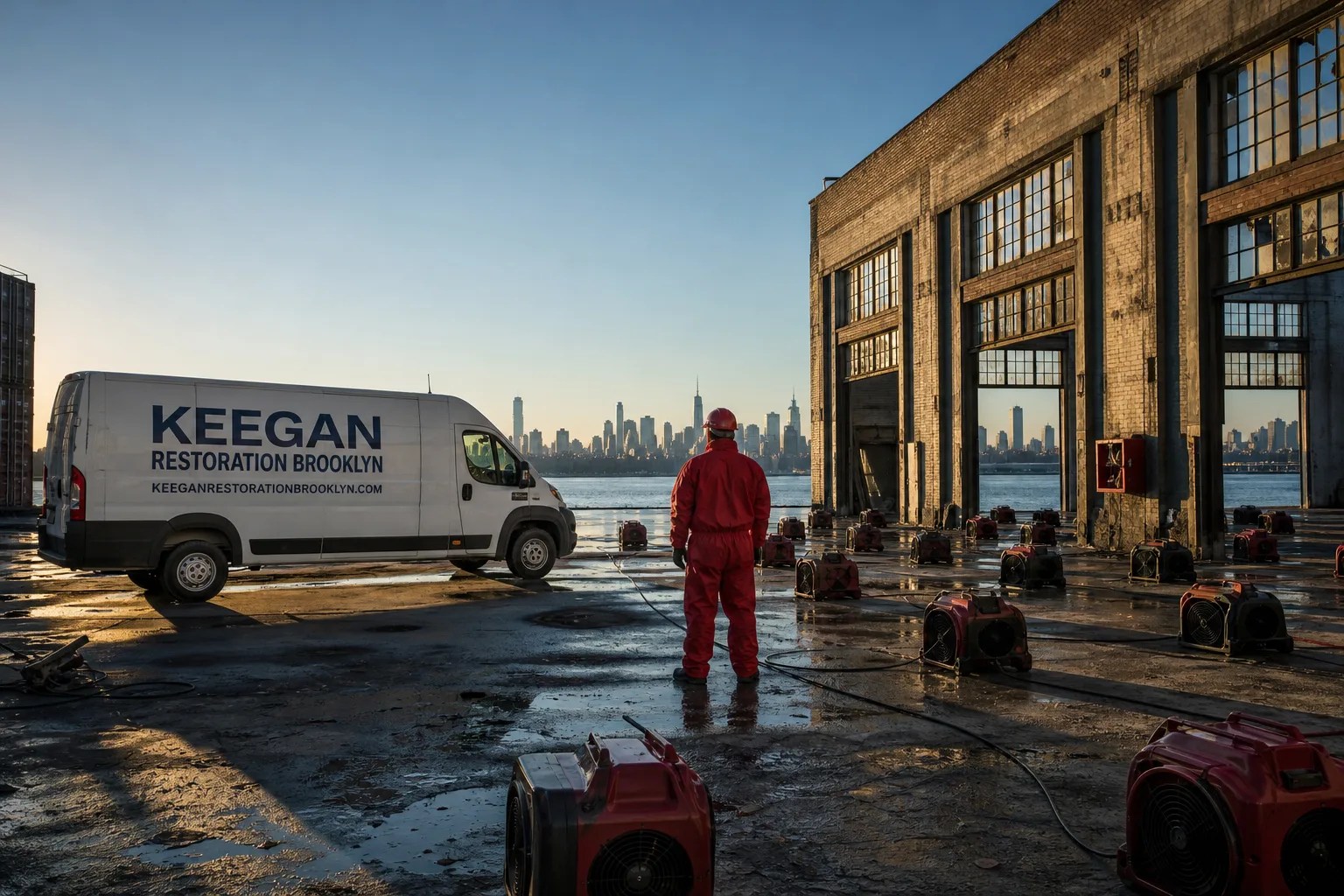
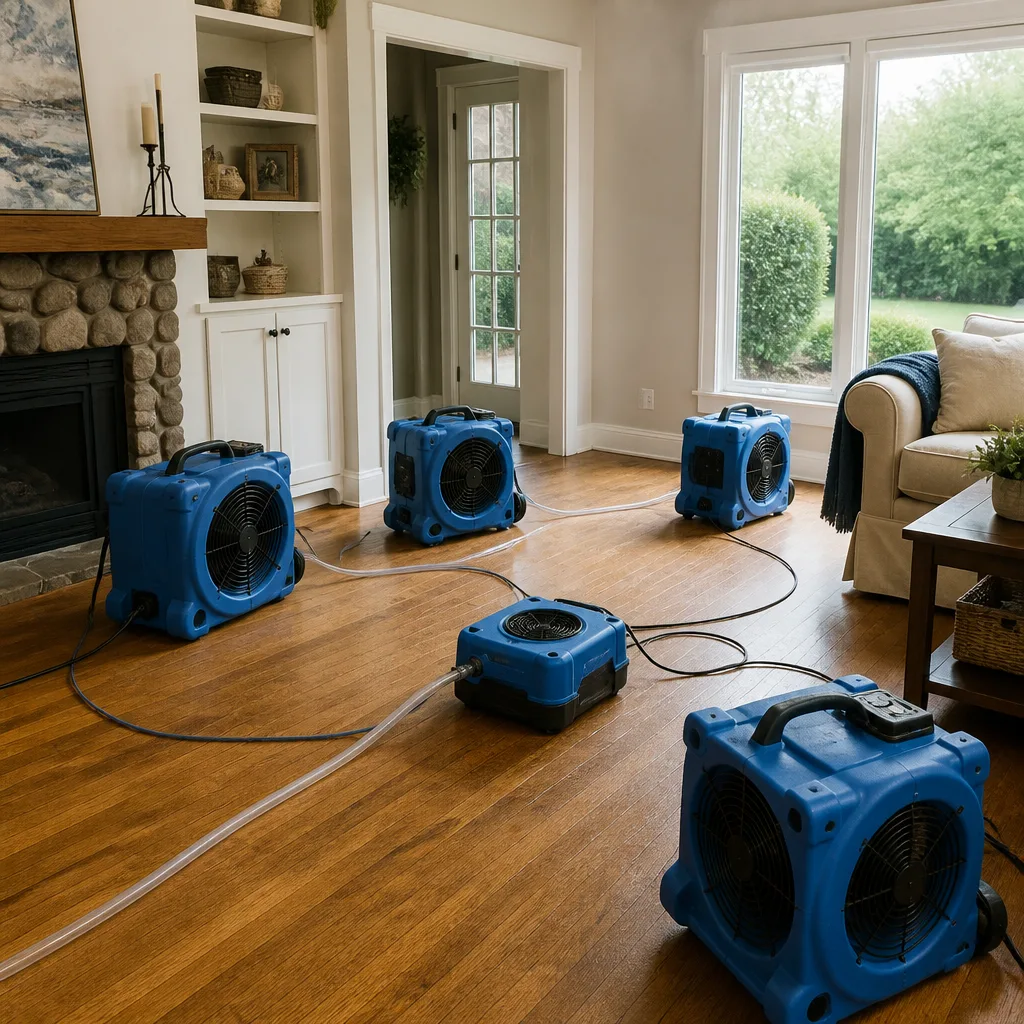
 Water damage drying
 Fire & smoke cleanup
 Mold remediation
 Storm response
 Sewage cleanup
 Reconstruction
Free visual inspection and a written scope of work before any mitigation begins - photos, moisture readings, and drying logs go in your claim file
The scope we write is the scope we bill. Anything new gets shown to you, in writing, before we touch it.
Get your free estimateFast, Reliable Fire Damage Restoration Across NoHo
Fire damage in a NoHo loft is never a single-problem job. You’re dealing with soot, smoke, and very often a secondary water loss from the sprinkler system or fire department response. Keegan Restoration Brooklyn answers with a live person around the clock, and our crews know NoHo’s converted cast-iron buildings well enough to start containment and moisture mapping the day you call. Don’t wait: smoke and soot keep working their way into original wood, plaster, and brick every hour they sit. Reach us at (607) 325-7185 for a written scope and upfront price.
Why Keegan Restoration Brooklyn Is NoHo’s Preferred Fire Damage Restoration Company
NoHo homeowners call us because we show up inside the window we give you, put the price in writing before any work starts, and stand behind every repair for a full year. That’s The Garrison Standard, and it’s not a slogan. It’s the rule our technicians work to on every job, from a one-unit soot cleanup to a five-floor sprinkler loss. Shane Pruitt leads our crews; he’s built the Keegan team around background-checked, uniformed technicians who document everything so your insurance claim has the detail it needs.
NoHo’s response time matters more than in most neighborhoods because of how quickly fire-suppression water moves through these buildings. A leak on the fifth floor becomes a fourth-floor ceiling loss, then a third-floor wall stain, and so on. We dispatch from the New York City office, and our crews arrive familiar with standpipe locations, freight elevator access on side streets like Bond and Lafayette, and the reality of working inside active co-op buildings with strict building manager requirements.
We also know how NoHo homeowners talk, which is to say: plainly. You want to know what’s destroyed, what’s salvageable, what it costs, and when it’s done. We give you that in writing. No pressure, no moving the number at the door. Just a trade crew that runs on a written standard.
Restoration work we handle
Fire and Water Damage Restoration in NoHo
Fire and water damage restoration in NoHo usually means treating two losses at once: the fire itself, and the water used to put it out. In a converted loft, that water often travels through shared standpipes and sprinkler risers inside the walls, dropping down through multiple floors and saturating wood framing, plaster ceilings, and concrete floors. Our job starts with containment and a full moisture map of every affected unit, not just the one where the fire started.
Multi-Floor Containment
Fire-suppression water doesn’t respect lease lines. We isolate the damaged area, check adjacent units and common areas for moisture migration, and run professional-grade air movers and dehumidifiers from Dri-Eaz and Phoenix to stop the spread before it becomes a building-wide mold event. In a NoHo loft with Category 2 water from a sprinkler system, this has to happen within hours, not days.
Structural Drying in Masonry and Timber
After a fire in a cast-iron loft, the building’s structure holds moisture far longer than drywall on wood studs ever would. Cold masonry walls condense in winter, and original timber behind ornate plaster can stay damp for weeks if it’s not actively mapped and dried. We track moisture content with meters, run desiccant drying where it’s needed, and document the entire process for your claim.
Soot Removal in NoHo
Soot removal in NoHo requires more than a vacuum and a sponge. These lofts contain original brick, carved plaster, cast-iron columns, and wood surfaces that have spent 150 years absorbing whatever touches them. Aggressive cleaning on the wrong surface can do permanent damage, so our approach starts with identifying what the surface is and what type of soot it carries.
Historic Surface Care
Cast-iron columns and original brick have a patina that aggressive chemical cleaners will strip. We use the appropriate method per surface: dry sponge cleaning for unpainted plaster, controlled HEPA vacuuming, and poultice treatments for embedded soot on porous brick. The same fire that blackens a wall often leaves a chemical fingerprint from melted synthetics, and that determines the cleaning agent we use.
Odor Neutralization
Smoke odor in NoHo lofts hides in surprising places: behind radiators, inside elevator shaft cavities, within the original flooring’s tongue-and-groove joints. We don’t mask it. We locate the source, treat it, and verify the space has returned to a baseline reading. One missed pocket of soot behind a plinth block will re-odor a whole floor a month later.
Trusted Brands We Service in NoHo
Our equipment roster runs the brands a NoHo homeowner’s insurance adjuster expects to see on a claim: Dri-Eaz for air movement, Phoenix for refrigerant dehumidification, and XPOWER and Injectidry for targeted extraction and hard-to-reach cavities. We keep parts and replacement filters stocked for these machines, so we’re not waiting on a shipment when a NoHo building needs drying now. We work to IICRC standards, and our documentation is formatted to plug directly into your insurance claim.
See the difference
 Before
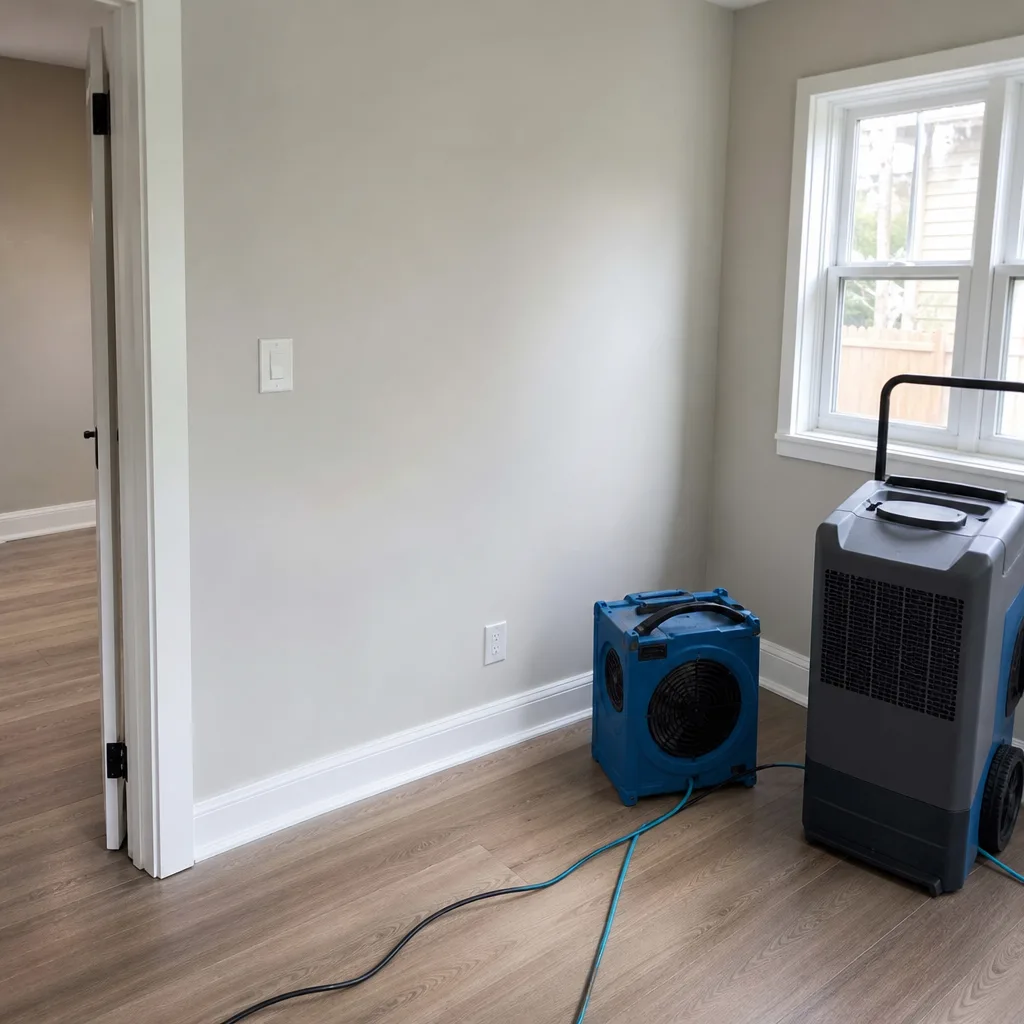 After
After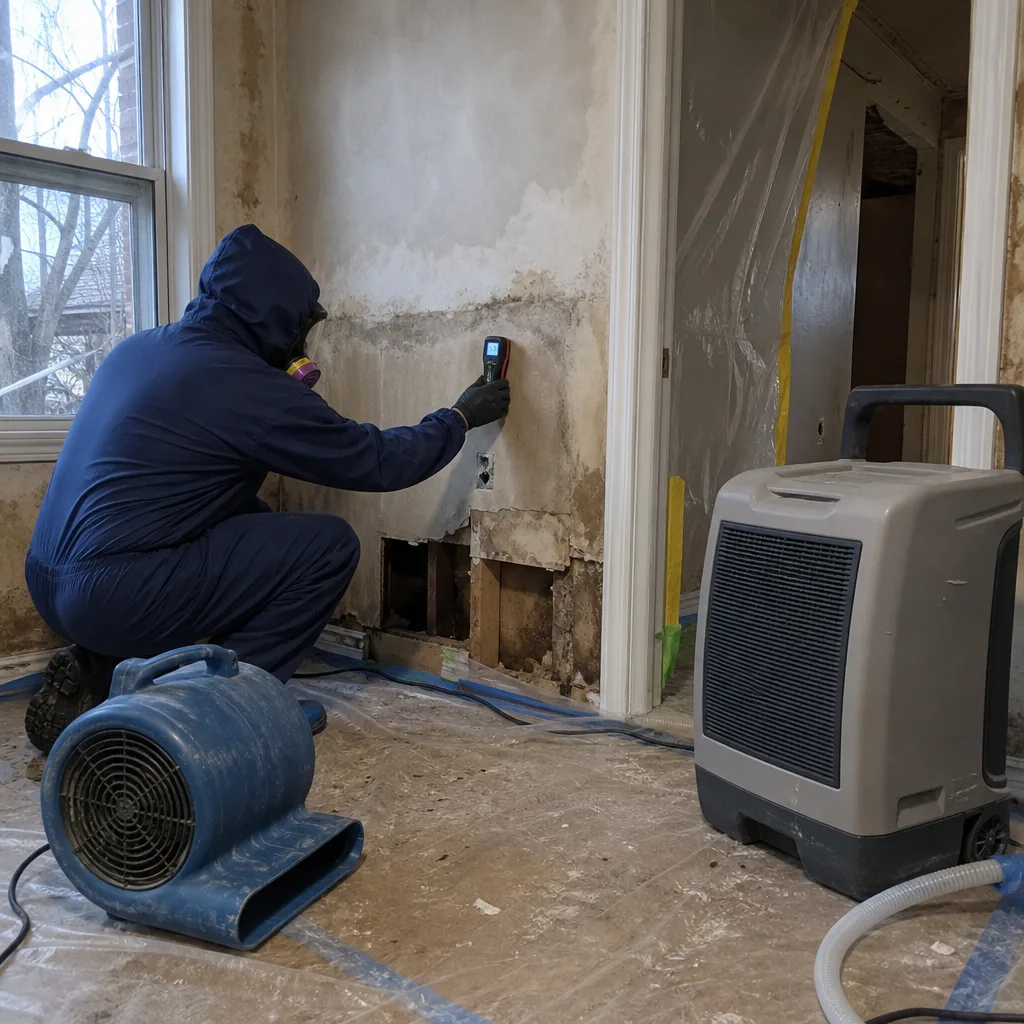 Before
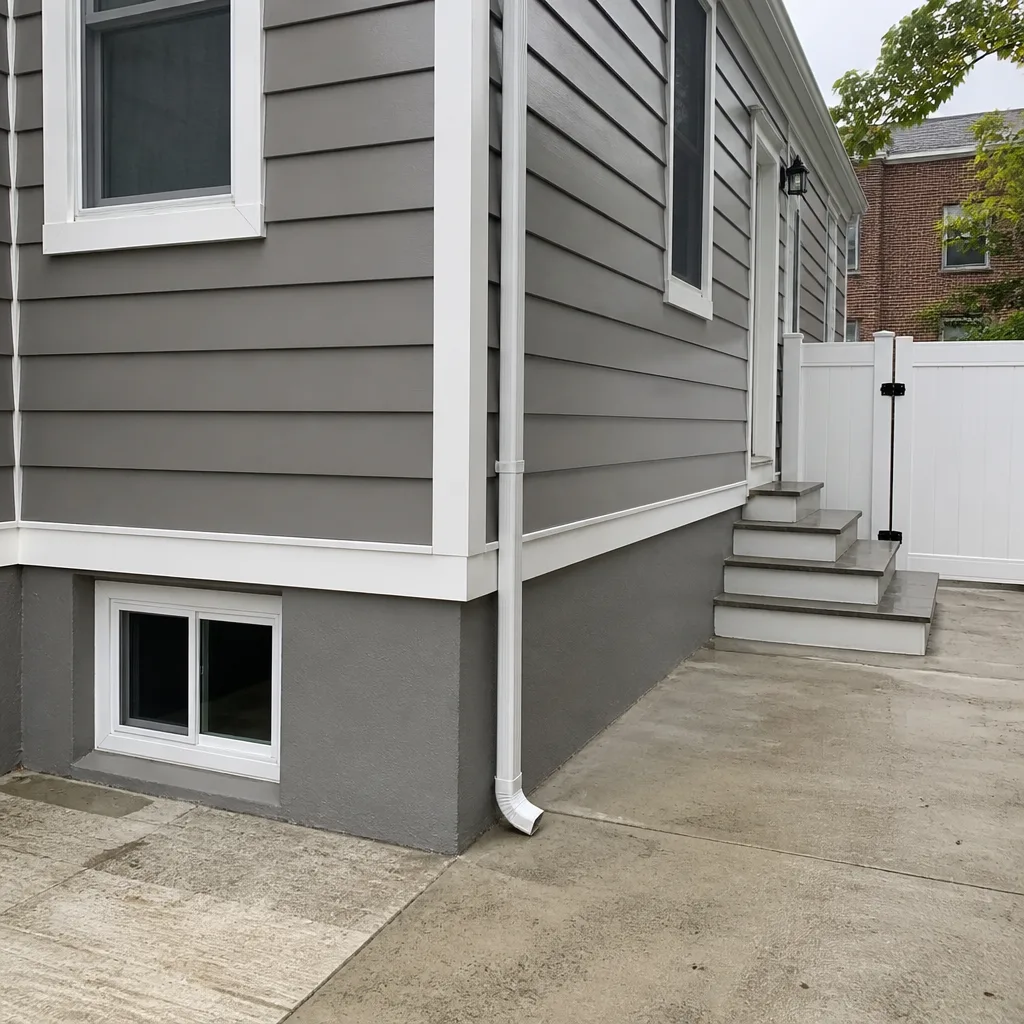 After
After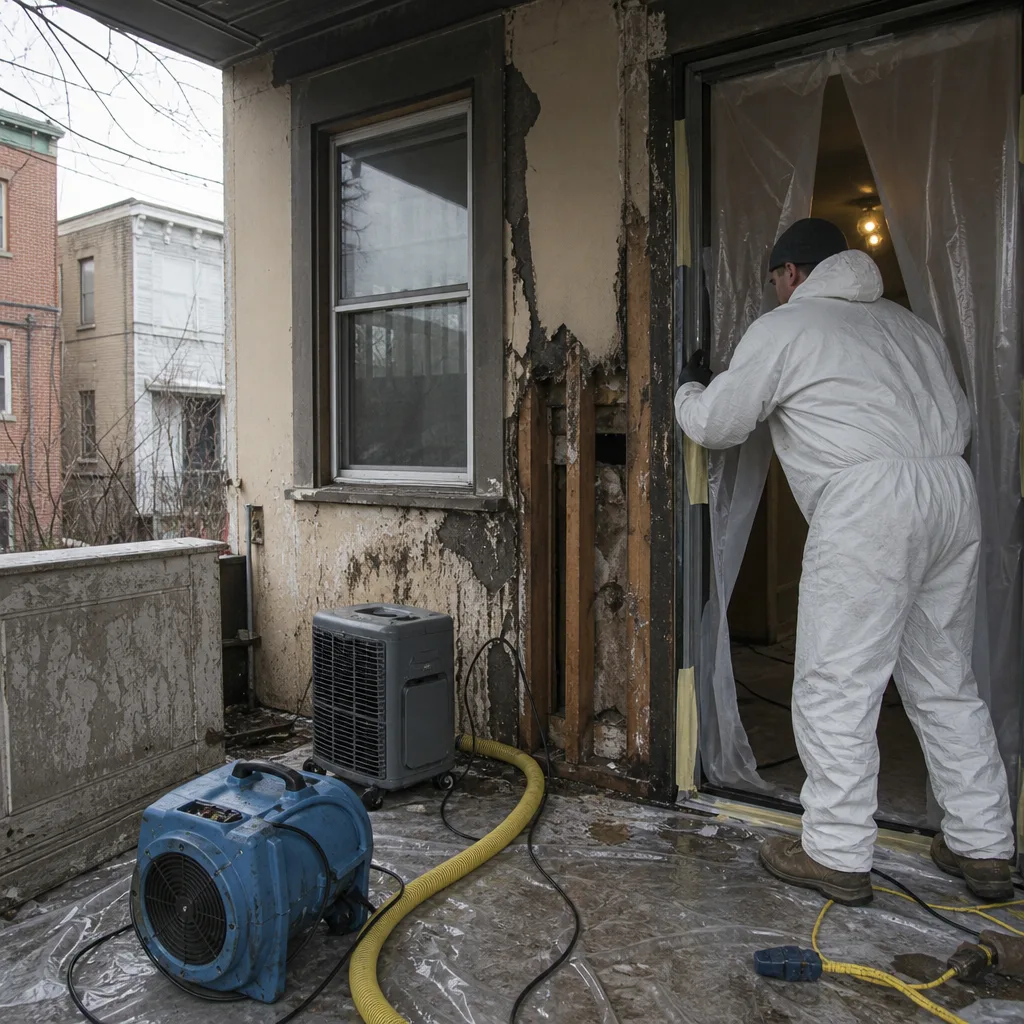 Before
 After
AfterCommon Fire Damage Restoration Problems We See in NoHo Homes
- Shared sprinkler risers sending water through multiple units. A kitchen fire on the fourth floor of a Bond Street loft can trigger the riser, and within twenty minutes water is moving down through three units below. The original loss is fire; the bigger loss is often water migration into lower floors and common areas. Without immediate containment on every affected floor, the scope doubles.
- Hidden moisture in original timber framing behind ornate plaster. Plaster in a NoHo loft may look dry on the surface while the lath and framing behind it are still saturated. Mold starts in these hidden cavities within 48 hours, often behind decorative cornices and ceiling medallions that no one wants to open. Moisture mapping shows us where the water actually is, so we dry what needs drying without tearing apart what doesn’t.
- Condensation from fire-suppression water on cold masonry in winter. When sprinkler water meets a freezing exterior brick wall, the temperature difference drives condensation deep into masonry pores. The result is a secondary damage event that shows up weeks later as efflorescence, spalling, or peeling paint on historic surfaces. In a NoHo winter, this is one of the first things we check.
- Landmark restrictions on altering finishes and mechanical systems. The Landmarks Preservation Commission has a say in what can be removed, replaced, or modified in a NoHo landmarked building. That affects everything from how we route drying equipment to which plaster we can open for inspection. We work with the building’s existing permits and coordinate with management so restoration doesn’t collide with a landmark violation.
Pricing for Fire Damage Restoration in NoHo, NY
NoHo pricing runs higher than the outer boroughs, on average, because access, landmark restrictions, and historic finishes add coordination time. Here’s what you’re looking at: soot removal and surface cleaning in a single NoHo loft typically runs $1,800 to $4,200. Full smoke odor remediation with thermal fogging or hydroxyl treatment usually adds $1,200 to $3,000. When fire-suppression water is involved, structural drying in a masonry loft with multi-floor containment typically runs $6,500 to $14,000 depending on the number of units affected. A full fire and water damage restoration package for a NoHo co-op unit with LPC oversight often lands between $12,000 and $40,000. The price is written before any work starts, and it doesn’t move at the door. Call (607) 325-7185 for a free estimate.
We Also Serve Cities Near NoHo
We serve NoHo and the surrounding neighborhoods, including NoHo properties plus Brooklyn, New York, Elmhurst, and Forest Hills. Each location gets the same written-price standard and the same Fire Damage Restoration crew accountability, along with a full year of guarantee on every repair.
Serving NoHo, NY - Our Local Coverage Area
We’re based in the NoHo area and know this community well. Use the map below to see our service coverage - if you’re nearby, we can almost certainly help.
FAQs About Fire Damage Restoration in NoHo
The LPC requires that any restoration work inside a landmarked NoHo building preserve the building’s historic fabric, which means we often cannot remove original plaster, cast-iron, or brick without prior approval. In practice, that means our crews plan drying and cleaning methods around what can stay in place, using access points like existing mechanical chases and floor seams rather than opening new holes. We coordinate with your building’s management and, when needed, reference the LPC’s permit requirements in our written scope so the restoration work doesn’t create a compliance problem for your co-op or condo. Call (607) 325-7185 and we’ll walk you through what applies to your specific loft.
Call Keegan Restoration Brooklyn immediately at (607) 325-7185, and do not attempt to dry the lower units yourself. Water from a shared sprinkler riser has already migrated through common areas and into your neighbors’ ceilings, and the building’s management will need documentation showing that containment and extraction took place promptly. We set up containment on every affected floor, map moisture in each unit, and provide a written scope that the building and your insurance adjuster can both rely on. Acting quickly on the lower units prevents a containable water loss from becoming a mold claim in three separate apartments.
Yes, if the method matches the surface. Original brick is porous and holds soot deep in the face; we use dry sponge techniques and, where necessary, controlled poultice applications rather than pressure washing or abrasive media blasting, which would strip the brick’s historic face. Cast-iron columns need a gentler touch than painted steel: we use non-abrasive chemical cleaning followed by immediate drying to prevent flash rusting from water-based methods. The key is testing in an inconspicuous area first, which is standard procedure on every NoHo job. Call us for an on-site assessment at (607) 325-7185.
Structural drying in a NoHo loft with thick masonry and original timber typically takes 5 to 10 days when the drying program is started within 24 hours of the water event, and longer if the moisture has been sitting behind plaster or inside wall cavities. Masonry releases water slowly, especially in winter when exterior walls are cold, and original timber behind ornate plaster dries slower than modern framing because there is less airflow through the lath and plaster system. We monitor moisture content daily with meters and adjust equipment placement as needed until the numbers show the structure is dry, not just the surface. For an estimate on your specific building, call (607) 325-7185.
Most NoHo co-ops and condos require a written scope of work before restoration begins, often including the equipment plan, drying goals, and any wall or ceiling openings proposed by the restoration contractor. Keegan provides that written scope as part of the upfront pricing, before any work starts, and we format it so your building’s management and your insurance carrier can both sign off on the same document. If the building’s engineer or architect needs to review the plan, we adjust the scope and document the change, so the restoration doesn’t stall while the paperwork catches up. Call (607) 325-7185 and we’ll help you put together the scope your building requires.
When fire touches a NoHo loft, every hour of delay makes the loss bigger. We answer the phone with a live person, we show up when we say we will, and we give you a written price before any work begins. Call Keegan Restoration Brooklyn at (607) 325-7185 for a free estimate.
Written by Shane Pruitt, Owner at Keegan Restoration Brooklyn, serving NoHo’s landmarked lofts and co-ops with disciplined, documented fire damage restoration.