
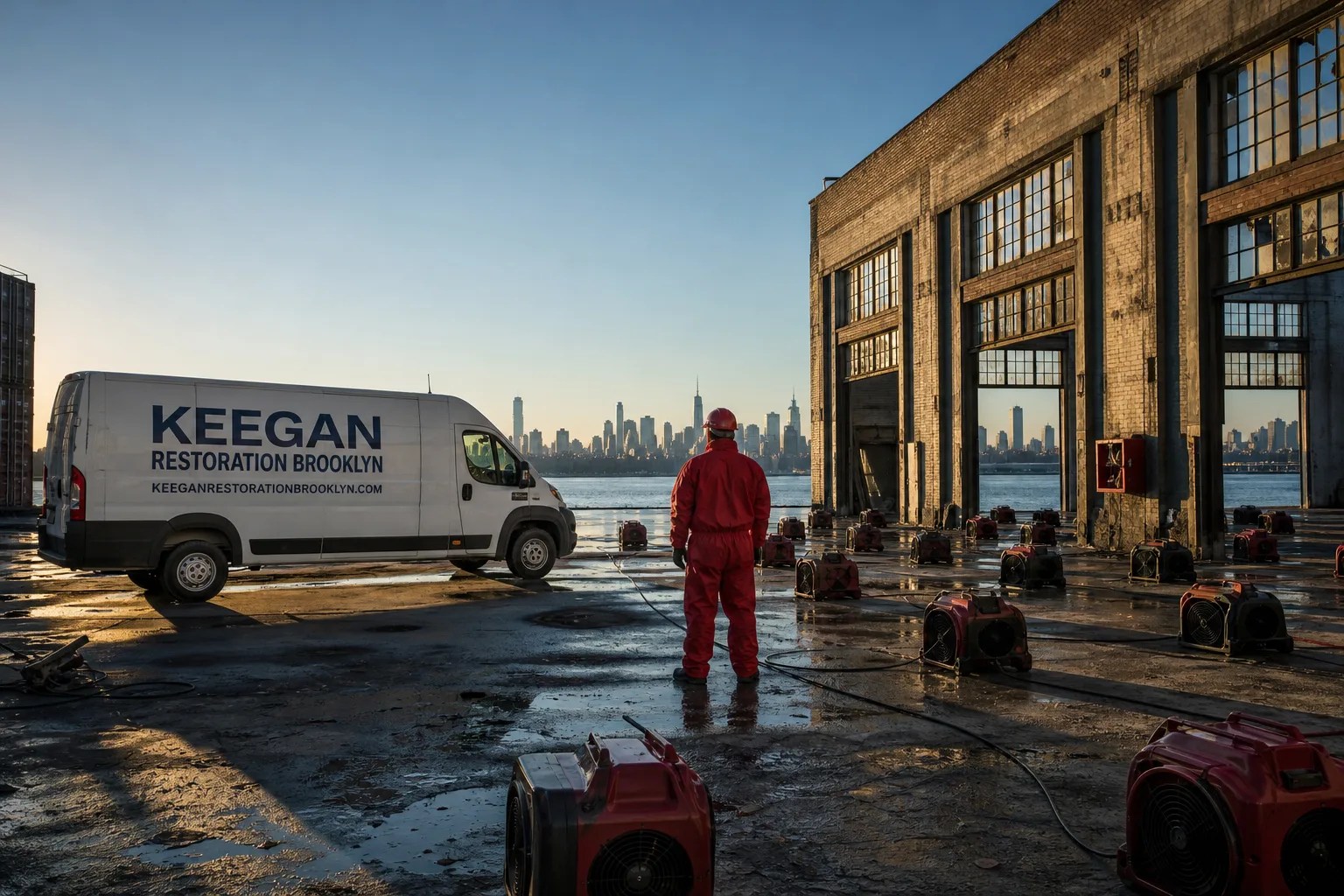
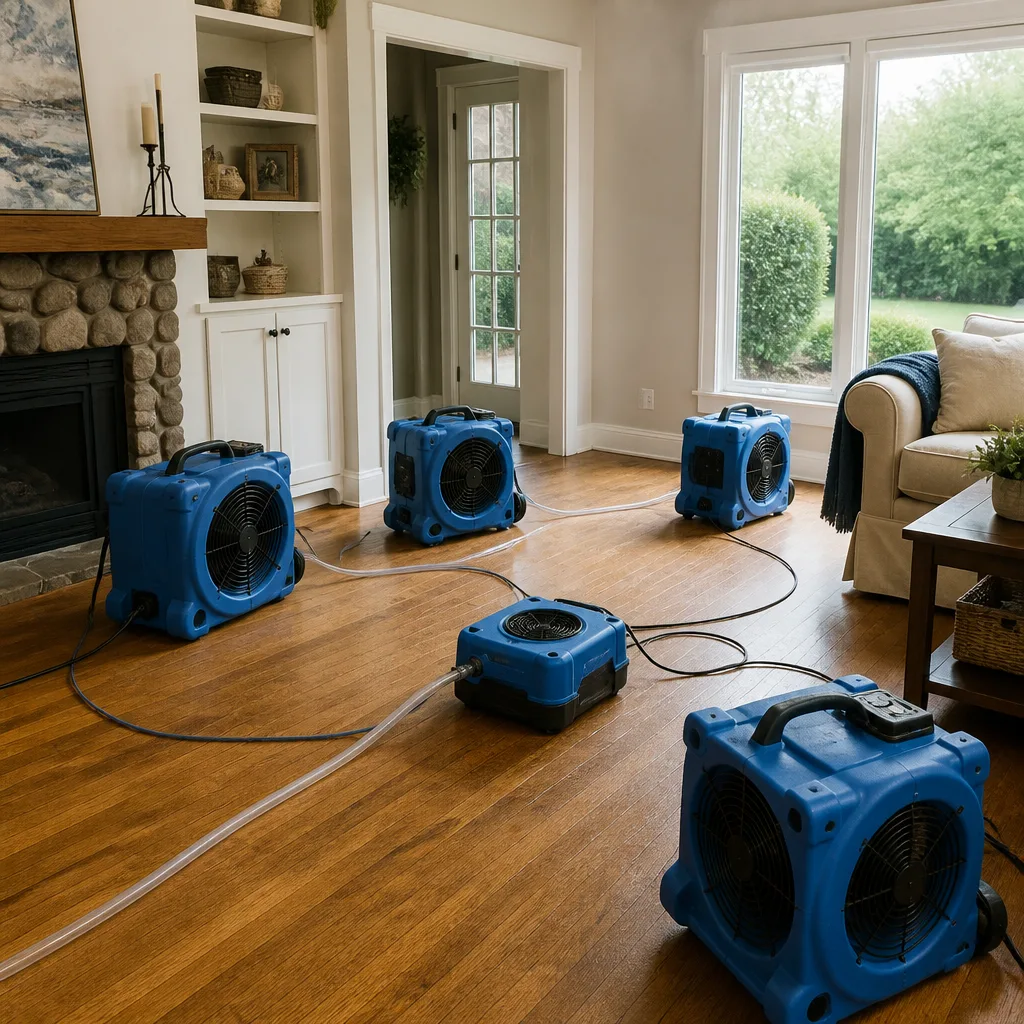
 Water damage drying
 Fire & smoke cleanup
 Mold remediation
 Storm response
 Sewage cleanup
 Reconstruction
Free visual inspection and a written scope of work before any mitigation begins - photos, moisture readings, and drying logs go in your claim file
The scope we write is the scope we bill. Anything new gets shown to you, in writing, before we touch it.
Get your free estimateFast, Reliable Water Damage Restoration Across New York
A burst pipe in a pre-war co-op on the Upper West Side or a failed sump pump in a Forest Hills basement doesn’t wait for business hours. Water moves through plaster, hardwood, and concrete fast, and in New York’s high-rise buildings it moves downward through multiple units. Keegan Restoration Brooklyn dispatches water damage restoration crews to every borough, any hour, with a live person answering at (607) 325-7185. We know the buildings, the supers, the co-op boards, and the Department of Buildings rules that shape how restoration gets done here. When you call, you’ll get a straight answer and a crew that shows up inside the window we give you.
Why Keegan Restoration Brooklyn Is New York’s Preferred Water Damage Restoration Company
New York homeowners have dealt with enough contractors who disappear after a deposit or rewrite the price at the door. We run every job to The Garrison Standard: written price before work starts, background-checked uniformed technicians, and a 365-Day Done Right Promise in writing. That matters when a co-op board wants documentation, an insurer wants scope-of-loss detail, and you want a crew you can let into your apartment without watching over their shoulder.
Our New York customers deal with water damage in buildings where one unit’s problem becomes three units’ problem by morning. We document everything: pre-loss condition of original plaster moldings and parquet, moisture readings room by room, drying logs formatted for adjusters. The crews carry Dri-Eaz, Phoenix, and Injectidry equipment and work to IICRC and RIA standards. Led by Shane Pruitt, the team answers questions in plain language and puts every repair guarantee on paper before we pack up.
Restoration work we handle
Water Damage Repair in New York
Water Damage Repair in New York means more than patching drywall after a leak. In pre-war buildings, it means assessing original lath-and-plaster walls, old-growth floor joists, and steam risers that have been in service since the Roosevelt administration. When a riser fails inside a bathroom wall on West 85th Street, the water isn’t sitting in modern gypsum board; it’s soaking through horsehair plaster and running down inside a wall cavity to the apartment below. The repair scope has to account for what’s behind the surface, not just what’s stained on the wall. Pricing for water damage repair in New York typically runs $1,800 – $6,500 depending on how many rooms are affected and whether period details need restoration versus replacement.
Plaster and Hardwood Restoration
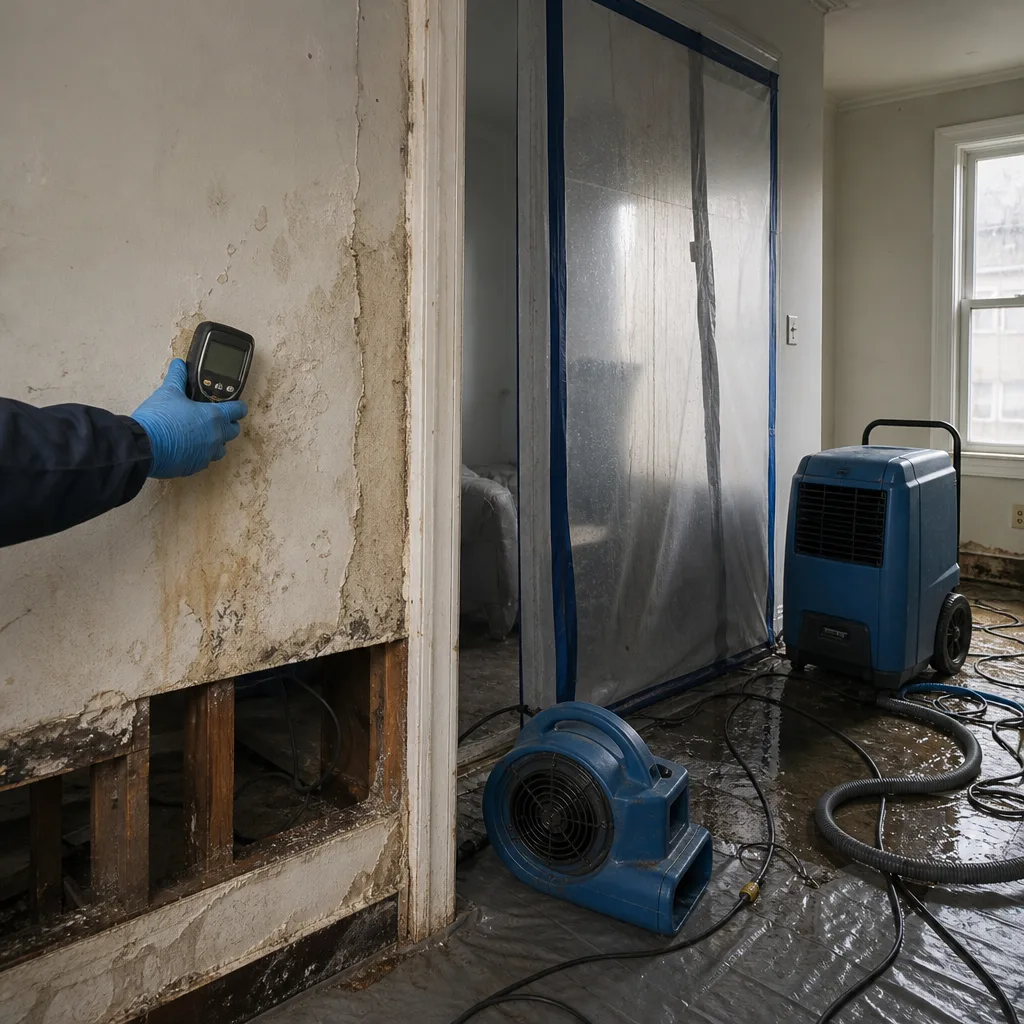
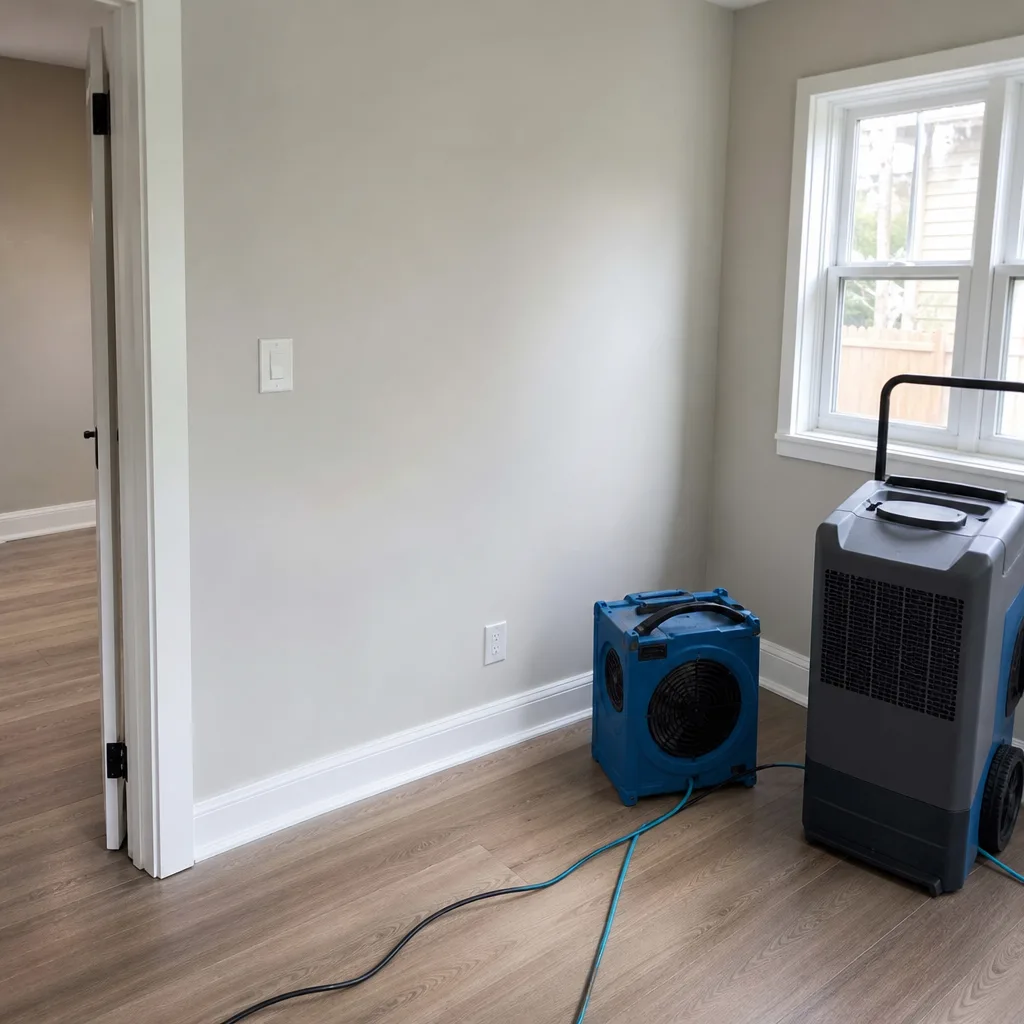
We don’t default to gutting walls and ripping out flooring just because they got wet. In New York apartments where original plaster and parquet carry real value, our first move is to map moisture, set containment, and dry aggressively with desiccant dehumidification. Category 1 water from a clean supply line can often dry in place. Category 2 water from a steam riser or washing machine overflow usually means removing saturated plaster and insulation, but the finish materials can sometimes be salvaged. The crew documents every decision so the co-op board sees why something was saved or cut out.
Riser Leak and Multi-Unit Damage Repair
When a riser fails in a high-rise, water chases the pipe through floors six, five, and four before anyone notices. Repair work has to move fast and coordinate with building management to close the riser and access ceilings below. We handle the containment, extraction, and reconstruction while keeping the building’s managing agent in the loop with photos and daily logs. Multi-unit riser repairs in New York often run $4,000 – $14,000 once you account for ceiling access, asbestos testing on older pipe insulation, and restoration across multiple apartments.
Water Mitigation in New York
Water Mitigation in New York is the emergency playbook: stop the source, extract standing water, contain the affected area, and begin structural drying before mold has a chance to establish. In a high-rise, mitigation also means protecting the units below, because water that sits in a ceiling cavity overnight becomes a claim in someone else’s apartment by noon. The goal is to dry the structure to its baseline moisture content and document every step so the insurance claim has a clean scope of loss. Mitigation pricing in New York typically runs $2,200 – $7,500 for a standard two-room incident, factoring in extraction, containment, equipment placement, and monitoring over three to five days.
High-Rise Containment and Drying
Our crew responded to a 5th-floor brownstone conversion on the Upper West Side where a legacy steam riser failed inside a bathroom wall. We set up containment in the hallway, coordinated with the building super to kill the riser, and used our moisture mapping and drying logs to show the co-op board exactly where we pulled category 2 water from the original lath-and-plaster before structural drying with Dri-Eaz dehumidifiers. That’s the difference between a two-day mitigation and a six-week rebuild: knowing where the water actually went.
Low-Rise Basement and Brownstone Mitigation
Not every New York water damage story happens forty floors up. Basement water removal in brownstones and row houses across Brooklyn and Queens has its own rhythm: pump out the standing water, cut the wet drywall on the lower four feet, and run high-volume air movers and dehumidifiers until the concrete slab reads dry. Winter freeze-thaw cycles crack older foundation walls, and spring rainstorms push groundwater through floor drains that haven’t been scoped in decades. A typical basement mitigation in a New York brownstone clears $2,500 – $6,000 before any rebuild work begins.
Trusted Brands We Service in New York
We stock and service equipment from B-Air, Injectidry, Phoenix, and Dri-Eaz so we’re not waiting on a distributor when your apartment is open to the studs. Our New York crews carry the same professional-grade drying and extraction equipment on every truck: high-capacity extractors, LGR dehumidifiers, and air movers sized for confined pre-war rooms and tight elevator access. Equipment repairs and replacements happen fast because we keep common parts in our New York City office. The goal is simple: keep the drying process moving without swapping out inferior rental units mid-job. Every piece of equipment we run is operated to IICRC, RIA, and IFA standards, and we log the readings daily.
Common Water Damage Restoration Problems We See in New York Homes
- Delayed response in high-rise buildings. Water that sits for 12 hours migrates through concrete slabs into the units below, multiplying claims and triggering co-op/condo insurance disputes. We’ve walked into apartments where a small tub overflow on the 12th floor became a three-floor claim because someone waited until morning to report it.
- Ignoring building access protocols and DoB permit requirements. In many New York buildings you can’t just show up with equipment and start cutting. Work stoppages and fines happen when crews skip the building’s certificate of insurance process, ignore freight elevator scheduling, or start structural work without the right Department of Buildings filings. The affected unit ends up with open walls and active moisture for weeks.
- Failure to document pre-loss condition of original period details. Plaster moldings, parquet, and old-growth framing in pre-war apartments create real disputes over restoration scope and cost. If nobody documented their condition before the water hit, the co-op board and insurer end up arguing about whether the water caused the damage or just revealed existing wear. We photograph and log everything before we touch a wall.
- Steam heat and no central air conditioning complicate drying. Pre-war radiators dump heat and humidity into drying chambers while window-unit ACs can’t move enough air. Without proper psychrometrics and desiccant drying, surfaces dry unevenly and hidden mold takes root inside closed wall cavities. In New York’s humid summer months, this is a recipe for callbacks.
See the difference
 Before
 After
After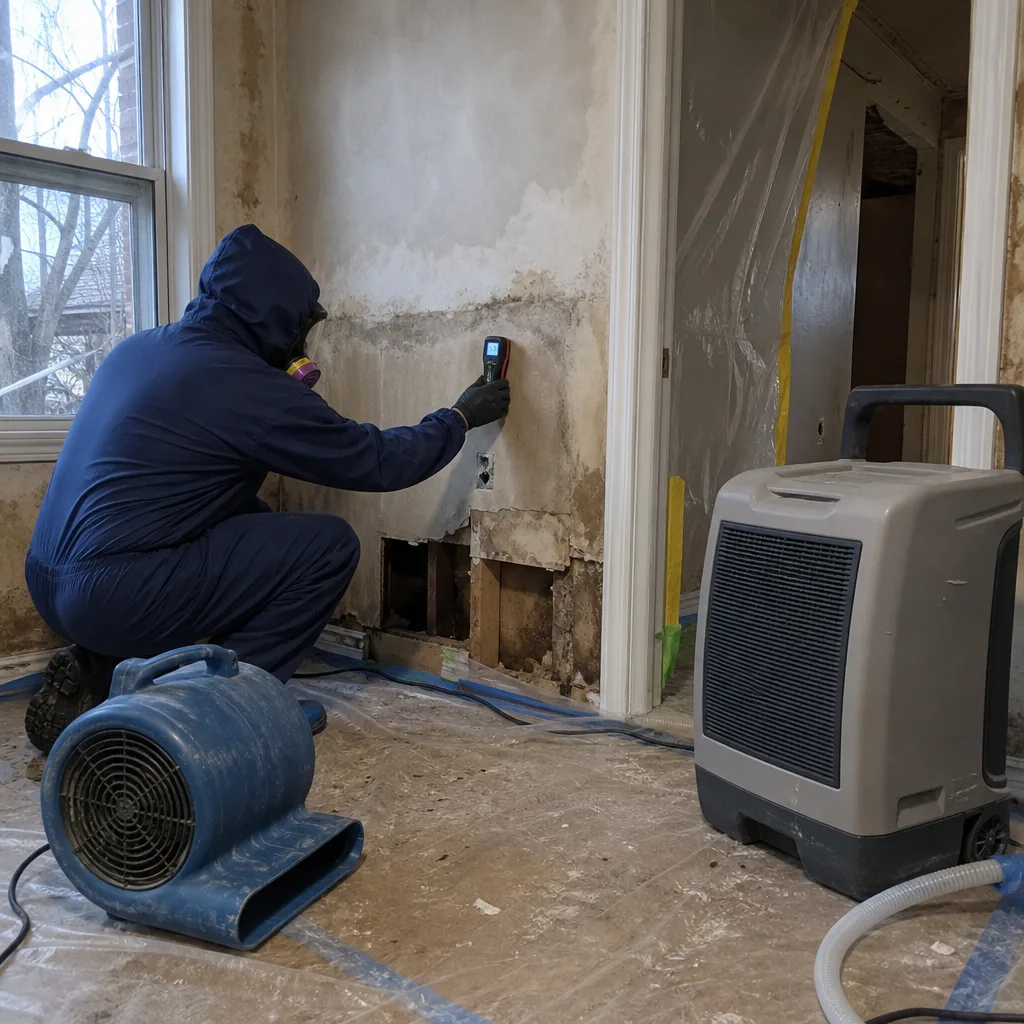 Before
 After
After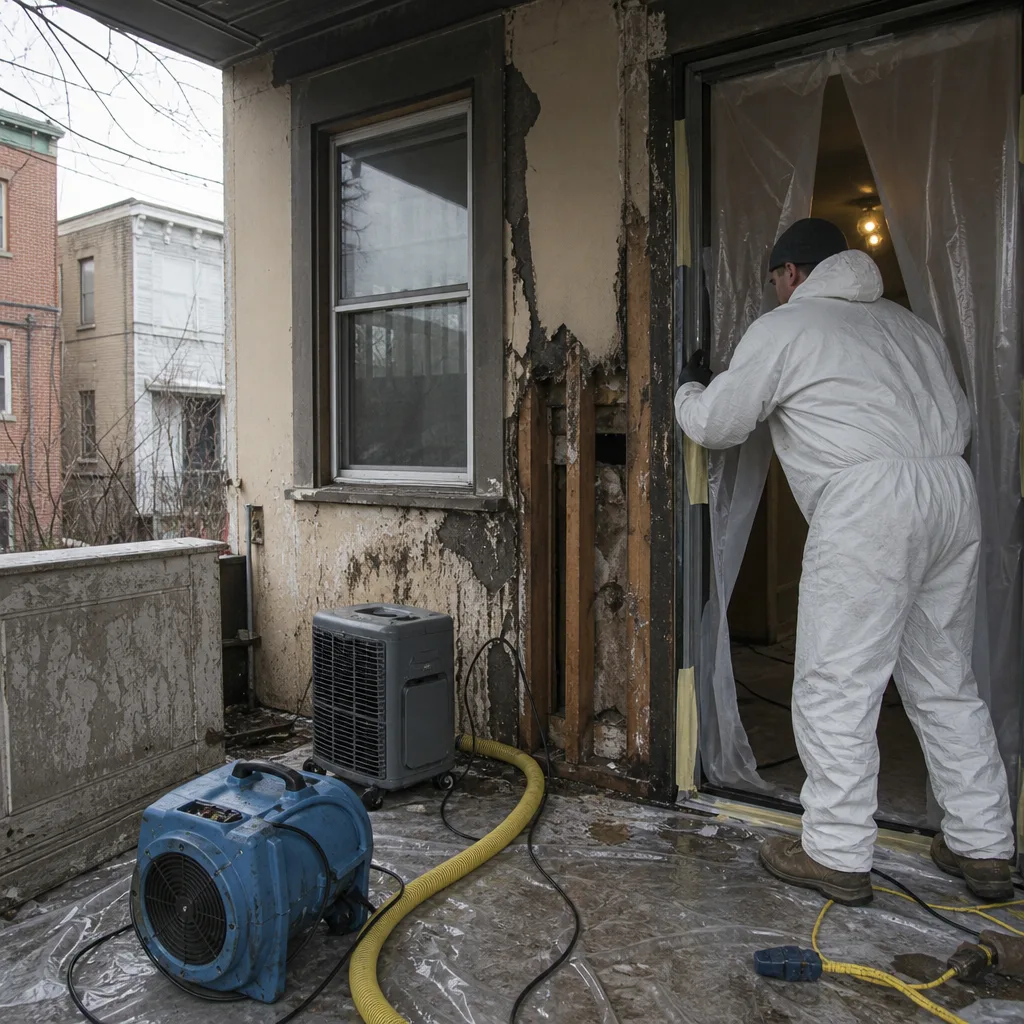 Before
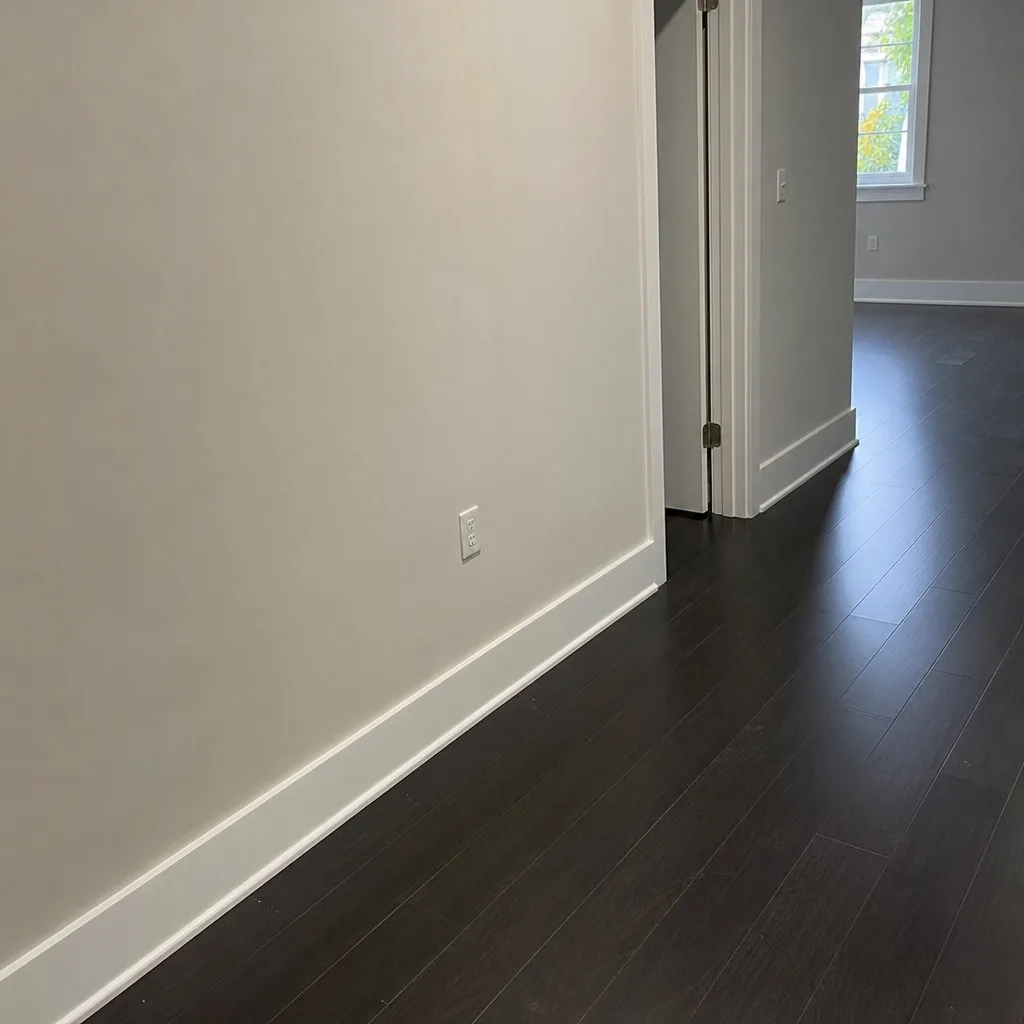 After
AfterPricing for Water Damage Restoration in New York, NY
New York water damage restoration is priced by scope, not by square footage alone. A straightforward emergency extraction in a single apartment with a burst supply line under the kitchen sink typically runs $1,200 – $2,800, including extraction, drying equipment, and monitoring. A full apartment flood involving category 2 water, containment, demolition, drying, and basic rebuild work commonly lands between $6,000 and $18,000. Riser leaks and multi-floor incidents trend $10,000 – $35,000 depending on the number of units affected. The written price comes before any work starts, not after, and it includes equipment, labor, and documentation formatted for your insurer. Call (607) 325-7185 and we’ll give you an exact quote after we see the scope.
We Also Serve Cities Near New York
Our crews serve New York plus the surrounding communities of Brooklyn, Elmhurst, Rego Park, and Forest Hills. If you’re in a brownstone near Prospect Park or a garden apartment off Queens Boulevard, the same Water Damage Restoration standards apply: written pricing, documented drying, and a full-year guarantee on every repair.
Serving New York, NY - Our Local Coverage Area
We’re based in the New York area and know this community well. Use the map below to see our service coverage - if you’re nearby, we can almost certainly help.
FAQs About Water Damage Restoration in New York
In most pre-war co-ops, the building’s proprietary lease assigns responsibility for riser pipes to the corporation, meaning the co-op’s insurance covers the pipe itself and often the wall cavity, while your individual unit policy covers your finishes, personal property, and any betterments like a renovated kitchen. The neighbor above is only liable if the leak stemmed from their negligence (an overflowing tub, a disconnected washer hose). Practically, we document everything so each party’s insurer can argue from facts instead of guesses. Call (607) 325-7185 and we’ll walk you through what we see on site.
Yes, in many cases. If we’re replacing plaster with new drywall, that’s considered a minor alteration and typically requires an LAA (Limited Alteration Application) filing with an expeditor. Full apartment rebuilds, structural repairs, or changes to fire-rated assemblies often require a full ALT-2 permit. Some mitigation work (extraction, drying, containment) falls under emergency repair provisions and can proceed without a permit, but restoration work behind the walls rarely does. We handle the DoB filings and coordinate with your building’s architect of record when one exists.
We don’t rely on the building’s climate systems. In a pre-war apartment we seal the affected area with containment, run high-output dehumidifiers (Dri-Eaz and B-Air units sized for the cubic footage), and use Injectidry systems to pull moisture from inside wall cavities and under hardwood floors. Steam radiators add heat to the chamber, which actually accelerates evaporation, but we monitor psychrometric conditions daily so surfaces dry evenly. The buildings on the Upper West Side and Park Slope dry slower in July than in January, and our logs track that.
It depends on the material and the exposure time. Category 2 water (from steam risers, washing machine overflows, or sump failures) carries significant contamination, so saturated drywall, insulation, and carpet pad almost always get removed. But original plaster walls can sometimes be saved if we catch the water quickly and dry the assembly from both sides. Hardwood flooring can be salvaged with Injectidry panel drying when the water hasn’t saturated the subfloor for more than 48 hours. We document every decision with moisture readings so you’re not paying to replace material that could have been saved.
Waiting. In a high-rise, water migrates through concrete slabs and down walls faster than most people expect, and a two-unit incident becomes a six-unit claim overnight if nobody starts extraction and containment. The next biggest mistake is letting an unlicensed contractor open walls before documenting the pre-loss condition, which guts your insurance claim and enrages the co-op board. Call us first at (607) 325-7185: we answer live, arrive fast, and document everything before a single tool touches the wall.
Contact Keegan Restoration Brooklyn for Water Damage Restoration in New York
If water is moving through your apartment, your basement, or the floors below you, don’t wait. Call (607) 325-7185 and a live person answers, day or night. We’ll dispatch a crew to New York, write the scope and price before work starts, and stand behind every repair with the 365-Day Done Right Promise. Led by Shane Pruitt, Keegan Restoration Brooklyn runs every water, fire, and mold job to The Garrison Standard: show up inside the window, price in writing, do it by the book, leave the site clean, and stand behind the work for a full year.
Written by Shane Pruitt, Owner at Keegan Restoration Brooklyn, serving New York since 2005.