
Last updated October 16, 2026
 Water damage drying
 Fire & smoke cleanup
 Mold remediation
 Storm response
 Sewage cleanup
 Reconstruction
Free visual inspection and a written scope of work before any mitigation begins - photos, moisture readings, and drying logs go in your claim file
The scope we write is the scope we bill. Anything new gets shown to you, in writing, before we touch it.
Get your free estimateSeasonal Damage Restoration Care for Brooklyn: Year-Round Homeowner’s Guide
Brooklyn’s worst water damage months are not the ones most homeowners expect. It’s March, when frozen pipes thaw behind walls that were never properly insulated, and November, when leaves choke flat roof drains right before the first hard freeze. Most seasonal guides split the year into four equal quarters. That split doesn’t match when Brooklyn homes actually fail. This guide rebuilds the calendar around the two brutal transition windows that cause the most damage in Brooklyn, and the two quieter periods when smart owners do the work that prevents the next loss. You’ll learn what to check, when to check it, what it costs to fix problems early, and when to call a restoration crew.
Quick Answer
Seasonal damage prevention in Brooklyn means working on the building’s real risk schedule, not the calendar. The two danger windows are October through December, when flat roof drains and parapets clog and freeze, and February through April, when pipes that ran through unheated spaces all winter thaw and split. The two safe windows, May through June and July through September, are when Brooklyn homeowners should complete exterior inspections, masonry repointing, and interior drying checks before the next freeze or thaw cycle arrives. A documented year-round maintenance log with dated photos is the single most effective tool for preventing losses and settling insurance claims faster.
Restoration work we handle
Table of Contents
- Brooklyn’s Real Risk Calendar: Why Four Seasons Don’t Apply Here
- October Through December: The Flat Roof and Parapet Drain Protocol
- February Through April: The March Pipe Thaw Risk Assessment
- May Through June: The Post-Thaw Inspection Window
- July Through September: Brooklyn’s Hidden Mold Window
- Brownstone and Masonry Exterior Envelope Work Before Freeze Season
- Building a Year-Round Photo and Maintenance Log That Insurance Adjusters Respect
- What Seasonal Prevention Costs in Brooklyn: Real Price Ranges
Brooklyn’s Real Risk Calendar: Why Four Seasons Don’t Apply Here
Brooklyn’s housing stock runs old. More than half the borough’s residential buildings went up before 1940, which means flat roofs, parapet walls, brick facades, and plumbing that predates modern insulation standards. That age is the variable most seasonal guides miss. A new-construction home in Texas behaves differently from a 1920s brownstone in Park Slope or a 1950s brick rowhouse in Bay Ridge. The calendar matters less than the infrastructure.
What actually damages Brooklyn homes is the freeze-thaw cycle. Water gets into a crack, a drain, a parapet cap, or a supply line. The temperature drops below 32 degrees. The water freezes and expands by roughly 9 percent. That expansion widens the crack, pops the pipe, or lifts the roof membrane. Then the thaw comes, and the water that was frozen is now liquid and moving through the building. In our experience across Brooklyn, the damage shows up weeks after the weather event that caused it. That delay is why homeowners blame the thaw and not the freeze, and why the response always feels late.
The second variable is roof geometry. Most Brooklyn rowhouses and many apartment buildings have flat or low-slope roofs. Flat roofs don’t shed water on their own. They rely on drains and scuppers to move water off the membrane. When those drains clog in October and November, water ponds. When that ponded water freezes in December, it lifts the membrane and works its way under flashing. By the time the spring thaw arrives, the leak path is established and the damage is done. This is the single most avoidable seasonal failure in Brooklyn, and we’ll cover the exact protocol below.
The third variable is humidity. Brooklyn sits between two bodies of water, the East River and the Atlantic via the harbor. Summer relative humidity routinely stays above 65 percent for weeks. That humidity does not cause damage on its own. But it reactivates mold in materials that dried out after a winter leak but were never fully removed. We’ll cover that in the summer section, because skipping the summer check is how small spring water damage becomes a September mold remediation.
For a broader look at how water moves through Brooklyn buildings, start with our guide to Water Damage Restoration in Brooklyn. For now, the takeaway is this: Brooklyn has two danger windows and two working windows. Structure your year around them.
October Through December: The Flat Roof and Parapet Drain Protocol
The single highest-value thing a Brooklyn homeowner can do in the fall is clear every roof drain, scupper, and parapet opening before the first hard freeze. This is not a chore to outsource to memory. It needs to happen on a schedule, with a checklist, because a single clogged drain on a flat roof can pond enough water to affect an entire top floor ceiling by January.
Here is the protocol we recommend, and the one our technicians use when we assess roof-related water damage in Brooklyn:
- Schedule the first cleaning for the first or second week of October. Brooklyn’s leaf drop starts in mid-October and runs through Thanksgiving. Waiting until December means the drains are already clogged.
- Clear the main roof drains first. Remove leaves, twigs, plastic bags, and construction debris from every drain basket and strainer. On a typical 20-foot-wide Brooklyn rowhouse, that’s two to four drains. On a larger building, it’s more.
- Check every scupper opening. Scuppers are the openings in parapet walls that let water drain off the roof to the exterior. Leaves plug them just as easily as they plug interior drains.
- Inspect parapet cap joints and reglet flashing. The parapet is the low wall around the roof edge. Water gets into the parapet wall through failed cap joints and open reglets. Once inside, it travels down through the brick and shows up as ceiling stains on the top floor. This is the freeze-thaw mechanism, and it’s the most common roof leak source we see in Brooklyn.
- Run a second cleaning the week after leaf drop peaks. One October cleaning is not enough. Brooklyn plane trees and oaks drop leaves in waves, and the second wave is often the one that clogs the drain you already cleared.
- Photograph every drain and parapet section after cleaning. Dated photos are your proof of maintenance and your baseline if a leak develops later in the winter.
If you find ponding water that doesn’t drain after the cleaning, that’s a sign the roof membrane has sagged or the drain line itself is clogged below the roof surface. A plumber or roofing contractor can camera the line. If water has already entered the building, the response is different, and speed matters. Water that sits in a ceiling cavity for more than 48 hours grows mold. For that kind of emergency, our Keegan Restoration Brooklyn home page explains how we respond, and our Water Damage Restoration in Brooklyn service covers the extraction and drying process in detail.
February Through April: The March Pipe Thaw Risk Assessment
March is Brooklyn’s cruelest month for water damage. Every hard freeze from December through February put stress on supply lines and drain lines that run through unheated spaces: exterior walls, uninsulated crawl spaces, garages, and the cavities behind kitchen cabinets on perimeter walls. The pipes survived the freeze because the water inside them was frozen solid, plugging the breach. Then March arrives, the temperature rises, the ice plug melts, and the water starts moving through a pipe that now has a split in it. The damage appears days or weeks after the thaw, which is why March claims more ceilings and floors in Brooklyn than any other month.
The March pipe thaw risk assessment is a targeted inspection you can do yourself, though it sometimes requires opening a wall. Here is the step-by-step method:
- Map every supply line that runs along an exterior wall. In a typical Brooklyn rowhouse, that’s the kitchen sink on the front or rear wall, the bathroom on a side wall, and any radiators on perimeter walls. Mark them on a simple floor plan.
- Check for freeze history. If a pipe ever froze before, even if it didn’t burst, that section is more likely to fail again. The copper has already been stressed. Treat any previously frozen pipe as a suspect.
- Look for the warning signs in March. Water pressure that drops without explanation. A water bill that spikes. Stains on ceilings below bathrooms or kitchens. A musty smell that appears and disappears. Bulging drywall or peeling paint along a wall that ran a pipe all winter. Any of these mean water is already moving where it shouldn’t be.
- Check shutoff valves. Every sink, toilet, and appliance has a shutoff. Turn each one one-eighth turn and back. If it’s frozen, corroded, or won’t move, replace it. A valve that fails when you need it turns a small leak into a flooded floor.
- If you find a leak, shut the water at the main and call. This is not the moment for a DIY patch. Water inside a wall cavity or ceiling cavity is already doing structural and microbial damage. The clock is running.
Brooklyn’s oldest housing stock, the prewar brownstones and limestone rowhouses, are the most vulnerable because their plumbing was installed before perimeter insulation was standard practice. Even buildings that have been renovated often have one or two supply lines that still run through an unheated chase. Identifying those lines before March turns a $400 pipe repair into a $14,000 restoration claim. Our Water Damage Restoration in Brooklyn page explains what to expect if a thaw pipe does fail, including the documentation we provide to support an insurance claim.
May Through June: The Post-Thaw Inspection Window
By May, the thaw is done, the weather is stable, and homeowners can finally see the damage winter left behind. This is the inspection window. What you find in May and June determines whether you have a quiet summer or a mold problem by August.
The first place to inspect is every ceiling below a roof or a bathroom. Water stains from a winter leak often fade as they dry, which makes them easy to miss. Use a flashlight held at an angle against the ceiling. The angled light reveals texture changes, even where the stain has faded. Mark every suspicious area with painter’s tape and photograph it.
The second area is the basement or cellar. Brooklyn basements take on water from three sources: foundation seepage, sewer backup, and leaks from the supply lines running overhead. In spring, the water table is still high from winter precipitation, so seepage shows up now. Look for damp spots on the floor, efflorescence on the foundation walls (that’s the white powdery mineral deposit that signals water moving through masonry), and any rust on the bottom of the water heater or boiler. Rust at the base means water sat there. The question is whether it’s still coming.
The third area is around window frames and doorframes on the top floor. Winter wind-driven rain works its way through failed caulk and flashing, and the damage shows up as soft wood, peeling paint, or stains in the corners. This is the cheapest time to fix it, because the materials are dry and the sealants cure properly.
If you do find water damage in May or June, resist the urge to just paint over it. Paint seals moisture inside the wall cavity, and that trapped moisture is exactly what mold needs to establish itself. The proper sequence is: find the source, stop the water, dry the cavity, then repair. That sequence is the standard we follow on every Water Damage Restoration in Brooklyn job, and it’s why our drying plans use psychrometrics, the science of how moisture moves through air and materials, rather than guesswork.
July Through September: Brooklyn’s Hidden Mold Window
Summer should be the quiet season, and for roof and pipe work it mostly is. But Brooklyn’s summer humidity creates a specific problem that most homeowners never connect to the original water event: mold that restarts in wall cavities and drywall that tested clear in spring.
Here is the mechanism. In March or April, a pipe leaks inside a kitchen wall. The homeowner dries the visible area, maybe runs a fan for a few days, and the wall feels dry. The cavity inside, however, still holds moisture in the framing and the backside of the drywall. It’s not enough to feel from the outside, but it’s there. Then Brooklyn’s June-through-September humidity arrives, and the indoor air stops accepting moisture. Materials that were slowly drying now stop drying entirely. The moisture level in the cavity stays high enough, long enough, for dormant mold spores to germinate. By late August, the homeowner smells it or sees staining at the baseboards. What looked like a minor spring leak has become a fall mold remediation.
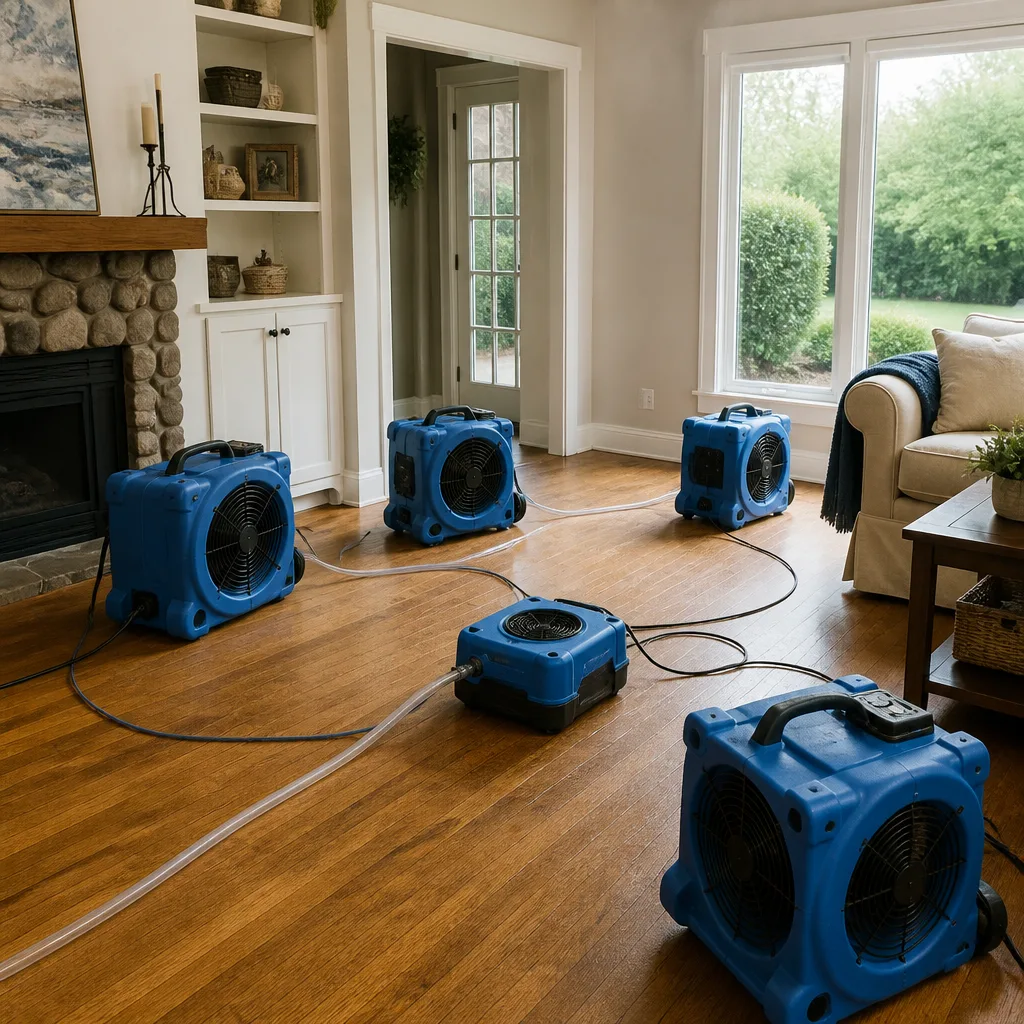
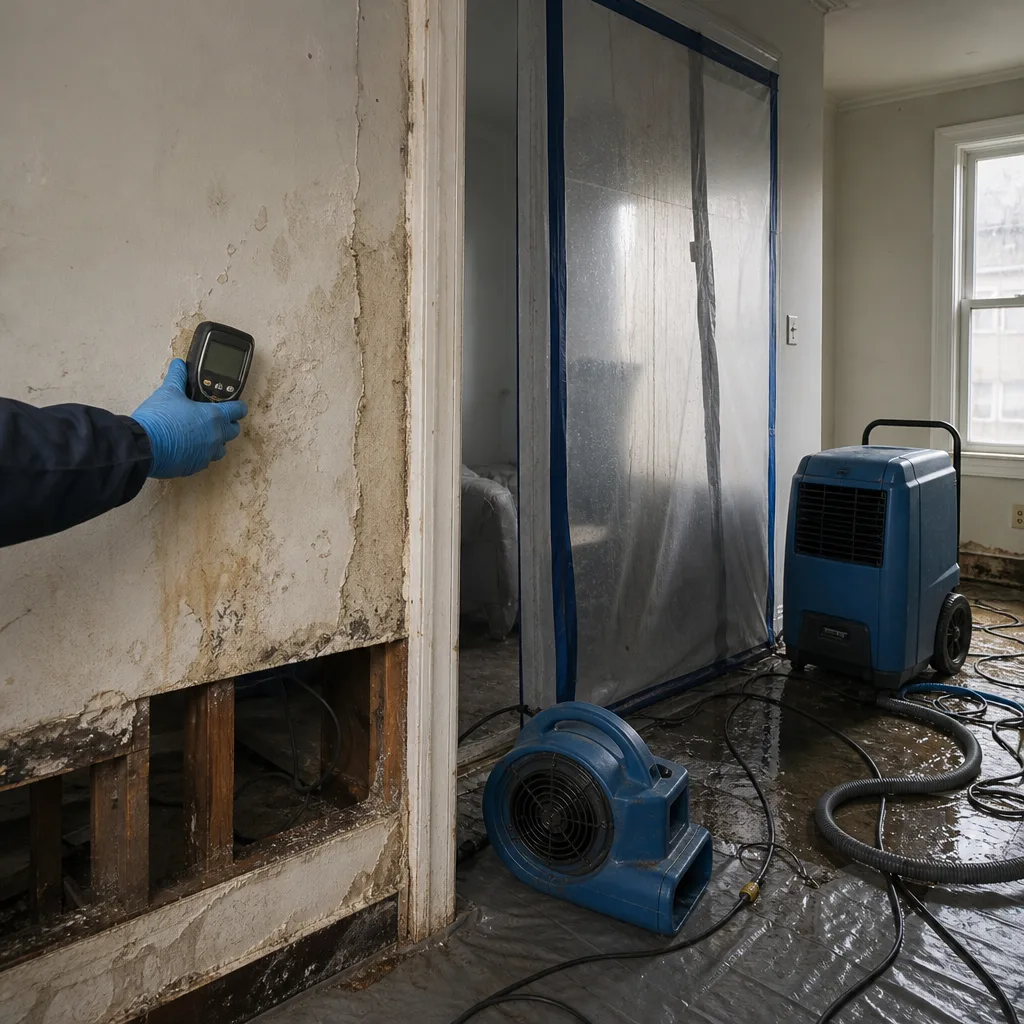
The fix is not more fans. The fix is to verify the cavity actually dried all the way through. That means using a moisture meter, not fingertips. In our experience across Brooklyn, a wall cavity that still reads above 16 percent moisture content in June is a mold problem waiting for August. Professional drying equipment, like the Dri-Eaz and Phoenix units we use on restoration jobs, is designed to pull moisture from deep inside building materials, not just off the surface.
For homeowners who had water damage in the spring and didn’t have it professionally dried, here’s what we recommend for the summer mold window:
- Run a dehumidifier in the affected room through July and August. Keep indoor relative humidity below 55 percent if you can. A $25 hygrometer tells you where you actually are.
- Check the affected wall and adjacent baseboards every two weeks. Look for staining, warping, or a musty odor. Smell is often the first indicator.
- If you smell mold but can’t see it, it’s inside the cavity. The visible mold is only a fraction of what’s present. Mold remediation is not cleaning the surface. It’s removing the reservoir.
- Don’t run a standard household fan pointed at the wall. That just circulates spores around the room. The drying needs to happen in a controlled way, with the right equipment and air filtration.
Mold is the one topic where we hear the most expensive homeowner denial. “It’s just a little mold” is how a $900 surface cleaning becomes a $9,000 cavity remediation. If you had water in the spring and you smell mold in the summer, call for an inspection before it spreads to adjacent rooms. Our Mold Remediation in Brooklyn page explains the process, including when testing is worthwhile and when it’s not.
Brownstone and Masonry Exterior Envelope Work Before Freeze Season
Brooklyn’s brownstones and brick rowhouses have an exterior envelope that behaves differently from a modern house with siding. The brick, brownstone, and limestone are porous. They absorb water. When that water freezes, it spalls the face off the stone, breaks the mortar joints, and opens paths for water to move deeper into the wall. The term for the process is freeze-thaw spalling, and it’s visible on thousands of Brooklyn facades if you know what to look for.
What to look for: mortar joints that are recessed more than a quarter inch from the brick face, brick faces that have flaked or popped off (you’ll see fresh, lighter-colored patches where the old face used to be), and brownstone lintels, the horizontal stones above windows, that show hairline cracks or flaking along the bottom edge. All of these are water entry points. Repairing them before October means the wall goes into winter able to shed water. Repairing them in March means the freeze already did its work.
Repointing is the process of cutting out deteriorated mortar and packing fresh mortar into the joints. It’s not a caulk job, and it’s not a weekend project for most homeowners. The mortar mix has to be softer than the brick or stone, or the repair itself causes spalling. This is a trade craft, and a bad repointing job is worse than none at all because it traps water behind a hard, impermeable cap. In Brooklyn, building codes for landmarked districts also restrict the mortar type and finish, so a brownstone in a historic district needs a contractor who knows the district’s rules.
The parapet, the low wall around the roof, is the most abused part of a Brooklyn masonry building. It takes full sun, full wind, and full freeze-thaw exposure, and it’s the part most homeowners never look at. A cracked parapet cap lets water into the wall all winter, and the resulting damage shows up not on the roof, but on the top floor ceiling and walls. October is the time to look at the parapet. If the cap is cracked, the flashing is lifted, or the mortar is crumbling, fix it before December.
Building a Year-Round Photo and Maintenance Log That Insurance Adjusters Respect
The least expensive loss-prevention tool in Brooklyn is a camera and a dated log. We’ve worked with hundreds of homeowners through insurance claims, and the difference between a claim that settles in three weeks and one that drags on for three months is almost always documentation. The homeowners who keep a simple year-round log provide the adjuster with a timeline and a baseline. The homeowners who don’t are left arguing about whether the damage was pre-existing.
Here is the system we recommend, and it takes less than an hour a month:
- Take a full set of baseline photos now. Every room, every ceiling, every wall, every appliance, the roof, the parapet, the basement, the water heater, the boiler, the electrical panel. Use a phone that stamps the date automatically. Store them in a folder you won’t delete.
- Add seasonal photos of the high-risk areas. In October and November, photograph the roof drains, scuppers, and parapet. In March, photograph the exposed pipes in the basement and any exterior wall plumbing. In May and June, photograph any stains or damp spots. In July and August, photograph the walls that got wet in spring.
- Log every maintenance action, even the small ones. “October 14: cleared roof drains, second floor.” “March 8: checked supply lines along the rear kitchen wall, no leaks found.” “June 12: dehumidifier running in bathroom, RH 48 percent.” A two-line entry with a date transforms a claim from a dispute into a narrative.
- After any loss, photograph everything before anything is moved. The adjuster needs to see the scene as it was. Then photograph the process. Then photograph the repairs. Our restoration jobs include this documentation as standard practice, formatted to support your claim, because we’ve seen how much difference it makes.
- Keep receipts for every repair and every maintenance item. A $200 drain cleaning receipt from October is your proof that you maintained the property, which matters in a claim dispute.
This log is not just an insurance tool. It’s a prevention tool. The simple act of photographing the same wall every month means you see the slow changes that otherwise go unnoticed until a ceiling falls in. Most serious water damage in Brooklyn is not sudden. It’s slow, incremental, and visible if someone is looking.
What Seasonal Prevention Costs in Brooklyn: Real Price Ranges
Here are the price ranges we see in Brooklyn for the seasonal work described in this guide. These are the costs of prevention, and they’re useful for calibrating your maintenance budget before anything goes wrong.
| Service | Typical Brooklyn Range | Notes |
|---|---|---|
| Roof drain and scupper cleaning (single rowhouse) | $150 – $350 per visit | Two visits in fall; some roofing companies offer a fall package. |
| Parapet cap joint sealing | $600 – $1,800 | Depends on linear footage and condition of existing caps. |
| Masonry repointing (section, not full facade) | $15 – $30 per square foot | Full facade work runs higher; landmarked districts add review requirements. |
| Pipe inspection (camera scope, single line) | $250 – $500 | Worth it before March if you’ve had freeze history. |
| Shutoff valve replacement (single valve) | $120 – $250 per valve | Plumber’s rate; parts are inexpensive, labor is the cost. |
| Moisture meter check with restoration inspection | Free estimate from Keegan Restoration Brooklyn | We include moisture assessment in the estimate. |
| Professional water extraction and drying (post-loss) | $2,800 – $7,500 for a typical room | Covered by insurance in most sudden-loss cases; our Water Damage Restoration in Brooklyn page details the process. |
| Mold remediation (single room, cavity) | $1,800 – $6,000 | Price depends on the size of the affected cavity and the containment required. |
Prevention costs are a fraction of restoration costs. A $300 fall drain cleaning prevents a $6,000 January ceiling repair. A $350 camera scope in February prevents a $12,000 March pipe burst claim. The math is not complicated. The discipline is the hard part, because the maintenance calendar doesn’t match the urgency of the emergency calendar. Every dollar spent on October and February prevention in Brooklyn saves somewhere between five and fifteen dollars in restoration, and we’ve seen that ratio hold across hundreds of jobs.
Common Mistakes to Avoid
- Clearing roof drains once in October and calling it done. Brooklyn leaf drop runs through late November, and the second wave of leaves is what clogs drains you already cleared. One cleaning is not a protocol.
- Assuming a pipe that survived one freeze will survive the next. Copper that has frozen once is already stressed. The same pipe will fail in a later winter, usually at the worst time. Replace or reroute previously frozen lines instead of gambling.
- Painting over a water stain without drying the cavity. Paint traps moisture inside the wall, and trapped moisture is what mold feeds on. Dry first, then repair.
- Using a household fan to dry a leak inside a wall. A fan moves air across surfaces. It doesn’t pull moisture from inside a cavity. That requires professional drying equipment and a plan based on moisture readings.
- Ignoring a musty smell in July because the spring leak “dried fine.” The smell means the cavity never actually dried. By the time you can smell it, the mold reservoir is established. Early intervention is cheaper than remediation.
- Repointing a brownstone with the wrong mortar. Hard mortar on soft brick causes spalling, which creates new water entry points. The repair becomes the problem. Use a contractor who knows Brooklyn masonry.
- Not photographing the roof and parapet before winter. Without a baseline, you can’t prove when a crack appeared or whether damage was storm-related. The photo log is your evidence.
See the difference
 Before
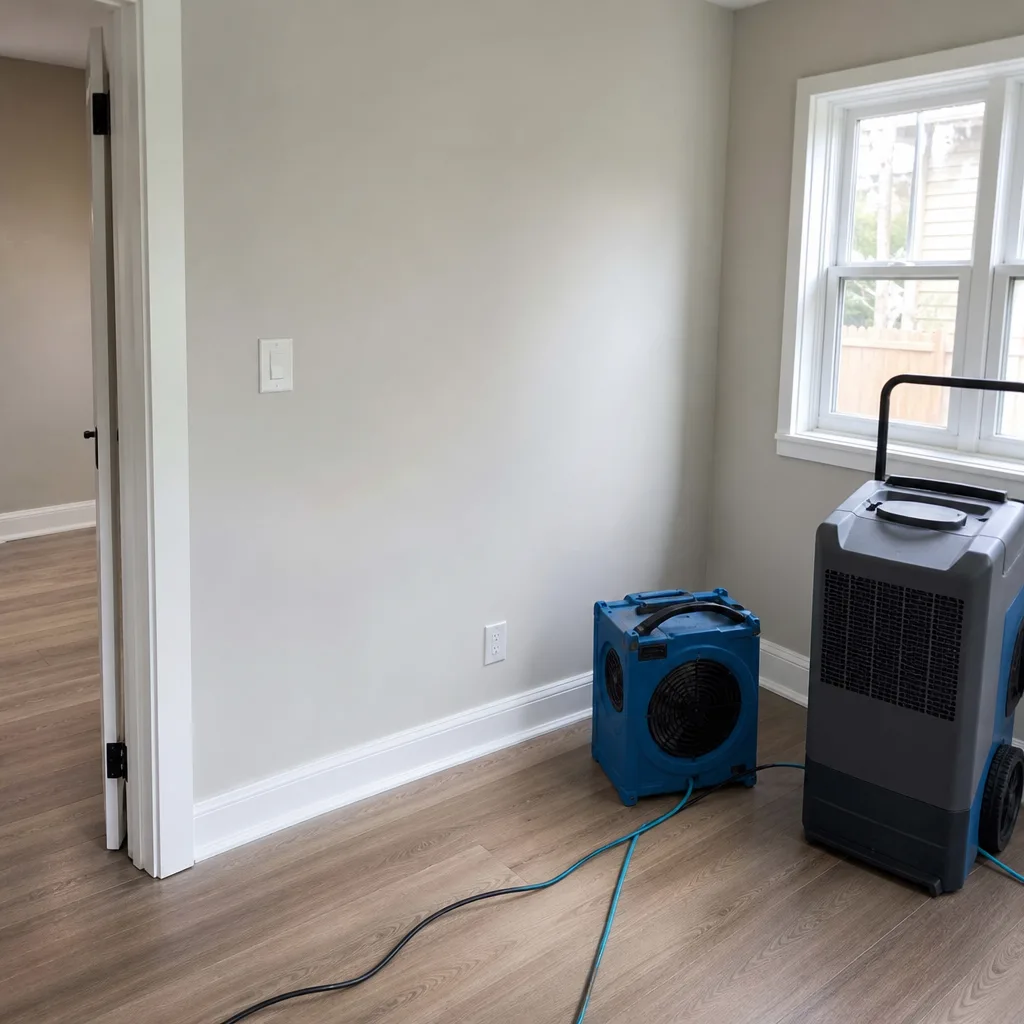 After
After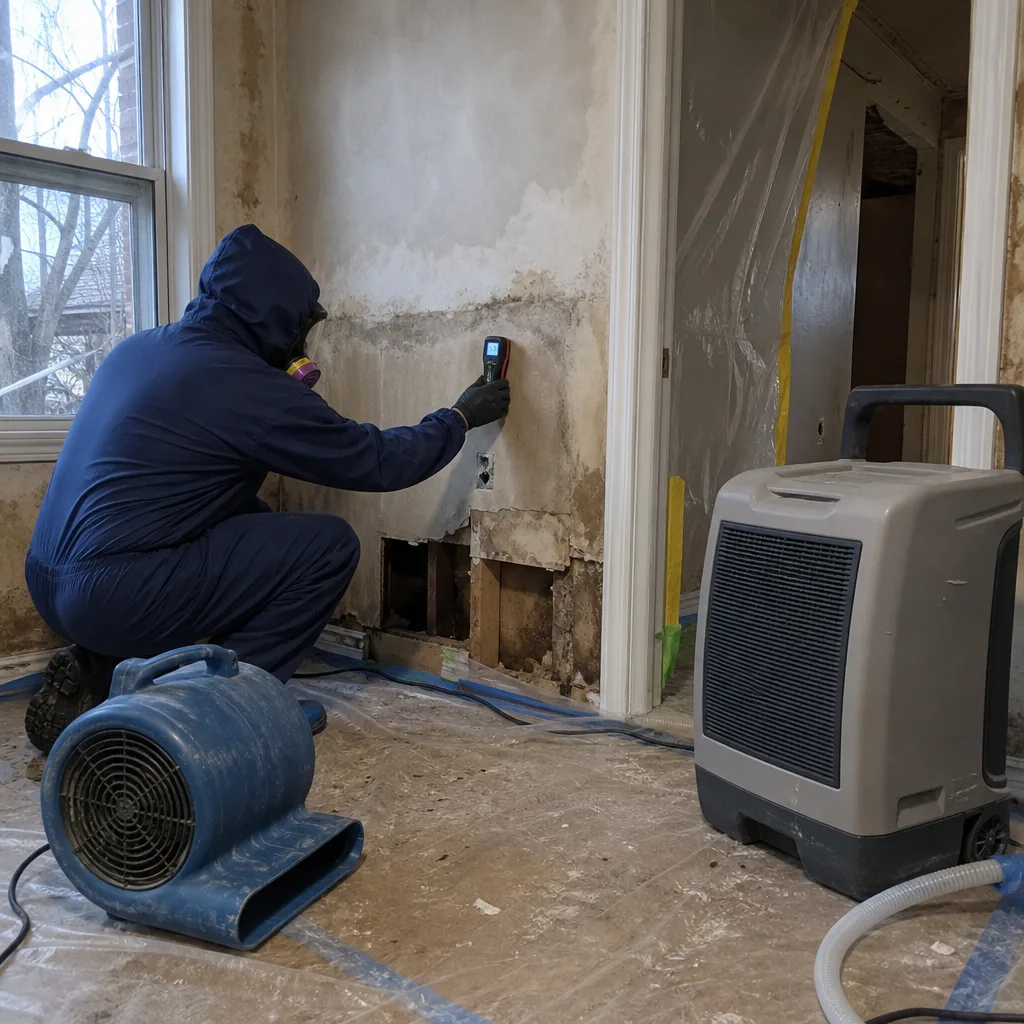 Before
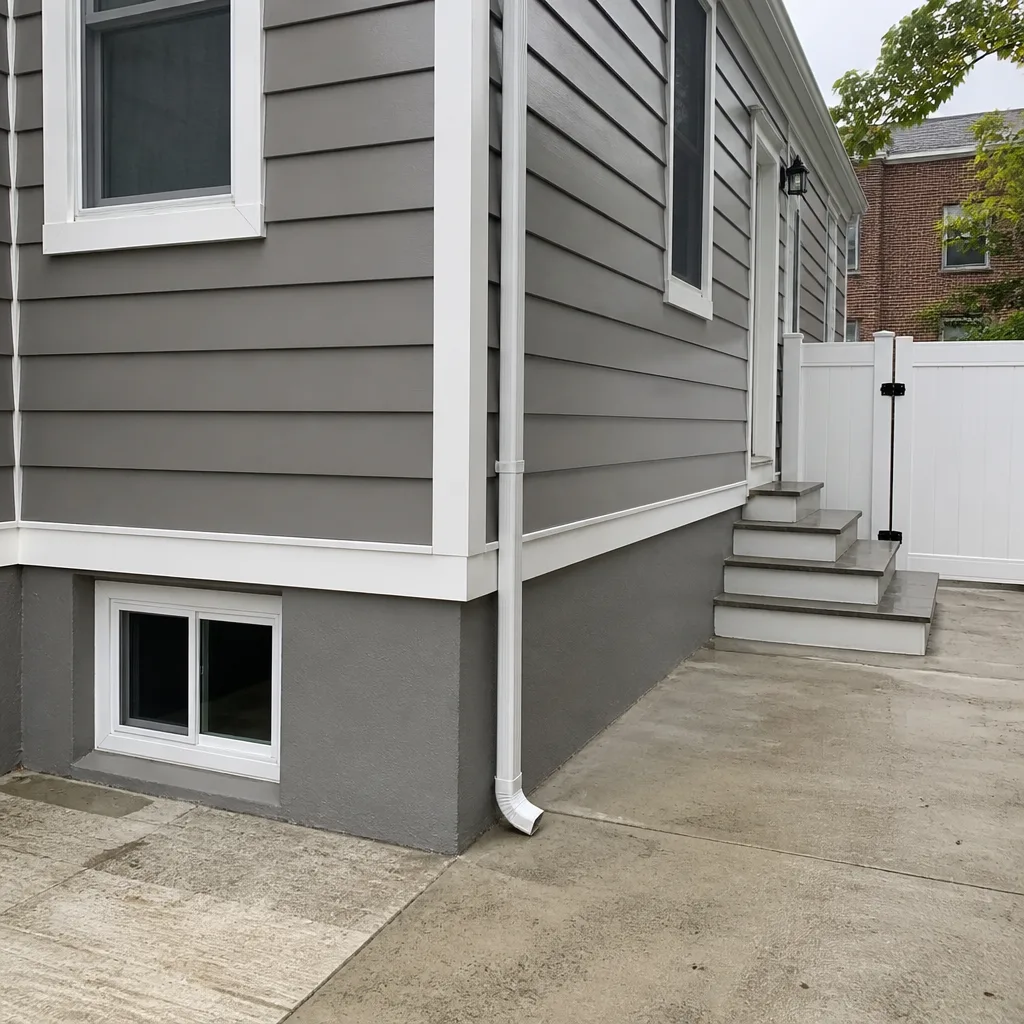 After
After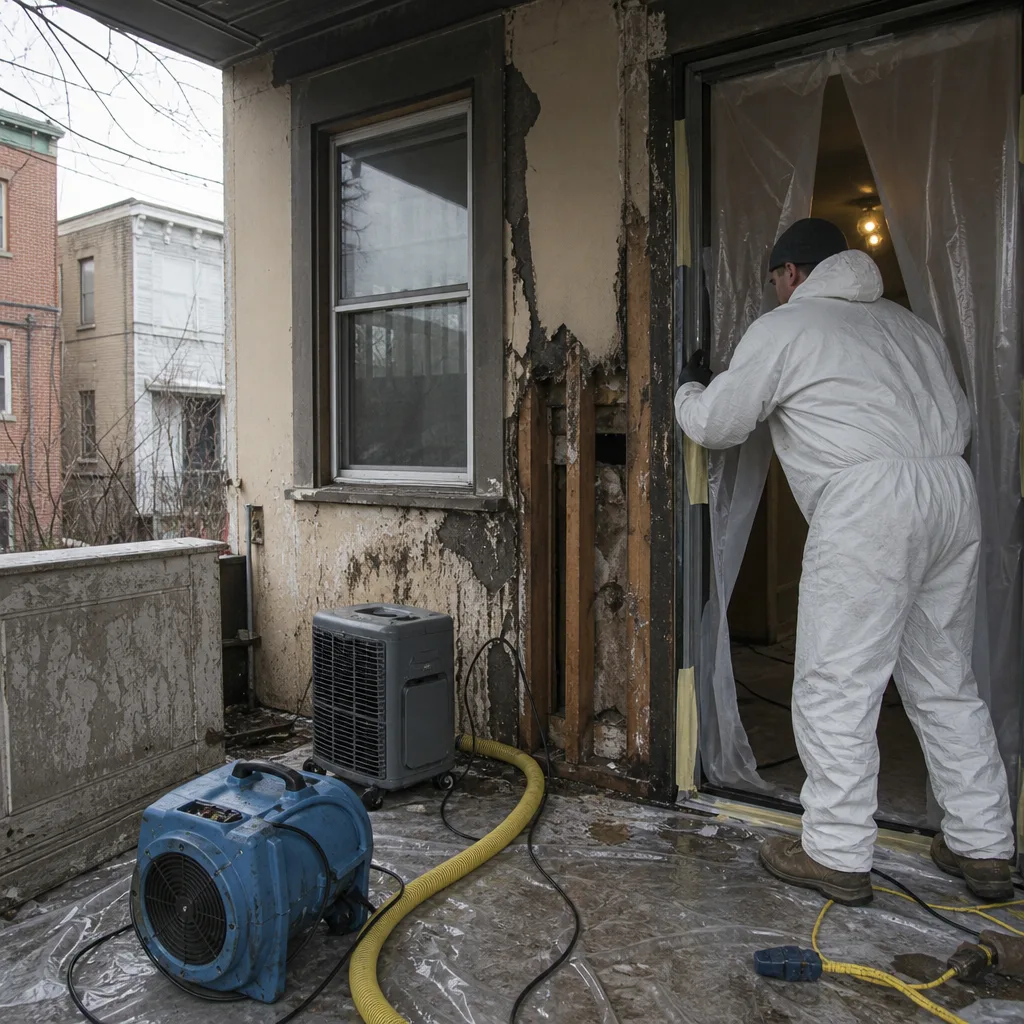 Before
 After
AfterWhen to Call a Professional
Some seasonal maintenance is homeowner work. Clearing a drain, checking a valve, running a dehumidifier, photographing the parapet. But certain situations require a professional restoration crew, and the sooner you call, the less damage you’re dealing with. Call when you have active water flowing from a ceiling or wall and you can’t stop it at the source. Call when you see water stains on a ceiling below a bathroom or roof that you can’t explain. Call when you smell mold but can’t find it, because that means the reservoir is hidden in a cavity. Call when a pipe froze and thawed, even if you don’t see a leak, because a thawed pipe that didn’t burst may still have a hairline split waiting to fail. And call when you had water damage in spring and you never verified the cavity dried all the way through. Keegan Restoration Brooklyn offers free estimates in Brooklyn, and a live person answers the phone 24 hours a day. Call (607) 325-7185 and we’ll schedule an inspection with a written scope before any work starts.
Frequently Asked Questions
March and November are the two months when Brooklyn homes fail most often. March is the thaw month, when pipes that froze in unheated spaces all winter split and release water. November is the leaf month, when flat roof drains and scuppers clog, water ponds, and the first hard freeze lifts roof membranes and works water under flashing. If you only do two seasonal checks a year in Brooklyn, do them in October and February, ahead of those danger windows. Call (607) 325-7185 if you suspect damage from either window.
Any supply line that runs through an unheated space is at risk. In Brooklyn, that means pipes in exterior walls, uninsulated crawl spaces, garages, and the cavities behind kitchen cabinets on perimeter walls. If a pipe has frozen before, even without bursting, it’s more likely to fail again. The March assessment described in this guide walks through mapping those lines and checking for the signs. If you find a leak or suspect one, call (607) 325-7185 for an inspection.
Most standard homeowner’s policies cover sudden and accidental water damage from a frozen pipe that bursts, including the resulting water damage to walls, floors, and contents. What matters in practice is documentation: photos of the scene before anything is moved, a record of maintenance, and a professional assessment that ties the damage to a specific event. We document every job to support your insurance claim, because the difference between a fast settlement and a dispute is usually the quality of the evidence.
Because the cavity never fully dried, and Brooklyn’s summer humidity stopped it from drying later. A leak in March or April soaks the framing and the backside of the drywall inside a wall cavity. If that cavity isn’t professionally dried to below 16 percent moisture content, the residual moisture sits in the dark, warm space. When June through September humidity arrives, the air can’t absorb that moisture, and mold germinates. The fix is proper drying with professional equipment, not surface cleaning.
Twice in the fall. Once in early October, before the main leaf drop, and once in late November, after the second wave of leaves has fallen. A single cleaning leaves the roof vulnerable to the second wave. If you have a large tree directly overhanging the roof, consider a third check in mid-December. The cost of a drain cleaning is a fraction of the cost of a roof leak, and the difference is a calendar reminder.
Both terms describe the same professional process: containing the affected area, removing the mold reservoir behind the walls and floors, cleaning the air, and verifying the moisture source is eliminated. Surface cleaning and painting over mold is not remediation. The mold colony behind the drywall remains, and it will reappear. Our Mold Remediation in Brooklyn page explains the full process and when professional testing is worth the cost.
The Bottom Line
Brooklyn homes fail on a schedule that doesn’t match the calendar. The two danger windows, October through December and February through April, are when aging flat roofs, parapets, and uninsulated pipes fail under freeze-thaw stress. The two working windows, May through June and July through September, are when smart owners inspect, repoint, dry, and document. The difference between a quiet year and a restoration claim is usually two or three hours of targeted maintenance at the right time, plus a dated photo log that proves the work was done. When damage does happen, call before the cavity grows, because the cost of restoration rises with every day water sits. Keegan Restoration Brooklyn handles water, fire, and mold jobs to The Garrison Standard: written price before work starts, background-checked uniformed technicians, professional-grade equipment, and the 365-Day Done Right Promise in writing. Call (607) 325-7185 for a free estimate, any time. A live person answers.
Written by Shane Pruitt, Owner at Keegan Restoration Brooklyn, serving Brooklyn since 2005.